

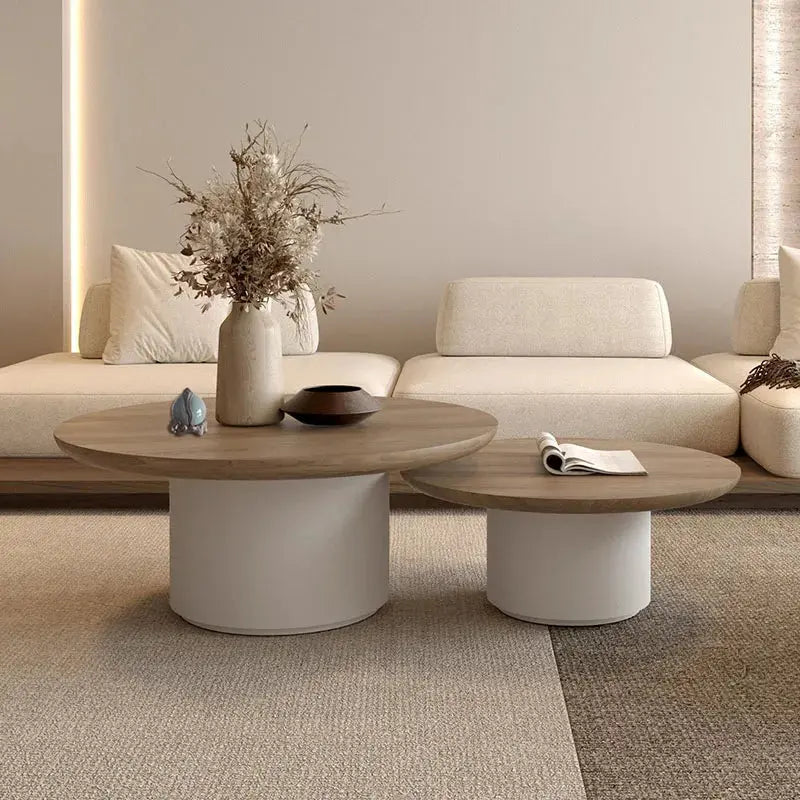
Quick answer: Japanese interiors have their own vocabulary for furniture, rooms, light and design ideas: a chabudai is a low round table, a zaisu a legless floor chair, shōji are translucent paper screens, an andon is a paper lamp, and ma is the art of empty space. This glossary explains 31 of the most useful terms, how to say them, and how each one translates into a modern Japandi home.
Key takeaways
- Traditional Japanese rooms are built around low furniture and life close to the floor.
- Sliding screens, tatami and display alcoves make rooms flexible and calm.
- Paper and diffused light are central to Japanese lighting.
- Ideas such as ma, kanso and wabi-sabi explain the calm of Japandi style.
- Many traditional pieces have a modern equivalent you can use today.
What are the main pieces of Japanese furniture?
Low tables, floor seating, bedding that folds away and wooden storage chests are the core of a traditional Japanese room.
Chabudai (cha-boo-dye)
A short-legged, usually round table that a household sits around on the floor for meals and tea. Many traditional ones have legs that fold away. See our chabudai table guide and the Chabudai Coffee Table.
Zataku (za-ta-koo)
A larger, usually rectangular low table with fixed legs, often found in tatami rooms and used with floor chairs.
Kotatsu (ko-tat-soo)
A low table with a heater fixed under the top and a quilt laid between the frame and the tabletop to hold in the warmth. Mainly a winter table.
Zaisu (zai-soo)
A legless chair with a backrest, used on the floor at a low table.
Zabuton (za-boo-ton)
A flat floor cushion for sitting on, often used with a zaisu or at a low table.
Futon (foo-ton)
Traditional Japanese bedding laid on the floor at night and folded away in the day. In Japan the word means the bedding set, not a sofa bed. Prefer a bed frame? Read about Japanese-style low beds.
Shikibuton (shee-kee-boo-ton)
The mattress layer of a futon set, placed directly on the floor or on tatami.
Tansu (tan-soo)
A traditional wooden storage chest, often made in stackable sections with drawers and cabinets.
Kaidan dansu (kai-dan dan-soo)
A "staircase chest": a tansu built as steps, used both as storage and as stairs to an upper floor.
Byōbu (byoh-boo)
A folding screen made of several hinged panels, used to divide space or as decoration.
What are the parts of a traditional Japanese room?
Tatami floors, sliding paper and panel doors, a display alcove and a step-down entrance give a Japanese room its calm, flexible layout.
Tatami (ta-ta-mee)
Thick floor mats with a woven rush surface. Traditional room sizes are counted in tatami mats.
Shōji (shoh-jee)
Sliding doors or screens made of a wooden lattice covered with translucent paper, letting soft light through.
Fusuma (foo-soo-ma)
Opaque sliding panels used as doors between rooms or on cupboards.
Tokonoma (toh-koh-noh-ma)
A shallow alcove for displaying one or two treasured objects, such as a scroll, a vase or a flower arrangement. A single sculptural vase, like the Kushi Vase, follows the same idea at home.
Genkan (gen-kan)
The entrance hall, usually a step lower than the rest of the home, where shoes are taken off.
Engawa (en-ga-wa)
A wooden veranda or corridor along the outside edge of a traditional house, between the rooms and the garden.
Noren (noh-ren)
A split fabric curtain hung in a doorway, for privacy and decoration.
Which Japanese lighting terms should you know?
Japanese lighting is built around paper and soft, diffused light, from standing andon lamps to hanging lanterns.
Andon (an-don)
A traditional lamp with a paper shade on a wooden frame, giving a soft, diffused light. Modern Japandi floor and table lamps follow the same idea. Browse floor and table lamps or read our Japandi lamps guide.
Chōchin (choh-chin)
A collapsible hanging lantern made of paper or silk stretched over a bamboo frame. Today's woven and bamboo shades carry on the look: see our pendant lights.
Washi (wa-shee)
Traditional Japanese paper, strong and slightly translucent, used for shōji, lamps and lanterns.
Which Japanese design ideas shape Japandi interiors?
A handful of ideas about simplicity, space and imperfection explain why Japandi rooms feel so calm.
Wabi-sabi (wa-bee sa-bee)
An aesthetic that finds beauty in imperfection, impermanence and natural ageing. Read Japandi vs wabi-sabi.
Ma (ma)
The idea of meaningful empty space: the pauses and gaps that let a room, or a design, breathe.
Shibui (shee-boo-ee)
Quiet, understated beauty that reveals itself slowly rather than shouting.
Kanso (kan-soh)
Simplicity: removing clutter and anything that is not needed.
Kintsugi (kin-tsoo-gee)
The art of repairing broken ceramics with lacquer mixed with gold, so the repair becomes part of the object's story.
Japandi (ja-pan-dee)
A modern interior style that blends Japanese minimalism with Scandinavian warmth: natural materials, calm colours and simple, comfortable furniture. Read our guide to what Japandi style is.
Which Japanese tableware words come up most?
Tea cups, teapots and chopsticks have their own names, and knowing them makes shopping for a Japanese table much easier.
Yunomi (yoo-noh-mee)
A tall, handleless everyday tea cup. See our Japanese tea cups guide.
Chawan (cha-wan)
A wide tea bowl used for preparing and drinking matcha.
Kyūsu (kyoo-soo)
A Japanese teapot, often with a side handle, used for green tea. The Ocha Set is a ceramic teapot set for the tea ritual at home.
Hashi (ha-shee)
Chopsticks. Choosing a pair? See how to choose chopsticks and the Tetsu Chopsticks.
Hashioki (ha-shee-oh-kee)
A small chopstick rest that keeps the tips off the table.
How do Japanese terms translate into a modern Japandi home?
Most traditional pieces have a modern, Western-height equivalent that keeps the same spirit.
| Japanese term | What it is | Modern Japandi equivalent |
|---|---|---|
| Chabudai | Low round table | A low, round coffee table, such as the Chabudai Coffee Table or Kofuku Coffee Table |
| Futon and shikibuton | Floor bedding | A low platform bed with a mattress |
| Andon | Paper floor lamp | A floor or table lamp with a diffusing shade |
| Chōchin | Hanging lantern | A woven or bamboo pendant light |
| Tokonoma | Display alcove | A shelf or console with one sculptural vase |
| Tansu | Wooden storage chest | A low wooden sideboard or cabinet |
Explore the pieces in our coffee tables and Japandi decor collections.
Frequently asked questions
What is Japanese floor furniture called?
The main pieces are the chabudai or zataku (low tables), the zaisu (a legless chair with a backrest), the zabuton (a floor cushion) and the futon (bedding laid on the floor).
What is the difference between a chabudai and a kotatsu?
A chabudai is a plain low table used all year, while a kotatsu has a heater under the top and a quilt to hold in the warmth, so it is mainly used in winter.
What is a tansu?
A tansu is a traditional Japanese wooden storage chest, often built in stackable sections with drawers and cupboards. A kaidan dansu is a tansu built as a staircase.
What does ma mean in Japanese design?
Ma is the idea of meaningful empty space. In a room it means leaving breathing space around furniture instead of filling every corner.
Is Japandi a Japanese word?
No. Japandi is a modern English blend of "Japanese" and "Scandi", used for interiors that combine Japanese minimalism with Scandinavian warmth.
Can I use this glossary on my own site?
Yes. You are welcome to quote or link to this glossary; please credit Nisu Home with a link to this page.

Leave a comment
This site is protected by hCaptcha and the hCaptcha Privacy Policy and Terms of Service apply.