

Japandi vs wabi sabi is one of the most common style questions, because the two share a quiet palette and a love of natural materials. They are not the same thing, though, and knowing the difference makes it much easier to furnish a room with confidence. This guide sets out what each one is, where they overlap and which to choose.
Quick answer: Japandi is an interior style that blends Japanese simplicity with Scandinavian warmth, favouring clean lines, tidy surfaces and light wood. Wabi-sabi is a Japanese philosophy that values imperfection, age and handmade character. Japandi looks ordered and polished; wabi-sabi looks weathered and organic. Many homes combine the two.
Key takeaways
- Japandi is a defined interior style; wabi-sabi is a philosophy of beauty found in imperfection.
- Japandi favours clean lines and order; wabi-sabi favours texture, wear and asymmetry.
- Both rely on natural materials, muted colour and fewer, better-chosen objects.
- Choose Japandi for a calm, structured room; choose wabi-sabi for a lived-in, handmade feel.
- The easiest way to blend them is Japandi furniture with a few wabi-sabi accents.
What is the difference between Japandi and wabi-sabi?
Japandi is an interior style with recognisable rules, while wabi-sabi is a Japanese philosophy about finding beauty in imperfection and age. One tells you how a room is put together; the other describes how you look at the objects in it. That is the core of the difference between Japandi and wabi-sabi.
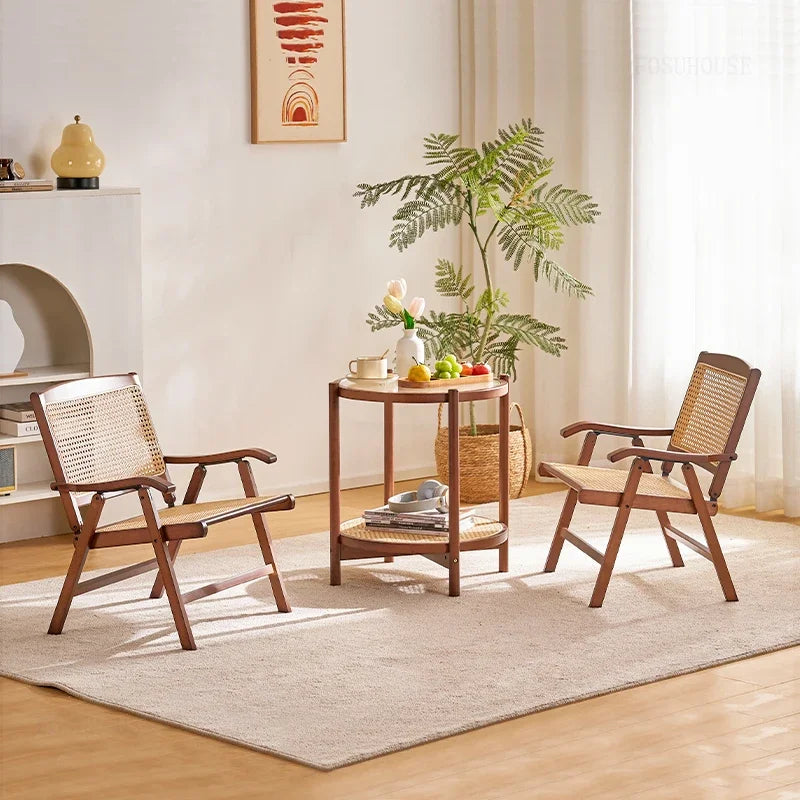
They get confused because they look related. Both favour a quiet palette, natural materials and a lack of fuss, so a photograph of a calm room with a ceramic vase and a wooden table could belong to either.
Japandi: a style with clear rules
Japandi blends Japanese minimalism with Scandinavian warmth, the cosy, comfort-led thinking often called hygge. It emerged as a way of combining Japan's restraint with the softness of Nordic homes.
The rules are easy to spot: low, clean-lined furniture, light woods, warm neutrals, tidy surfaces and a small number of well-chosen objects. For the general method, see our guide to bringing Japandi to your home; this article concentrates on how it differs from wabi-sabi.
Wabi-sabi: a way of seeing
Wabi-sabi is rooted in Japanese aesthetics and values things that are modest, imperfect and changing. A chipped bowl, a weathered timber beam or a hand-thrown cup with an uneven glaze all count as beautiful because of those qualities, not despite them.
It has no checklist of furniture shapes. You can apply wabi-sabi to a flat, a farmhouse or a studio, which is why it is better thought of as an attitude than a style. A related idea, shibui, describes understated, quietly refined beauty and often sits alongside it.
Japandi vs wabi-sabi: side-by-side comparison
Japandi looks ordered and softly polished, while wabi-sabi looks weathered and organic. The table below sets out the main differences.
| Feature | Japandi | Wabi-sabi |
|---|---|---|
| Origin | A modern interior style combining Japanese and Scandinavian design | A traditional Japanese philosophy and aesthetic |
| Mood | Calm, ordered, warm | Quiet, earthy, contemplative |
| Colour | Warm neutrals, soft greys, muted accents | Earthy browns, clay, moss, faded tones |
| Materials | Light wood, linen, wool, smooth ceramics | Rough plaster, aged timber, raw clay, worn linen |
| Shapes | Clean lines, gentle curves, balance | Irregular, asymmetric, hand-formed |
| Furniture | Low, simple, well-proportioned pieces | Mixed, often antique, vintage or visibly worn |
| Decor | Few, deliberate objects | Handmade objects with visible marks of making |
| Upkeep | Needs clear surfaces and regular tidying | Forgiving of marks, wear and patina |
What does a Japandi room look like?
A Japandi room is low, light and uncluttered, with warm neutral colours and natural materials throughout. Everything has a place, and nothing is there only to fill space.
Furniture and layout
Furniture sits close to the floor, which makes ceilings feel higher and the room calmer. A sofa with a low back and simple lines keeps sightlines open; our sofas collection includes Japandi designs such as the Endo Sofa.
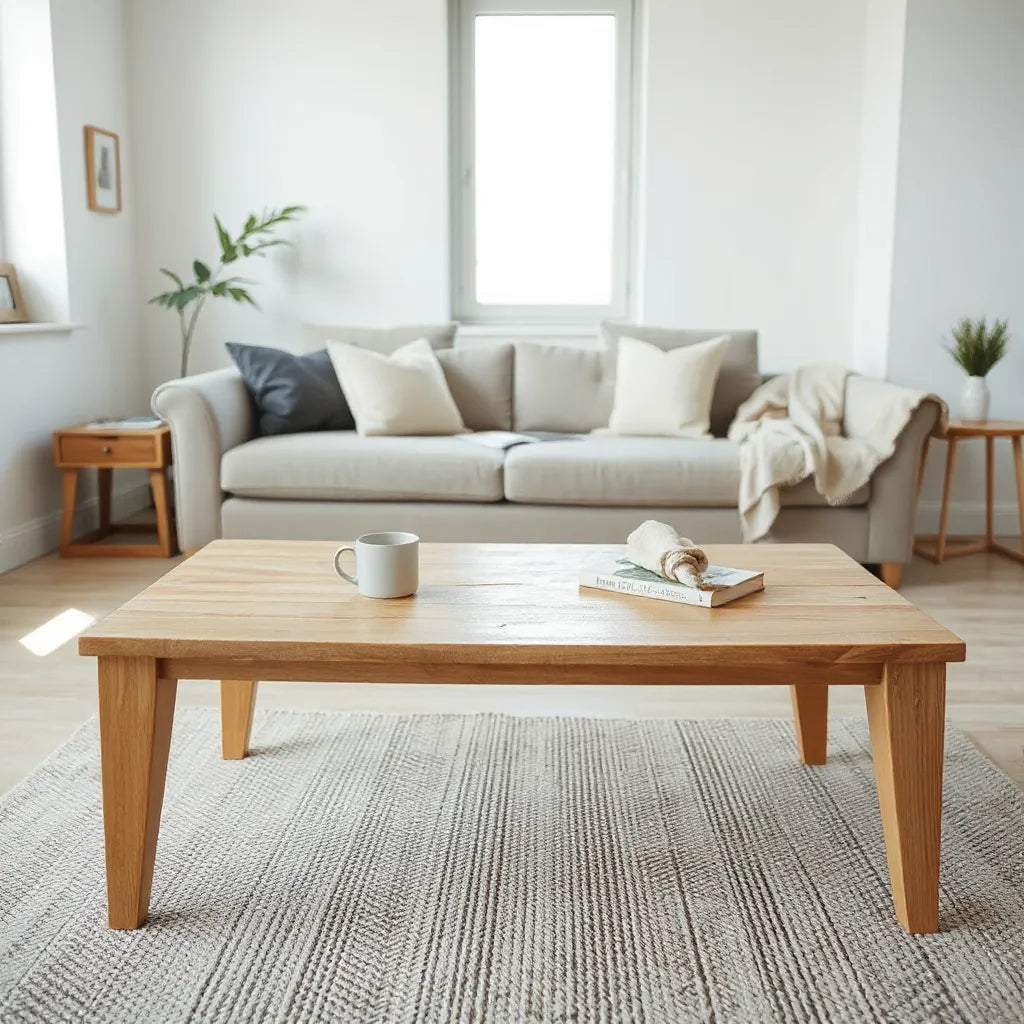
Leave clear floor space around each piece. As a guide, keep around 45 cm between a sofa and a coffee table so you can reach a cup without leaning, and keep main walkways 75 to 90 cm wide. A single coffee table such as the Honin Coffee Table can anchor the centre of the room; see the coffee tables collection for alternatives.
Colour and texture
Keep the palette to three or four tones: warm white, oatmeal, soft grey and one deeper accent such as charcoal or muted green. Texture does the work that pattern would do elsewhere, so combine linen, wool, matt ceramic and light wood grain.
Restrain the decor. One vase, one lamp and one tray on the table is usually enough.
Featured pieces: the Honin Coffee Table gives a Japandi living room one clear centrepiece, and the Endo Sofa provides a calm base that suits either look.
What does a wabi-sabi room look like?
A wabi-sabi room feels lived-in and quietly worn, with rough textures, uneven finishes and earthy colours. In practice, it is a room where age and handwork are visible and welcome.
Objects and surfaces
Surfaces carry marks. Think limewash or plaster walls with subtle variation, timber that has darkened with use and linen that has softened with washing. This slow ageing is called patina, and it is the opposite of a showroom finish.
Handmade ceramics sit at the heart of the look: a vase with a pooled, uneven glaze or a bowl that is slightly out of round. A single vase is an easy starting point, and our vases collection offers plenty of choice. Group objects in odd numbers and leave gaps between them, so each one is seen.
Colour and mood
Colours come from the earth: clay, stone, moss, dried grass and weathered brown. Light is soft and low, so choose warm bulbs and consider a paper or fabric shade from the lighting collection.
Asymmetry is intentional. Place a vase off-centre on a shelf and leave one end empty. For a wabi-sabi living room, begin with a single weathered wooden bench or table and build outwards slowly.
Featured piece: Suzuki Vase. A simple way to add one considered object to a shelf or table. View the Suzuki Vase
Which is better for a UK home: Japandi or wabi-sabi?
For most UK homes, Japandi is the more practical base, because it handles limited space and mixed use well. Wabi-sabi suits people who prefer a looser, more personal room and enjoy collecting individual pieces.
Choose Japandi if...
- You live in a small flat and need clear surfaces and low, compact furniture.
- You have a family home and want easy-to-tidy storage with calm order.
- You rent and want a look built from movable furniture, not wall finishes.
- You dislike clutter and feel better in a room with open space.
A chair with a clean profile, such as the Toshiro Chair, fits this approach. More options are in the chairs collection.
Choose wabi-sabi if...
- You live in a period property with uneven walls, original beams or worn floorboards that you would rather celebrate than hide.
- You love vintage, antique or handmade pieces and prefer objects with a history.
- You are relaxed about marks, scuffs and change over time.
Pros and cons at a glance
- Japandi pros: easy to follow, suits small spaces, simple to maintain.
- Japandi cons: can feel cold if it lacks texture, and shows clutter quickly.
- Wabi-sabi pros: forgiving, personal and good with older buildings.
- Wabi-sabi cons: harder to define, and can slip into untidiness without some structure.
Featured piece: Toshiro Chair. One of our bestsellers, and a practical place to start if you are unsure which direction to take. View the Toshiro Chair
Can you mix Japandi and wabi-sabi?
Yes. The simplest approach is a Japandi structure with wabi-sabi accents, so the room stays calm and organised but gains character. That is how most people use the two in practice: as layers, not rivals.
Start with the big pieces
Choose the sofa, table and main storage in the Japandi manner: simple lines, light or mid-tone wood and a neutral upholstery colour. Order fabric swatches and view them at home, because daylight and evening lamplight change how a warm neutral reads. Nisu Home offers downloadable digital swatches as well as handmade ones, which take about two weeks.
Keep the large pieces few. Three or four well-proportioned items give the room its calm outline.
Add imperfect, handmade accents
Once the framework is in place, bring in objects with visible character: an uneven ceramic bowl, a rough linen throw, a weathered branch in a vase. The Eternal Ornament is one way to add a single considered object, and the ornaments collection has others.
Avoid two common mistakes:
- Too sterile: everything smooth, matching and new. Add one aged or handmade item per surface.
- Too cluttered: too many characterful objects competing. Limit yourself to two or three per surface and leave space around them.
Japandi or wabi-sabi: a quick decision checklist
Choose Japandi as your base and wabi-sabi as your finishing layer, then use this checklist to confirm the balance for your own room.
- Do you need the room to stay tidy with little effort? Lean towards Japandi.
- Is the space small or used by a family? Start with Japandi furniture.
- Do you own handmade or vintage pieces you love? Add wabi-sabi accents.
- Does the room feel cold? Add texture, patina and one imperfect object.
- Does it feel busy? Remove half the decor and keep the best.
The verdict: for most homes, Japandi is the practical foundation, giving you order, comfortable proportions and a calm palette. Wabi-sabi adds soul through the handmade, the worn and the imperfect. Used together, they make a room that is both easy to live in and personal to you.
Frequently asked questions
Is wabi-sabi a design style or a philosophy?
Wabi-sabi is a Japanese philosophy about finding beauty in imperfection, simplicity and the passing of time. It influences design but has no fixed rulebook. Interior designers use it to describe rooms with handmade, weathered or uneven elements, whereas Japandi is a named style with more consistent visual rules.
Is Japandi the same as Japanese minimalism?
No. Japanese minimalism focuses on restraint, open space and few possessions. Japandi borrows from it but adds Scandinavian warmth, such as softer textiles, lighter woods and a cosier feel. The result is usually less austere than traditional Japanese minimalism and easier to live with in a typical Western home.
What colours are used in wabi-sabi interiors?
Wabi-sabi interiors use muted, earthy tones such as clay, stone, moss, charcoal, sand and warm off-white. Colours tend to look soft or slightly faded rather than crisp. Variation within a single surface, such as mottled glaze or uneven plaster, is welcome rather than corrected.
Is Japandi still popular?
Yes. Japandi remains a popular choice because its calm palette, natural materials and focus on fewer, better pieces suit small and busy homes. Its emphasis on durable, timeless shapes also means it tends to date more slowly than trend-led looks.
Can wabi-sabi work in a small flat?
Yes. Wabi-sabi relies on a few well-chosen handmade or textured objects rather than volume, so it suits small spaces. Keep surfaces clear, use a limited colour range and let one or two imperfect pieces, such as a hand-finished vase, act as the focal point.
What materials suit both Japandi and wabi-sabi?
Both styles favour natural materials: wood, linen, cotton, wool, ceramic, stone and paper. The difference is finish. Japandi tends towards smooth, refined surfaces, while wabi-sabi welcomes rough, uneven or aged finishes. Choosing natural materials makes it easy to combine the two.
How do I make a room feel wabi-sabi without buying old things?
Focus on texture and irregularity rather than age. Use linen or washed fabrics, handmade ceramics, matt finishes and a slightly asymmetrical arrangement of objects. Avoid matching sets. Over time, natural materials develop their own patina, which suits the style.
Shop the pieces in this guide
- Honin Coffee Table: one clear centrepiece for a Japandi living room.
- Endo Sofa: a calm base that suits either look.
- Suzuki Vase: one considered object for a shelf or table.
- Eternal Ornament: a simple accent to layer onto a Japandi room.
- Toshiro Chair: a clean-lined chair and one of our bestsellers.
Related reading
About Nisu Home
Nisu Home is a Japandi furniture and homeware brand that makes Japanese-minimalist pieces to order, with free shipping to the UK, EU, US and MENA. Explore our Japandi coffee tables to find a calm, well-proportioned centrepiece for your living room.

Leave a comment
This site is protected by hCaptcha and the hCaptcha Privacy Policy and Terms of Service apply.