

Updated 2026-10-28 · By the Nisu Home team
Quick answer: Japandi is an interior style that blends Japanese minimalism with Scandinavian warmth. It combines calm, warm-neutral colours, natural materials such as wood, rattan and linen, low and simply shaped furniture, and plenty of open space, so a room feels uncluttered, practical and cosy at the same time.
In this guide: the five principles · the colour palette · materials · Japandi vs other styles · how to get the look in 7 steps · room-by-room ideas · mistakes to avoid · FAQ
Where does Japandi come from?
The name is a blend of "Japanese" and "Scandi", and it became widely used in the late 2010s. The two traditions fit together naturally. Both value simplicity, natural materials, good craftsmanship and furniture that is made to be used, not just looked at.
Each side brings something the other lacks. Scandinavian design adds comfort and lightness, captured in ideas like the Danish hygge (cosiness) and the Swedish lagom ("just the right amount"). Japanese design adds restraint and depth: darker woods, low furniture and an appreciation of handmade, imperfect objects. Together they make rooms that are calm without feeling cold.

What are the key principles of Japandi design?
Five ideas sit underneath almost every Japandi room:
- Simplicity (kanso). Fewer things, chosen carefully. Clutter is put away or let go.
- Space (ma). Empty space is treated as part of the design, not something to fill.
- Imperfection (wabi-sabi). Handmade ceramics, visible wood grain and natural irregularities are celebrated. Read more in our guide to Japandi vs wabi-sabi.
- Comfort (hygge). Soft textiles, warm light and inviting seating keep minimalism from feeling bare.
- Function and craft. Every piece should be useful and well made, so it lasts for years rather than seasons.
What colours are used in Japandi interiors?
Japandi palettes start with warm neutrals, add a few earthy accents, and use dark tones for contrast. Avoid stark, cool white and keep bright colours to a minimum.
| Colour | Example | Where to use it |
|---|---|---|
| Warm white | #F4F1EA | Walls, ceilings, large textiles |
| Oatmeal | #E8E0D3 | Sofas, bedding, rugs |
| Sand | #D8C8B0 | Throws, cushions, light woods |
| Clay | #B5694B | Ceramics, a single accent chair |
| Sage | #9AA58B | Textiles, plants, small decor |
| Walnut | #5C4033 | Dark wood furniture and frames |
| Charcoal | #2E2C29 | Lighting, legs, small contrasts |
A useful rule of thumb: roughly 70% warm neutrals, 20% wood and earthy tones, 10% dark contrast.
What materials are typical of Japandi style?
- Wood: light ash and oak alongside darker walnut. Mixing the two is one of the clearest Japandi signatures.
- Woven natural fibres: rattan, cane, paper rope and jute, for texture and lightness.
- Textiles: linen, cotton, wool and bouclé in plain, tactile weaves.
- Ceramics and stoneware: glazed or raw, ideally handmade, with small irregularities.
- Stone and mineral surfaces: travertine, marble and concrete, used in calm, matte finishes.
How is Japandi different from Scandinavian, Japanese and minimalist style?
| Style | Palette | Furniture | Feel |
|---|---|---|---|
| Japandi | Warm neutrals, earthy accents, dark contrast | Low, simple, light and dark woods mixed | Calm, warm, uncluttered |
| Scandinavian | Bright whites, pale greys, pastels | Light woods, tapered legs | Airy, cosy, practical |
| Japanese | Natural, muted, deeper tones | Very low, floor-based, darker woods | Serene, restrained |
| Minimalist | Often white, grey, black | Sleek, often man-made materials | Clean, can feel cool |
| Wabi-sabi | Earthy, weathered, organic | Raw, aged, handmade | Rustic, imperfect |
How do you get the Japandi look? 7 steps
- Clear the room first. Remove anything you do not use or love. Japandi starts with kanso, the Japanese idea of simplicity, so decide what stays before you buy anything new.
- Choose a calm base palette. Keep walls and large pieces in warm neutrals such as off-white, oatmeal or sand. Save darker or earthy tones for accents.
- Bring in natural materials. Mix woods, rattan, cane, linen, wool, ceramic and stone. Combining a light wood with a dark one, such as ash with walnut, is a classic Japandi move.
- Go low and simple with key furniture. Choose sofas, beds and coffee tables with low profiles, clean lines and soft, rounded edges.
- Add texture instead of pattern. Bouclé, linen, jute and woven rattan make a neutral room feel rich without busy prints.
- Use soft, warm lighting. Pick warm-white bulbs (around 2700 to 3000K) and diffusing shades such as woven or paper pendants, layered with table and floor lamps.
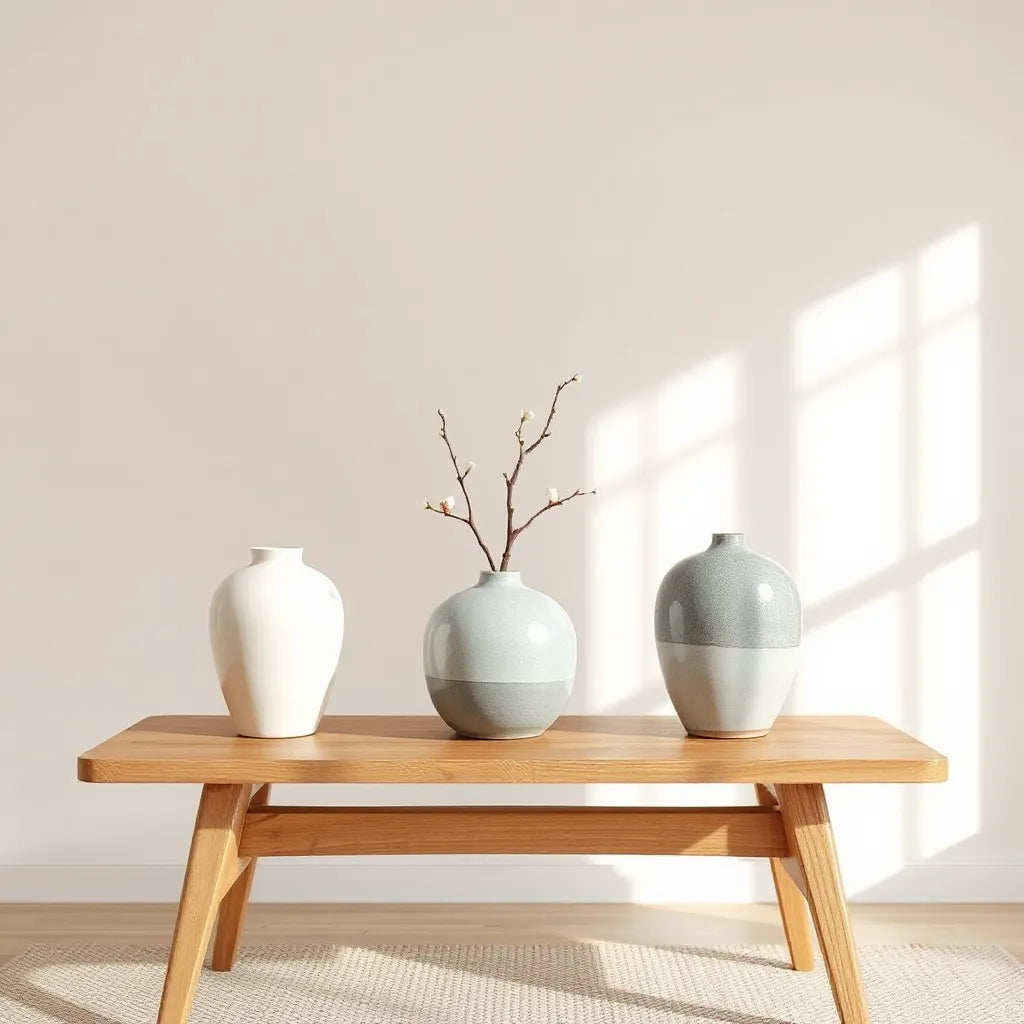
- Finish with a few handmade pieces and leave space. Add one or two ceramics, a sculpture or a branch in a vase, then stop. Empty space, ma in Japanese, is part of the design.

Japandi ideas, room by room
Living room
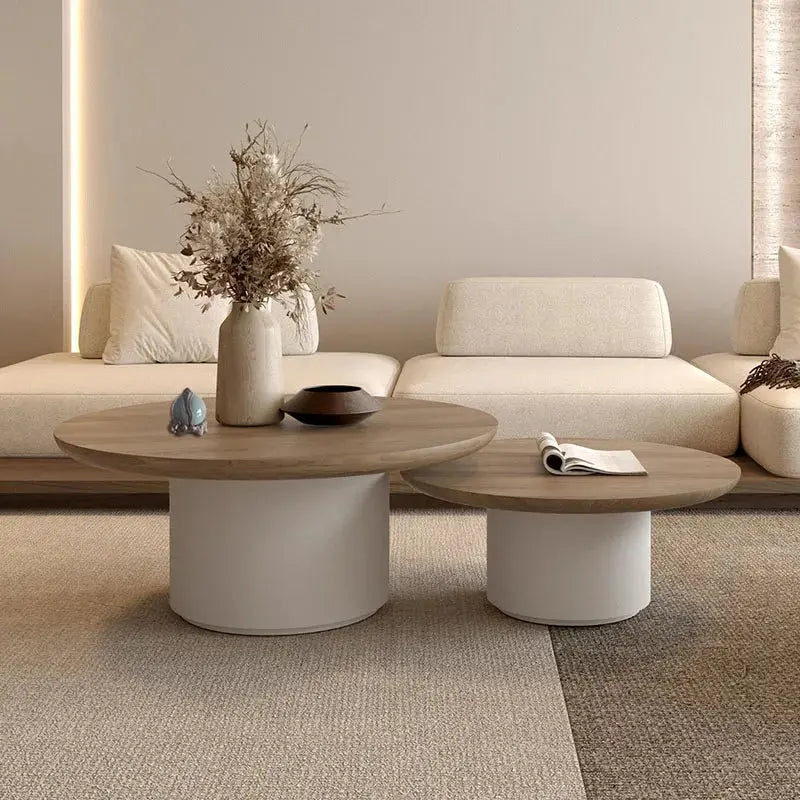
Build the room around a low, deep sofa such as the Mariko Sofa in bouclé or velvet, and a low wooden table like the Chabudai Coffee Table, inspired by the traditional Japanese chabudai. Ground it with a handwoven rug such as the Initoma Rug, drape a Yūgen faux fur throw over the arm, and keep the coffee table to one or two objects. Browse sofas, coffee tables and rugs.
Dining room
A strong, simple table sets the tone: the Nakamura Dining Table pairs a slate-grey concrete top with warm solid wood supports. Surround it with comfortable upholstered chairs such as the Izumi Chair in velvet, and hang a woven pendant like the Luna Light low over the table. Our guide to choosing pendant light sizes explains how big to go. Browse dining chairs and dining tables.

Bedroom
Keep the bed low and the surfaces clear. The Hidemi Bed is made from solid ash wood with a floating design and built-in lighting, while the Mokuzai Bed adds texture with a rattan headboard. Use a simple pedestal like the Kumo stand as a bedside table, layer linen bedding in two or three neutral tones, and add an organic mirror such as the Kohana Mirror. Browse beds.
Kitchen
Swap shiny metal stools for wood and natural fabric. The Haruto Bar Stool combines cotton and linen upholstery with a solid ash frame in 65 or 75 cm seat heights, and the Emi Bar Stool comes in light oak, warm oak or black. Finish the table with handmade pieces like Tetsu chopsticks and the Ocha tea set. Browse bar stools and tableware.
Common Japandi mistakes to avoid
- Making it cold. Minimal is not empty. Add texture, warm light and at least one soft, inviting seat.
- All beige, no contrast. Without dark wood or a charcoal accent, a neutral room can look flat.
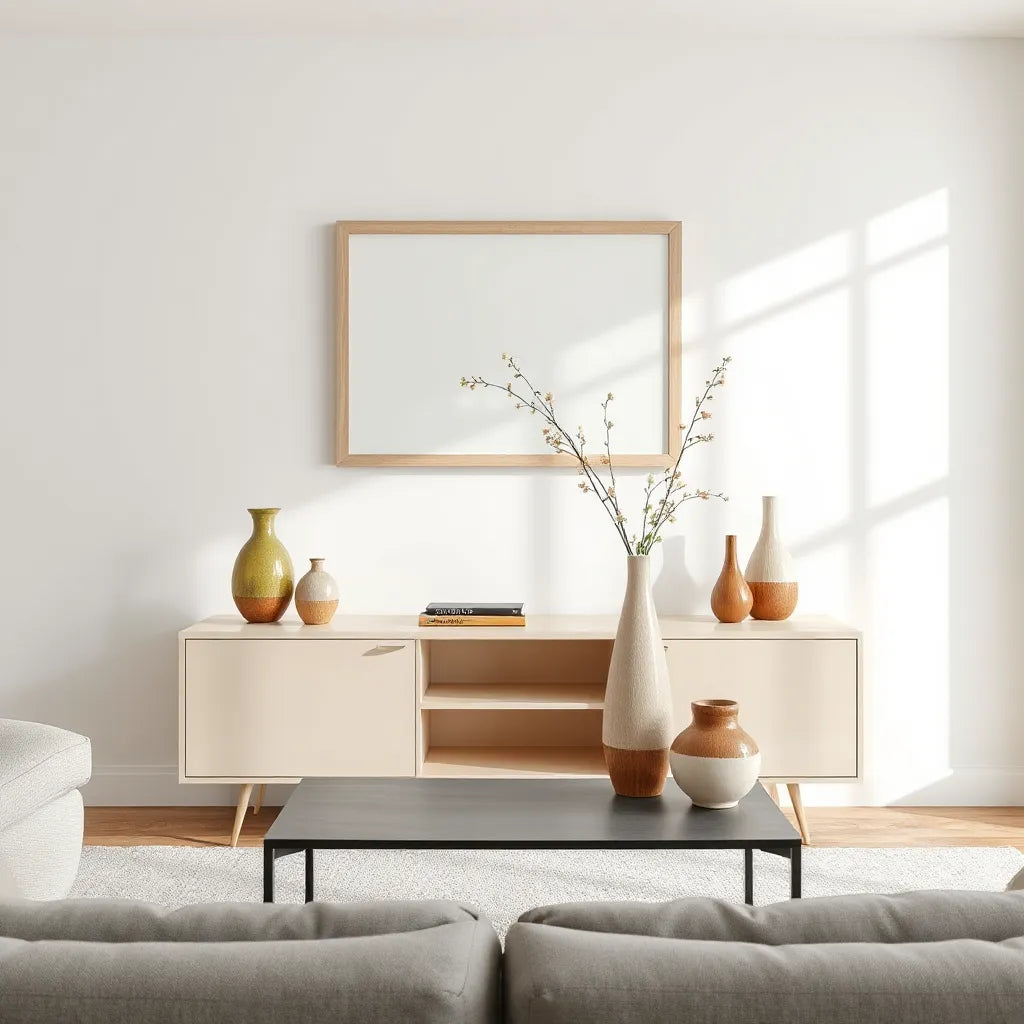
- Too many small decorations. One sculptural vase says more than six small ornaments.
- Cool white bulbs. Light above about 4000K feels clinical. Stick to warm white.
- Clashing wood undertones. Mix light and dark woods deliberately, but keep their undertones (warm or cool) consistent.
- Buying everything at once. Japandi rooms grow slowly. Start with the pieces you use every day.
Japandi FAQ
What is Japandi style in simple terms?
Japandi is an interior style that combines Japanese minimalism with Scandinavian warmth. It uses calm, neutral colours, natural materials such as wood, rattan and linen, low and simple furniture, and plenty of open space, so a room feels uncluttered but still cosy.
What colours are used in Japandi interiors?
Japandi colour palettes are built on warm neutrals such as off-white, oatmeal and sand, balanced with earthy accents like clay, sage and olive, and grounded with darker tones such as walnut brown, charcoal or black. Bright, saturated colours are used sparingly, if at all.
What is the difference between Japandi and Scandinavian style?
Scandinavian style tends to be lighter and brighter, with pale woods, white walls and cosy textiles. Japandi keeps that comfort but borrows from Japanese design: lower furniture, darker woods mixed with light ones, more muted earthy colours and a stronger focus on empty space and imperfect, handmade pieces.
Is Japandi style still popular in 2026?
Yes. Japandi is built on lasting ideas rather than a passing trend: natural materials, fewer but better pieces, and calm, functional rooms. That is why it has stayed popular through the mid-2020s, evolving towards warmer, darker woods and more texture rather than going out of style.
What furniture do you need for a Japandi living room?
Start with a low, comfortable sofa in a natural fabric, a low wooden coffee table, a natural-fibre rug and soft, warm lighting such as a woven pendant. Add one or two sculptural pieces, a throw and a plant, and keep surfaces mostly clear.
Does Japandi work in a small space?
Very well. Low furniture keeps sight lines open, a light colour palette makes the room feel bigger, and the Japandi habit of owning fewer, better pieces leaves more floor space. Choose pieces that do two jobs, such as a side table with storage, and add a mirror to bounce light.
How long does Nisu Home furniture take to arrive?
Most Nisu Home furniture is made to order, which typically takes around 3 to 5 weeks. Each product page shows its delivery time, along with dimensions, materials and care guidance.
Start with one room
You do not need to redo your whole home. Clear one room, settle on a warm neutral palette, and replace one or two everyday pieces with something natural and well made. Explore chairs, lighting, vases and new arrivals at Nisu Home, all designed in a calm Japandi spirit and made to order.

Leave a comment
This site is protected by hCaptcha and the hCaptcha Privacy Policy and Terms of Service apply.