

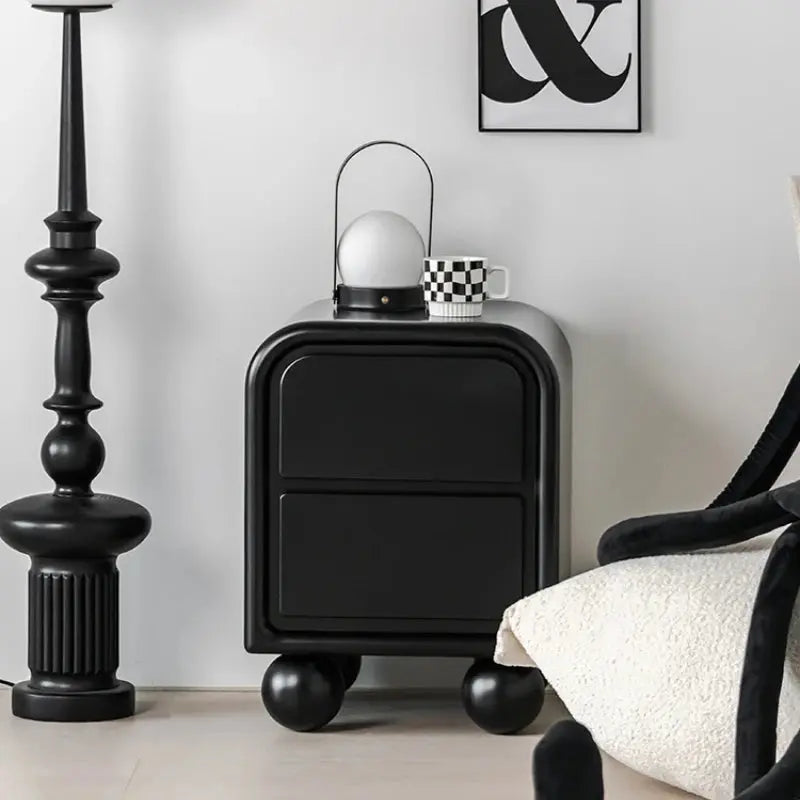
Quick answer: A Japandi bedside table is a small, simple table in a natural material such as wood, stone or rattan, sitting roughly level with the top of your mattress, with a drawer or shelf so the top stays clear. Choose the height to suit your bed first, then the storage you need, then the material and shape that suits the room.
Key takeaways
- Match the table's height to your mattress, not to the bed frame.
- Low Japanese-style beds need low tables, often 40 to 50 cm high.
- Drawers or a lower shelf keep clutter out of sight, which is the heart of the look.
- Natural materials, soft curves and muted colours suit Japandi best.
- Bedside tables do not have to match; similar heights matter more than identical pieces.
What makes a bedside table Japandi?
Simple shapes, natural materials and very little on show.
Japandi blends Japanese restraint with Scandinavian warmth, so a Japandi bedside table tends to have a clean outline, soft or rounded edges, and a material you can see and feel: wood grain, stone, rattan or a brushed metal. Colours stay quiet, from pale oak and walnut to black, white and grey. Above all, it gives you somewhere to put things away, because a clear surface is what makes a bedroom feel restful. For the wider room, our Japandi bedroom ideas guide covers the bed, lighting, colours and materials together.
How high should a bedside table be?
Roughly level with the top of your mattress, give or take a few centimetres.
At that height you can reach a glass of water or switch off a lamp without stretching, and the table looks in proportion to the bed. Measure from the floor to the top of the mattress, including any topper, before you choose. A standard bed frame with a deep mattress often suits a table around 55 to 60 cm high; a low platform bed or floor bed suits a much lower table. If your bed is low, a tall table will look out of place and put the lamp above your eye line. Our guide to Japanese-style low beds explains how low frames change the proportions of a room.
Which Nisu Home side tables work beside a bed?
Any small table whose height suits your mattress, with storage if you need it.
| Table | Height | Material | Storage | Suits |
|---|---|---|---|---|
| Junko Side Table | 45 cm (30 cm across) | Iron, brushed metallic finish | None; a small drum | Low beds and narrow gaps |
| Takeshi Side Table | 45 cm (32 x 32 cm) | Pine wood | None; sculptural shapes | Low beds, natural wood schemes |
| Decuro Side Table | 44 or 51.3 cm (56 cm across) | Solid walnut | Open top | Low or mid-height beds |
| Vintin Side Table | 49.5 cm (38.5 cm across) | Resin | Built-in magazine and book holder | Readers |
| Hotila Side Table | 50 cm (38 cm across) | Marble | Open top | A sculptural, statement bedside |
| Nova Side Table | 55 cm (50 x 25 cm) | Iron | Lower rack | Standard beds, slim spaces |
| Kagawa Side Table | 60 cm (45 x 40 cm) | Wood, solid wood drawers | Drawers, on wheels | Standard and taller beds |
Sizes are taken from each product's Dimensions field; check the product page for every option before you order. See the full range in our side tables collection.
Drawers, a shelf or an open table: which is best?
It depends on how much you keep by the bed.
- Drawers hide everything: chargers, glasses, medicines, notebooks. The Kagawa has drawers and a smooth, curved form in black or white, and sits on wheels so it moves easily when you clean or rearrange.
- A lower shelf or rack holds books and a few essentials while the top stays clear. The Nova has a raised-edge top over a lower rack, in black or white.
- A built-in holder suits readers who keep a pile of books or magazines by the bed; the Vintin has one built into its compact shape.
- An open table or drum is the most minimal choice, for people who keep only a lamp and a book. Junko, Decuro and Hotila are all open-topped.
Which material should you choose?
Pick the material that repeats something already in the room.
| Material | Feels like | Pairs well with | Example |
|---|---|---|---|
| Walnut | Warm, rich and grounded | Dark wood beds, linen bedding | Decuro (walnut or wood finish) |
| Pale or natural wood | Light, Scandinavian and soft | Oak and ash beds, white walls | Takeshi |
| Stone | Cool, sculptural and calm | Plaster walls, upholstered beds | Hotila (marble) |
| Metal | Slim and modern | Black or bronze lamps and frames | Junko (grey or bronze), Nova (black or white) |
| Painted wood | Clean and graphic | Monochrome schemes | Kagawa (black or white) |
Two materials in a bedroom, such as walnut and linen, or stone and pale wood, usually look calmer than four or five.
Should bedside tables match?
No, but their heights should be close.
A matching pair either side of a double bed gives a symmetrical, hotel-like calm, and it is the easiest choice in a room with the bed centred on one wall. Two different tables can look more personal: for example, a wooden table on one side and a stone or metal drum on the other, in a shared colour family. What makes a mismatched pair look deliberate is a similar height and a similar visual weight, so the bed still looks balanced.
How do you style a Japandi bedside table?
With as little as possible.
- One soft light. A lamp with a woven or fabric shade softens the light at eye level. The Japandi Bedside Lamp is woven wicker on a wood body, in three shade sizes with warm or white light. Our Japandi lamps guide covers other options.
- One book or object. A single ceramic piece or a small vase with one stem is enough.
- Nothing loose. Cables, chargers and spare glasses go in the drawer or on the shelf.
- Leave space around it. A small gap between the table and the bed, and between the table and the wall, keeps the corner feeling light.
What if your bedroom is small?
Go narrow, go mobile, or go up.
Measure the gap beside the bed and leave enough room to walk past. Narrow drum and square shapes around 30 cm across, such as Junko or Takeshi, fit tight spaces. A table on wheels, like Kagawa, can be pulled closer at night and pushed back in the day. If there is no room for a table at all, a wall light frees the surface entirely, and a low bed with storage underneath takes pressure off the bedside. Browse our beds to plan the bed and tables together.
Frequently asked questions
How high should a bedside table be?
As a rule of thumb, the top of a bedside table should sit roughly level with the top of your mattress, or a few centimetres above or below it. Measure from the floor to the top of the mattress before you choose, and pick a table within that range.
What bedside table suits a low Japanese-style bed?
A low bed needs a low bedside table, often around 40 to 50 cm high, so the top does not tower over the mattress. Drum, pedestal and small wooden tables keep the line of the room low and calm.
Should bedside tables match?
They do not have to. A matching pair suits a symmetrical room with a double bed centred on one wall, while two different tables of a similar height and tone look relaxed and personal. Keep the heights close so the bed still looks balanced.
Do I need a bedside table with drawers?
If you keep chargers, books, glasses or medicines by the bed, a drawer or lower shelf keeps them out of sight and the top clear, which is what makes a Japandi bedroom feel calm. If you keep very little there, an open table or stand is enough.
What size bedside table do I need for a small bedroom?
Measure the gap between the bed and the wall or wardrobe and leave room to walk past. Narrow tables around 30 cm across, such as a drum or pedestal shape, fit tight spaces, and a table on wheels can be moved when you need the floor space.
What should go on a Japandi bedside table?
Keep it to a few things: a soft lamp, one book, and perhaps a small vase or ceramic piece. Everything else goes in a drawer or on a lower shelf.
Are Nisu Home bedside tables made to order?
Yes. Every piece is made to order, so timing depends on the piece; its product page shows the current estimate, and you can email hello@nisuhome.com to confirm it before you buy. We send photos and videos before shipping, and the order ships only once you approve them.

Leave a comment
This site is protected by hCaptcha and the hCaptcha Privacy Policy and Terms of Service apply.