

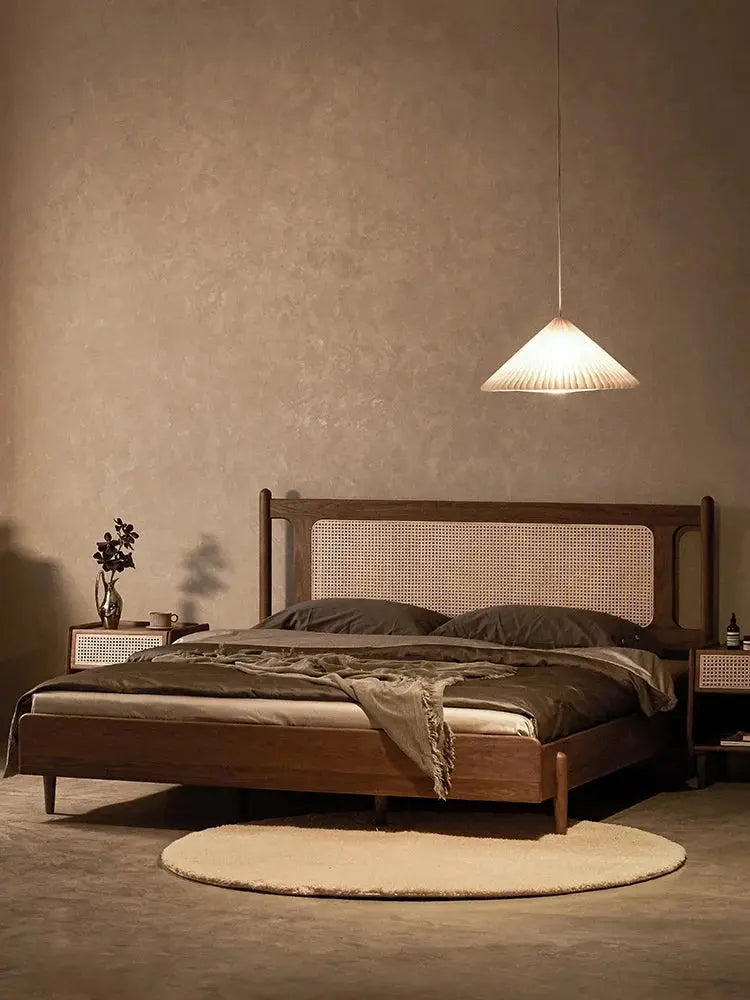
Quick answer: A Japandi bedroom pairs a low, simple bed with natural materials, a muted palette and soft, layered light. Keep surfaces clear, hide storage away, and choose a few well-made pieces in wood, rattan and textured fabric. The result is a room that feels calm the moment you walk in.
Key takeaways
- Start with the bed: low, simple and in natural wood or a soft, textured upholstery.
- Pick bedside tables with drawers or a shelf, so the top stays clear.
- Replace one bright ceiling light with two or three warm, soft light sources.
- Use warm neutrals, with black or dark wood as the accent.
- Choose storage that closes: under-bed storage and drawers beat open shelving.
What is a Japandi bedroom?
A Japandi bedroom is a calm, uncluttered sleeping space that blends Japanese minimalism with Scandinavian comfort. From Japan it borrows low furniture, natural texture and the idea that empty space is restful. From Scandinavia it takes warmth: soft fabrics, pale wood and practical, cosy lighting. If you are new to the style, our guide What Is Japandi Style? covers the principles in more depth.
In the bedroom these ideas matter more than anywhere else. A room with fewer objects, softer light and natural materials is simply easier to switch off in.
Which bed works best in a Japandi bedroom?
A low bed with clean lines works best, either in natural wood or with a soft, textured upholstery. The bed is the largest piece in the room, so it sets the tone for everything else.
Wooden beds for natural warmth
Wood is the most classic Japandi choice. The Mokuzai Bed combines a wooden frame with an integrated rattan headboard, adding organic texture without any decoration. For a darker, more graphic look, the Hidemi Bed is made from solid ash wood with a floating design and a deep black finish, which keeps the room feeling light and airy.
Upholstered beds for softness
If you prefer a softer feel, choose a low upholstered bed in a neutral, textured fabric. The Yukina Bed has a sculptural frame in textured fabric grounded by wooden accents, while the Kuri Bed adds depth with a vertically channelled headboard and a low profile.
Storage beds for smaller rooms
Hidden storage is one of the easiest ways to keep a bedroom clutter-free. The Eclipse Bed has a rounded, low-profile frame with ottoman-style storage underneath, and the Simupo Bed pairs an expansive headboard with a storage compartment beneath the mattress.
Browse every option in our beds collection.
How do the main bed styles compare?
| Bed style | Feels like | Best for | Example |
|---|---|---|---|
| Natural wood with rattan | Warm, organic, classic Japandi | Light, airy rooms | Mokuzai Bed |
| Dark wood, floating frame | Graphic and modern | Contrast with pale walls | Hidemi Bed |
| Soft textured upholstery | Cosy and sculptural | Calm, tonal schemes | Yukina Bed |
| Upholstered with storage | Clean and practical | Smaller rooms | Eclipse Bed |
What bedside tables suit a Japandi bedroom?
Choose compact bedside tables in natural materials that give you somewhere to put things away. A drawer or lower shelf means the top only needs to hold a lamp and a book.
- Drawers for hidden storage: the Kagawa Side Table has smooth, curved forms with neat drawers, in black or white.
- Cane for texture: the Akana Side Table has a woven cane top on a wooden frame, with a lower shelf for books.
- Built-in book storage: the Vintin Side Table is a wooden table with a built-in holder for magazines and books.
Matching tables either side of the bed feel restful and balanced. If your room is narrow, one table and a wall light on the other side works just as well. See more in our side tables collection.
How should you light a Japandi bedroom?
Layer several soft, warm light sources instead of relying on one bright ceiling light. In the evening, low and warm light helps the room feel calm.
Bedside lamps with natural shades
A lamp with a fabric or woven shade softens the light at eye level. The Japandi Bedside Lamp has a handwoven rattan base and a natural fabric shade, in three shade sizes and with warm or white light. The Hyung Light pairs a sculptural base with a soft fabric shade, available with a warm 3000K or cool 6000K light.
Wall lights and pendants
Wall lights free up bedside table space and give a gentle wash of light. The Takah Light is a marble wall sconce with metal accents. For general light, a woven pendant such as the Kazaru Light softly filters light through hand-woven rattan.
Whatever you choose, warm white bulbs feel calmer at night than cool white. Explore more in our lighting collection.
What colours and materials should you use?
Use warm neutrals for walls and bedding, then add natural wood, rattan and one dark accent. This keeps the room calm while giving it depth.
- Walls: warm white, oatmeal or soft greige.
- Bedding: linen or cotton in sand, stone or soft grey.
- Accents: black, charcoal or dark wood in one or two places, such as a bed frame or lamp base.
- Texture: rattan, cane, woven fibres and a soft throw.
A throw at the foot of the bed adds warmth in colder months. The Lagoto Throw comes in five colours and three sizes.
How do you finish the room without clutter?
Add only a few finishing pieces, each with a purpose. A full-length mirror, a natural rug and a single plant or vase are usually enough.
A tall mirror bounces light around and makes the room feel larger: the Okemia Mirror is a full-length mirror in a curved wooden frame. A natural-fibre runner beside the bed, such as the handwoven Harue Rug, softens the floor underfoot. For more ideas on bringing the style into the rest of your home, read Bringing Japandi to Your Home.
Frequently asked questions
What makes a bedroom Japandi?
A Japandi bedroom combines a low, simple bed, natural materials such as wood, rattan and linen, a muted palette of warm neutrals, and very little clutter. Every piece is useful, and soft, warm light replaces bright overhead light in the evening.
Are low beds better for a Japandi bedroom?
Low beds suit the style best because they keep the room feeling open and calm, a nod to traditional Japanese floor sleeping. A low platform or floating frame gives the look without sleeping on the floor.
What colours work in a Japandi bedroom?
Start with warm white, oatmeal, sand and soft grey on the walls and bedding, then add depth with natural wood, charcoal or black accents. Keep strong colour to one or two small pieces, such as a throw or a lamp.
What lighting is best for a Japandi bedroom?
Layer two or three soft sources instead of one bright ceiling light: a woven or fabric-shaded bedside lamp, a wall light or pendant for general light, and warm bulbs throughout. Warm white light feels calmer in the evening than cool white.
How do I add storage without clutter?
Choose furniture that hides things away: a bed with storage underneath, bedside tables with drawers, and a closed cabinet rather than open shelves. Keep only a lamp, a book and one object on each surface.
Can a small bedroom be Japandi?
Yes. Small rooms suit the style well: use a low bed, compact bedside tables, a full-length mirror to bounce light, and pale walls. Leaving floor space clear makes a small room feel larger.

Leave a comment
This site is protected by hCaptcha and the hCaptcha Privacy Policy and Terms of Service apply.