

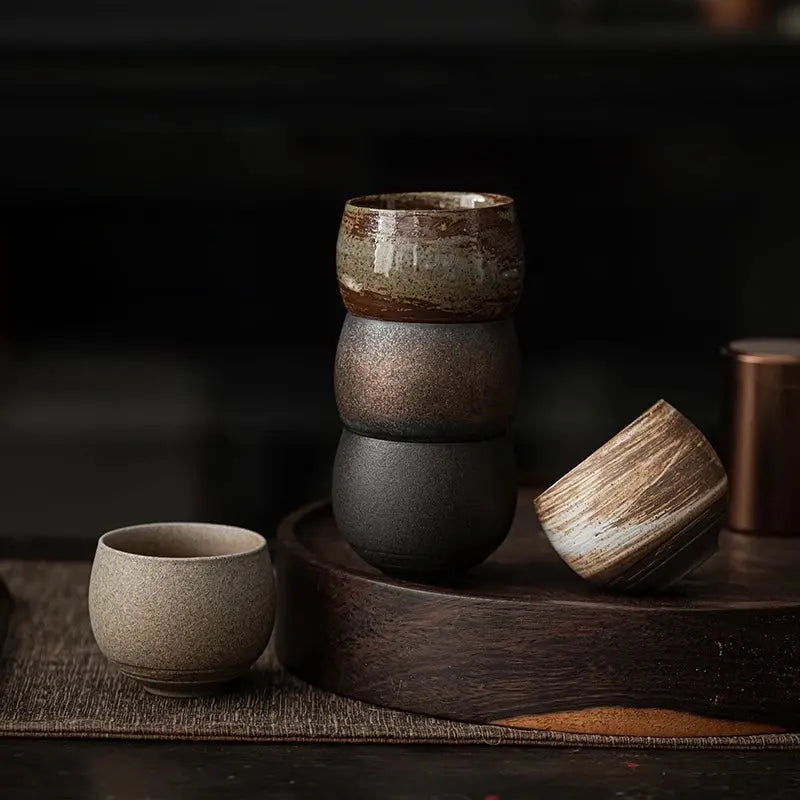
Quick answer: Japanese tea cups are small, usually handleless ceramic cups made for green tea. The everyday cup is the yunomi, a tall cup you hold in both hands; the chawan is the wide bowl used for matcha. Choose a small, handmade stoneware or ceramic cup that feels good in the hand, and pair it with a teapot and tray for a calm daily ritual.
Key takeaways
- Yunomi are for everyday tea; chawan are for whisking matcha; kumidashi are smaller cups for guests.
- Most Japanese tea cups have no handle, because green tea is brewed below boiling point.
- Small is normal: Japanese tea is poured little and often.
- Stoneware and ceramic glazes give each handmade cup its own colour and texture.
- A matching teapot, tray and tea jar turn a cup of tea into a ritual.
What are the main types of Japanese tea cups?
There are three you will meet most often: the yunomi, the chawan and the kumidashi.
The yunomi is the everyday cup. It is taller than it is wide, has thick walls and no handle, and is meant for informal drinking at home or at work. Many Japanese households give each person their own yunomi.
The chawan is a wide, open bowl made for matcha. The shape gives a bamboo whisk room to froth the tea, and it is held in both hands to drink.
The kumidashi is a smaller, wider cup used to serve guests, often as part of a set with matching saucers. Some are made with lids, which keep the tea warm while it is carried to the table.
| Cup | Shape | Used for | Handle |
|---|---|---|---|
| Yunomi | Tall, narrow, thick-walled | Everyday green tea, hojicha | No |
| Chawan | Wide, open bowl | Whisking and drinking matcha | No |
| Kumidashi | Small and wide, often in sets | Serving tea to guests | No |
| Cup and saucer | Rounded, with a saucer | Tea or coffee, Western-style | Yes |
Why don't Japanese tea cups have handles?
Because Japanese green tea is brewed cooler than black tea, the cup is comfortable to hold without one.
Delicate teas such as sencha taste sweeter when the water has cooled a little after boiling, so the cup warms your hands rather than burning them. Holding a cup in both hands is also part of the ritual: you feel the weight, the glaze and the warmth of the tea before you drink. That is why handmade texture matters so much in a Japanese tea cup.
Which Nisu Home cups suit Japanese tea?
Choose a small handleless cup for green tea, and a cup with a handle and saucer if you also drink coffee.
| Piece | Material | Size | Colours | Best for |
|---|---|---|---|---|
| Usagi Glass | Stoneware | 80 ml; 5 cm high, 6 cm across | Terra, Sandstone, Bronze, Charcoal, Oatmeal | Small handleless cups for green tea |
| Karafuru Mug | Ceramic, high-gloss glaze | 110 ml; 6.5 cm high, 6 cm wide | Eight colours, single or set of 4 | Tea, espresso or sake |
| Attaki Mug | Ceramic, with saucer | 260 ml; 7.8 cm high | Brown, Blue, Green, Coffee | A longer cup of tea or coffee |
| Magu Cup | Ceramic, dimpled, gold rim | 14 cm wide, 8 cm high | Amber, Terracotta, Teal, Rose, Beige, Light Blue | Generous mugs of tea or hot chocolate |
Despite its name, the Usagi Glass is made of stoneware, in earthy tones and textures that are as pleasing in the hand as they are to look at. At 80 ml it is the closest to a traditional Japanese cup in our range. The Karafuru Mug has a rounded form that fits comfortably in the hand, with marble-like glazes that make every cup one of a kind; buy it singly or as a set of 4 to mix colours around the table.
If you prefer a handle, the Attaki Mug comes with a matching saucer and layered, earthy glazes, while the Magu Cup is a generously sized mug with a delicate dimpled texture and gold rim.
Do Japanese tea cups come with lids?
Some do, mainly cups used to serve guests or to let tea steep in the cup.
A lid keeps tea hot and holds in its aroma, and lifting it is a small moment of ceremony. For everyday drinking most people use lidless yunomi. If you search for "Japanese tea cups with lids", think about how you drink: lids make most sense when you brew leaves directly in the cup or carry tea from the kitchen to guests.
How do you build a Japanese tea set?
Start with cups, then add a teapot, a tray and somewhere to keep your leaves.
- Teapot and tray: the Ocha Set is an earthy-toned ceramic teapot (250 ml) with a matching drip tray, available as the tray alone or the tray and teapot together. A 250 ml pot fills two or three small cups.
- Tea jar: the Chin Tea Jar is a ceramic jar 12 cm high, with a lidded top and tassel, in white, red, green, yellow or blue.
- Cups: one cup per person, in matching or deliberately mixed glazes.
Mixing glazes is very much in the Japanese spirit. Handmade cups are rarely identical, and a set of cups in related earthy tones looks more natural than a perfectly matched row. Serve on a low table, such as a chabudai, for the full effect.
How do you choose a good Japanese tea cup?
Think about how it feels to hold: the weight, the rim and the glaze matter more than the pattern.
- Size: for green tea, small cups of around 80 to 110 ml keep each pour fresh and hot.
- Walls: thicker stoneware walls hold heat and are comfortable to hold without a handle.
- Rim: a smooth, slightly thin rim feels pleasant against the lip.
- Glaze: handmade glazes vary from cup to cup; that variation is part of the charm.
- Use: if the cup will also hold coffee, a handle and saucer may suit you better.
For the rest of the table, from rice bowls to plates, read our Japanese tableware guide, or browse every piece in our kitchenware collection.
How do you care for handmade tea cups?
Gently, and by hand.
Rinse cups soon after use so tea does not stain the glaze. Wash them with a soft sponge and mild soap, avoid sudden changes of temperature, and let them dry fully before you stack them. Unglazed bases and textured stoneware can hold moisture, so leave them upside down on a rack for a while after washing.
Frequently asked questions
What are Japanese tea cups called?
The everyday Japanese tea cup is a yunomi: a tall, handleless cup for daily green tea. A chawan is the wide bowl used to whisk matcha, and a smaller cup for serving guests is often called a kumidashi or simply a teacup.
Why do Japanese tea cups have no handles?
Japanese green tea is usually brewed below boiling point, so the cup is comfortable to hold. Holding the cup in both hands also lets you feel its warmth and texture, which is part of the pleasure of drinking from handmade ceramics.
What is the difference between a yunomi and a chawan?
A yunomi is a tall, narrow cup for drinking everyday tea such as sencha or hojicha. A chawan is a wide, open bowl made for whisking and drinking matcha, with room for a bamboo whisk to move.
Do Japanese tea cups come with lids?
Some do. A lidded cup keeps tea warm and fragrant while it steeps and is a polite way to serve guests. Most everyday yunomi are lidless, and a small dish or saucer can cover a cup if you want to keep the heat in.
What size should a Japanese tea cup be?
Small. Japanese tea is poured little and often, so cups usually hold far less than a mug. Our Usagi Glass holds 80 ml and the Karafuru Mug 110 ml, both ideal for green tea; choose a larger cup, like the Attaki at 260 ml, for longer drinks.
How do you care for handmade ceramic tea cups?
Rinse them soon after use and wash gently by hand with a soft sponge and mild soap. Avoid sudden temperature changes, such as pouring boiling water into a cold cup, and let them dry fully before stacking.
Are Nisu Home tea cups made to order?
Yes. Every piece is made to order, so timing depends on the piece; its product page shows the current estimate, and you can email hello@nisuhome.com to confirm it before you buy. We send photos and videos before anything ships, and only ship once you are happy.


Leave a comment
This site is protected by hCaptcha and the hCaptcha Privacy Policy and Terms of Service apply.