

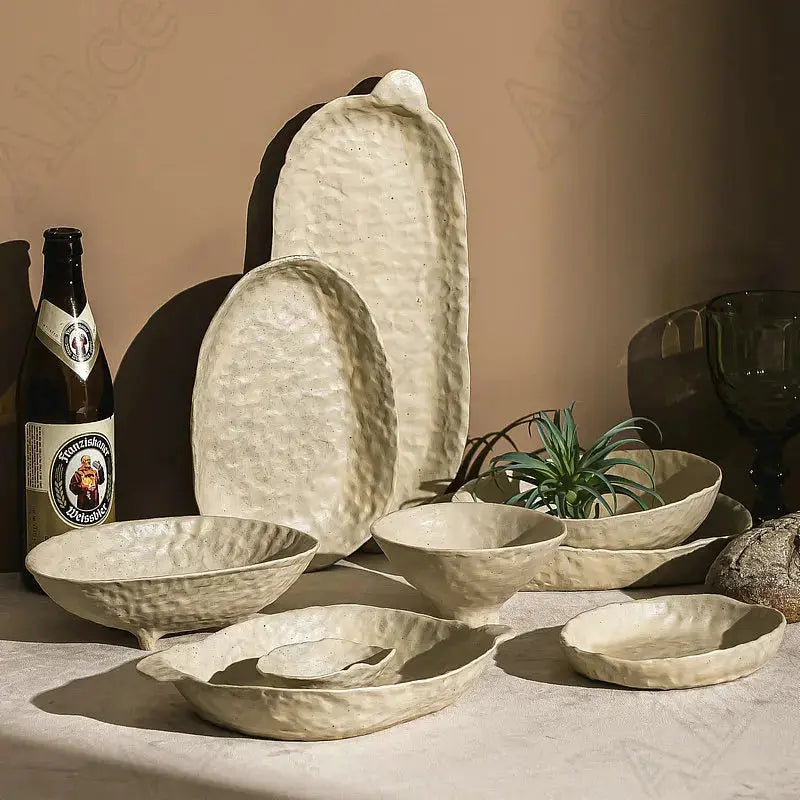
Quick answer: Japanese tableware is a mix of small, purpose-made pieces rather than one matching dinner set: a rice bowl, a soup bowl, a few plates in different sizes, a handleless tea cup and chopsticks on a rest. To set a Japanese table, place rice at the front left, soup at the front right, the main dish at the back and chopsticks across the front, tips pointing left.
Key takeaways
- A traditional Japanese meal follows ichiju sansai: rice, one soup and three dishes, each in its own vessel.
- Bowls do most of the work: chawan for rice, owan for soup, donburi and ramen bowls for one-bowl meals.
- Plates come in a range of sizes, from tiny mamezara to large ozara for sharing.
- Everyday tea is drunk from a handleless cup called a yunomi.
- Mixing shapes and glazes is normal; a calm, earthy palette ties a set together.
What is Japanese tableware?
Japanese tableware is a collection of bowls, plates, cups and small dishes, each chosen to suit a particular food. Instead of one large plate per person, a Japanese meal is served across several smaller vessels, so the table becomes a composition of shapes, colours and textures.
This idea sits at the heart of Japandi style: fewer, better-made pieces, natural materials and quiet colour. Handmade ceramics with uneven glazes are especially loved, an expression of the Japanese appreciation for imperfection. Our guide Japandi vs Wabi-Sabi explains that philosophy in more depth.
What are the main types of Japanese bowls?
The five bowls you will see most often are the chawan, owan, donburi, ramen bowl and kobachi. Each has a job, and together they cover almost every everyday meal.
| Bowl | Used for | Typical feature |
|---|---|---|
| Chawan (rice bowl) | Plain steamed rice | Small and light enough to hold in one hand |
| Owan (soup bowl) | Miso soup and clear soups | Often lacquered wood, sometimes with a lid |
| Donburi | Rice topped with meat, fish or egg | Large and deep |
| Ramen bowl | Noodle soups | Wide and deep, with room for broth and toppings |
| Kobachi | Pickles, salads and side dishes | Small, in many shapes |
For small side dishes, the Tora Bowl is handcrafted ceramic with a marbled texture and a gold rim, in four styles. The Doshim Tableware range includes a small 13 cm bowl and a mini 10 cm dish in organic shapes and earthy tones.
What sizes do Japanese plates come in?
Japanese plates are named by size, from tiny condiment plates to large sharing platters. Having a few of each lets you serve a varied meal without crowding the table.
- Mamezara: tiny plates of roughly 10 cm, for soy sauce, wasabi or a single sweet.
- Kozara: small plates of about 10 to 15 cm, for side dishes and individual portions.
- Chuzara: medium plates of about 15 to 21 cm, the everyday plate for a main dish.
- Ozara: large plates from about 24 cm, for sharing or presenting a whole dish.
Shape matters as much as size. Rectangular plates are traditional for grilled fish and sushi, which is why the Ichi Dishes, long serving plates made for sushi and appetisers, suit a Japanese table so well. The Doshim range adds square and rectangular plates in several sizes, while the Sutekina Plates have a built-in compartment for dipping sauce, ideal for gyoza and sushi.
For larger plates with a handmade feel, the Arigato Plates come in deep sea-blue tones from small to extra large, and the Sara Plates have a textured, organic edge in a crisp white glaze, in 20, 25 and 30 cm.
How do you set a Japanese table?
Set rice on the left, soup on the right and dishes behind, with chopsticks laid across the front. This classic layout follows the ichiju sansai meal of rice, soup and three dishes.
- Rice bowl at the front left.
- Soup bowl at the front right.
- Main dish, such as fish or meat, at the back right.
- Side dishes at the back left and in the centre.
- Chopsticks laid horizontally at the front, tips pointing left, resting on a chopstick rest (hashioki).
- Tea in a cup to the right, within easy reach.
Low tables suit this style of dining. For floor-level meals in the spirit of a traditional chabudai, see our Chabudai Coffee Table.
What are Japanese tea cups called?
An everyday Japanese tea cup is called a yunomi: a tall cup with no handle. Smaller cups called guinomi or ochoko are used for sake.
Handleless cups are comfortable because Japanese green tea is served hot rather than boiling, and holding the cup in both hands is part of the pleasure. The Usagi Glass is a handleless stoneware cup in five earthy tones, and the Karafuru Mug is handcrafted ceramic with a high-gloss, marble-like glaze, sized for tea, espresso or sake.
If you prefer a handle, the Attaki Mug is a handcrafted ceramic cup and saucer with layered glazes. To complete a tea setting, the Ocha Set pairs a ceramic teapot with a matching drip tray, and the Chin Tea Jar keeps loose-leaf tea in a glazed jar with a lidded top.
What is the etiquette for using chopsticks?
Rest chopsticks on a hashioki between bites, and never stand them upright in rice or pass food from chopstick to chopstick. Both of those are associated with funerals in Japan.
- Don't stand them in rice (tsukitate-bashi).
- Don't pass food chopstick to chopstick: place it on the other person's plate instead.
- Don't spear food or point at people with chopsticks.
- Don't hover over dishes while deciding what to take.
- Do use the rest: lay chopsticks on the hashioki when you pause.
The Tetsu Chopsticks come in sets of five in five colours, from classic black to soft light blue.
How do you build a wabi-sabi or Japandi tableware set?
Start with a calm, earthy palette, choose a few versatile pieces, and let shapes and glazes vary. A Japandi table should feel collected rather than matched.
- Start small: a rice bowl, a soup bowl, two plate sizes and a tea cup per person.
- Mix materials: glazed ceramics with wood, stone or bamboo. The Nakuti Cutlery, for example, pairs stainless steel with bamboo handles.
- Vary the glazes: handmade pieces with uneven, layered finishes look best side by side.
- Keep colour quiet: sand, charcoal, cream and deep indigo, with one or two bolder accents.
- Care for handmade pieces: check each product's care guide, and keep pieces with gold rims, such as the Tora Bowl, out of the microwave.
Browse the full range in our tableware collection, and for the wider style, read What Is Japandi Style?
Frequently asked questions
How do you set a Japanese table?
Place the rice bowl at the front left and the soup bowl at the front right. Put the main dish at the back right and smaller side dishes at the back left or centre. Lay the chopsticks horizontally in front of the bowls, tips pointing left, on a chopstick rest.
What are the main types of Japanese bowls?
The most common are the chawan (rice bowl), the owan (soup bowl, often lacquered), the donburi (a large bowl for rice topped with other food), the ramen bowl, and small kobachi bowls for side dishes and pickles.
What are Japanese tea cups called?
An everyday Japanese tea cup is a yunomi: a tall, handleless cup, usually ceramic. Wider, shallower cups are used for green tea served to guests, and small cups called guinomi or ochoko are used for sake.
Why do Japanese tea cups have no handles?
Japanese green tea is traditionally served hot but not boiling, so a handleless cup is comfortable to hold, and cradling the cup in both hands is part of the ritual. Cups with handles are now common too, especially for coffee.
What is considered rude with chopsticks in Japan?
Never stand chopsticks upright in rice or pass food from one pair of chopsticks to another, as both are linked to funeral rites. Also avoid pointing with them, spearing food, or hovering over dishes while you decide. Rest them on a chopstick rest between bites.
Should Japanese tableware match?
No. A Japanese table often mixes shapes, sizes, glazes and materials, chosen to suit each dish and the season. Keeping to a calm, earthy palette makes a mixed set feel deliberate.

Leave a comment
This site is protected by hCaptcha and the hCaptcha Privacy Policy and Terms of Service apply.