

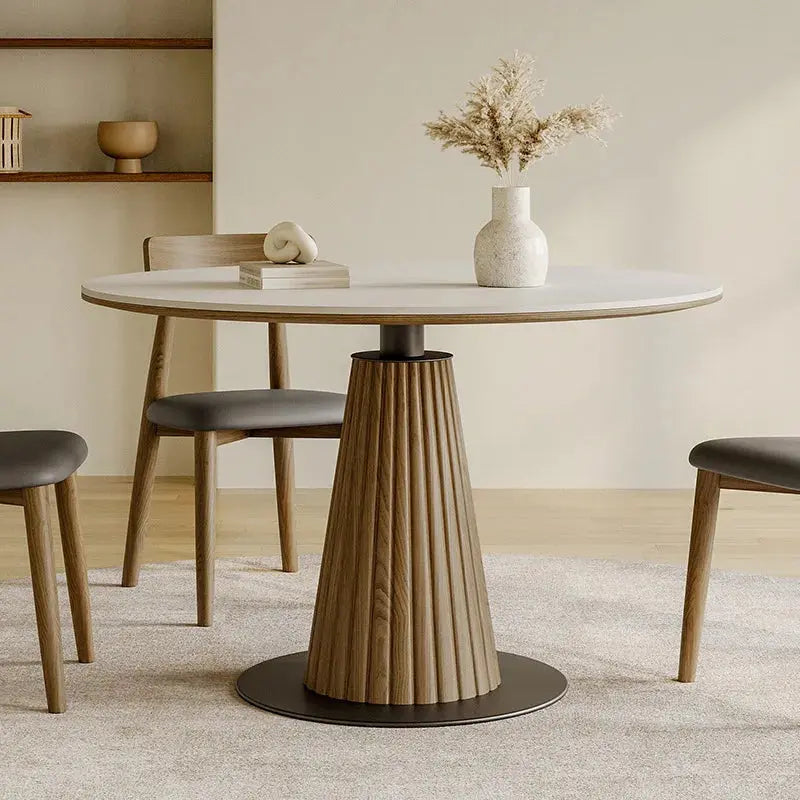
Quick answer: A Japandi dining room combines a simple table in wood or stone, comfortable chairs in natural materials, one soft pendant light and a natural-fibre rug, all in a calm, neutral palette. Size the table to about 60 cm per person, hang the light 75 to 85 cm above it, and keep the surfaces clear.
Key takeaways
- Start with the table: its shape and size set the whole room.
- Allow about 60 cm per person and 90 cm of space behind each chair.
- Choose chairs in natural wood, rattan, cane or soft fabric; they don't all have to match.
- Hang one woven or fabric pendant 75 to 85 cm above the table.
- Use a rug that reaches about 60 cm beyond the table on every side.
What is a Japandi dining room?
A Japandi dining room is a calm, uncluttered space where Japanese simplicity meets Scandinavian comfort. Low visual clutter, honest materials and soft light make it a room people want to linger in after a meal. If you are new to the style, our guide What Is Japandi Style? explains the principles.
In practice, it comes down to four pieces chosen well: the table, the chairs, the light and the rug.
Which dining table works best in a Japandi dining room?
A table with a simple form and a natural surface works best: solid wood, stone or concrete, on a sculptural base or clean legs. Pick the shape to suit your room first, then the size to suit your household.
Round tables for square rooms and smaller spaces
Round tables feel sociable and soften a room full of straight lines. The Ichiro Dining Table sits on a sculptural, walnut-finished conical pedestal in 120 or 160 cm, and the Bashira Dining Table comes in four diameters from 60 to 120 cm, so it works from a breakfast nook to a family dining room.
Rectangular tables for long rooms and bigger gatherings
Rectangular tables seat more people and suit long rooms. The Shoko Dining Table has a sculptural walnut base and tapered edges in 120 to 180 cm. For a statement surface, the Nakamura Dining Table pairs a slate-grey concrete top with warm solid wood supports in seven lengths up to 380 cm, and the Teruo Dining Table has a marble top in black or white.
See every shape and size in our dining tables collection.
What size dining table do you need?
Allow about 60 cm of table edge per person, plus around 90 cm between the table and the wall so chairs can pull out comfortably.
| Seats | Round (diameter) | Rectangular (length) |
|---|---|---|
| 2 | About 70 to 90 cm | About 80 to 100 cm |
| 4 | About 100 to 120 cm | About 120 to 140 cm |
| 6 | About 120 to 150 cm | About 160 to 180 cm |
| 8 | About 150 to 180 cm | About 200 to 240 cm |
These are guides rather than rules: chairs with arms need a little more room, and slim chairs a little less. Measure your room, take off 90 cm on each side where people will sit, and the space left is your maximum table size.
How do you choose Japandi dining chairs?
Choose chairs that are comfortable for long meals and made from natural materials: wood, rattan, cane, linen or soft upholstery in neutral tones.
- Woven backs for texture: the Akane Chair has a woven rattan backrest in natural wood, walnut or black, and the Hinata Chair pairs a handwoven rattan back with an upholstered seat and brass-tipped legs.
- Soft upholstery for comfort: the Risa Chair, one of our most-loved pieces, comes in beige or dark green with oak or dark oak legs, and the Hiroshi Chair is upholstered in breathable flax in eight colours.
- Warm wood: the Yubi Chair has a sturdy pine frame with a gently curved backrest and a warm natural finish.
Chairs don't all have to match. Two styles that share a material or tone, such as wood with natural fabric, look relaxed and considered. Browse more in our chairs collection.
What lighting works over a Japandi dining table?
A single pendant in a natural material, hung 75 to 85 cm above the table top, gives the warm, focused glow Japandi rooms rely on. As a guide, pick a shade about half to two thirds the width of your table, or hang two or three smaller pendants in a row over a long table.
- Woven rattan: the Kazaru Light is a leaf-like hand-woven rattan pendant from 30 to 60 cm, and the Utsu Light is a tiered rattan pendant with black edges in 40, 50 or 60 cm.
- Larger tables: the Shinto Light, a Japanese-inspired woven pendant, comes in 40 to 80 cm, and the Origan Light in eight sizes from 30 to 100 cm.
- A softer modern look: the Lonian Light suspends glass globes for a warm, diffused glow.
Warm white bulbs keep the mood relaxed in the evening. See more in our lighting collection.
Do you need a rug under a dining table?
A rug softens sound and defines the dining area, but it must be large enough: about 60 cm bigger than the table on every side, so chairs stay on it when pulled out.
Flat, durable weaves are easiest to keep clean under a table. The Junya Rug has a textured geometric pattern in neutral tones in five sizes up to 240 × 340 cm, large enough for most six-seater tables, and the handmade Initoma Rug comes in sizes up to 200 × 290 cm.
How do you style a Japandi dining table?
Keep the table almost empty: one vase, bowl or a few stems is enough. Let the materials do the decorating.
- One centrepiece: a sculptural vase with a single branch or a few dried stems.
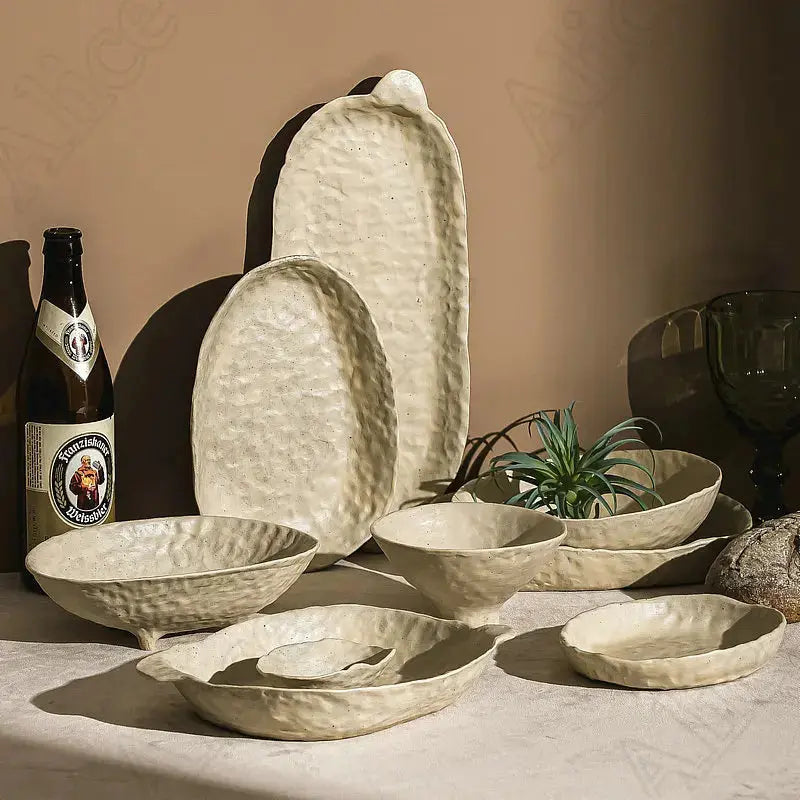
- Handmade tableware: mixed ceramic plates and bowls in earthy glazes. Our Japanese tableware guide explains how to build a set.
- Linen, not plastic: a linen runner or simple placemats in sand or charcoal.
- Clear sideboard: closed storage keeps everyday clutter out of sight.
Frequently asked questions
What makes a dining room Japandi?
A Japandi dining room pairs a simple wooden or stone table with comfortable chairs in natural materials, one soft pendant light over the table, a natural-fibre rug and a calm, neutral palette. Surfaces stay clear, with perhaps one vase or bowl as a centrepiece.
What size dining table do I need for 6 people?
Allow about 60 cm of table edge per person. A rectangular table of around 180 cm by 90 cm seats six comfortably, and a round table of about 120 to 150 cm across seats four to six. Leave roughly 90 cm between the table and walls so chairs can pull out.
Is a round or rectangular dining table better?
Round tables suit square rooms and smaller spaces, feel sociable and have no corners to bump into. Rectangular tables suit long rooms, seat more people and are easier to extend for guests. Choose the shape that echoes your room.
What lighting works best over a Japandi dining table?
A pendant in a natural material, such as woven rattan, linen or paper, hung about 75 to 85 cm above the table top. As a guide, choose a shade roughly half to two thirds of the table width, or use two or three smaller pendants over a long table.
Should a dining room rug be bigger than the table?
Yes. Choose a rug that extends about 60 cm beyond the table on every side, so the chairs stay on the rug when pulled out. Flat-woven natural fibres such as jute are the easiest to keep clean under a table.
Do Japandi dining chairs have to match?
No. Matching chairs feel calm and formal, but mixing two chair styles or colours around one table works well in Japandi rooms if they share a material or tone, such as all wood with natural fabric.

Leave a comment
This site is protected by hCaptcha and the hCaptcha Privacy Policy and Terms of Service apply.