

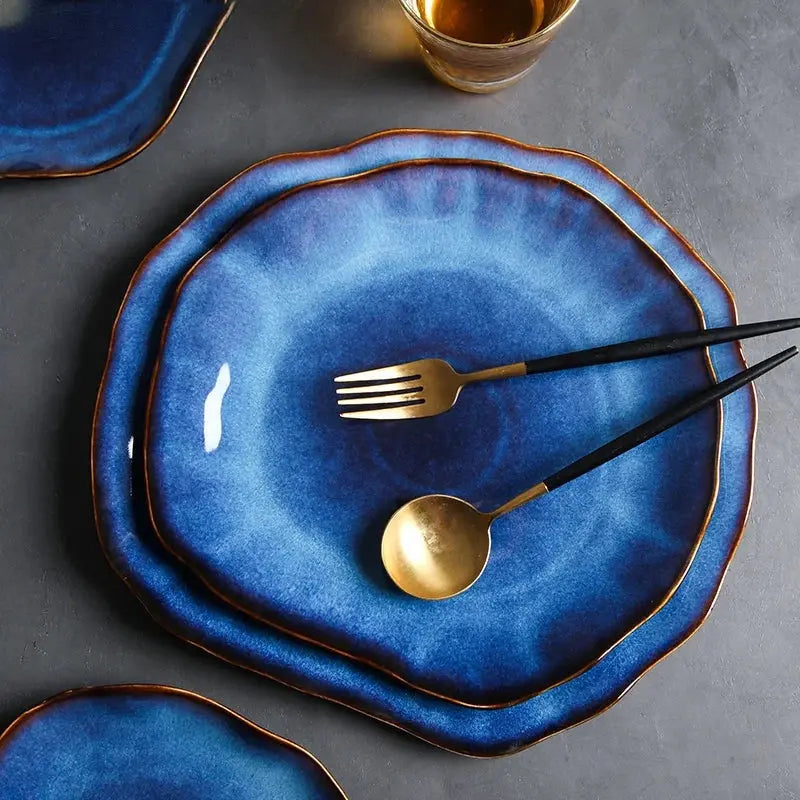
Quick answer: Wabi-sabi plates are ceramic pieces that show the hand of the maker: organic edges, uneven glazes and earthy colours. To build a wabi-sabi dinnerware set, choose a shared colour family and finish, then mix shapes and sizes, from dinner plates and bowls to small dishes and rectangular serving plates, rather than buying one perfectly matched set.
Key takeaways
- Wabi-sabi values imperfection, natural texture and quiet, earthy colour.
- A good set shares a mood, not a pattern: keep the palette consistent and vary the shapes.
- Small dishes, compartment plates and rectangular plates give the table a Japanese feel.
- Glaze, colour and texture vary from piece to piece in handcrafted ceramics; that is the point.
- Most handcrafted plates last longest when washed by hand.
What does wabi-sabi mean for tableware?
It means choosing pieces that look made rather than manufactured.
Wabi-sabi is a Japanese way of seeing beauty in things that are simple, natural and a little imperfect. On the table, that shows up as plates with irregular rims, glazes that pool and change colour, stone-like or matte surfaces, and muted tones taken from clay, sand, ash and sea. No two pieces need to be identical, and food tends to look more natural on them than on bright white porcelain. If you are still deciding how wabi-sabi differs from Japandi, our post on Japandi vs wabi-sabi explains the two styles side by side.
How do you build a wabi-sabi dinnerware set?
Pick a palette first, then fill in the shapes you actually eat from.
- Choose a colour family. Earthy browns and stone tones, deep blues, or white and off-white all work. Two related families, such as stone and indigo, can sit together happily.
- Start with everyday pieces. A plate and a bowl for each person covers most meals.
- Add small dishes. Little dishes for soy sauce, pickles and sides are the heart of a Japanese table.
- Add one or two serving plates. A long or wide rectangular plate is ideal for grilled fish, sushi or sharing starters.
- Mix shapes deliberately. Round, square and rectangular pieces together look relaxed and considered.
- Build over time. A wabi-sabi set never has to be finished; adding a piece at a time suits the style.
Which Nisu Home plates suit a wabi-sabi table?
Look for organic shapes, textured or matte glazes and earthy or sea-inspired colours.
| Piece | Look | Shapes and sizes | Care |
|---|---|---|---|
| Doshim Tableware | Organic shapes, earthy tones, handcrafted design | Small bowl, mini dish, square and rectangular plates up to an extra-long 34 cm plate, or the entire set | Hand wash only |
| Sara Plates | Textured, organic edge like natural stone; crisp white glaze | 20, 25 or 30 cm | Dishwasher safe; hand washing recommended |
| Arigato Plates | Handmade; deep-sea blue tones with a blue rim | Small to extra large, singly or in sets of 2, 3 or 4 | Dishwasher safe; hand washing suggested |
| Sutekina Plates | Textured, matte glaze with a compartment | 18.5 x 17.5 cm, in four colourways | Hand wash; avoid the dishwasher |
| Ichi Dishes | Earthy stone finishes with glazed accents | Serving dishes in several colours, some in a large size | Hand wash; avoid the dishwasher |
| Tora Bowl | Marbled texture with a gold rim | Four shapes, from 15.5 to 20.5 cm across | Hand wash strongly recommended |
The Doshim Tableware range is the easiest way to build a full wabi-sabi set from one family. Its pieces share organic shapes and earthy tones, and the range runs from a small 13 cm bowl and a mini dish to square, deep, wide and extra-long rectangular plates, so you can buy exactly the shapes you need or choose the entire set.
For a lighter table, the Sara Plates pair a crisp white glaze with a textured edge that mimics natural stone. They give food a clean background while keeping the handmade feel. The Arigato Plates are handmade in rich blue tones inspired by the deep sea, in four sizes from small to extra large, which makes them a natural choice if you want a set built around one colour.
Which small dishes and bowls complete the set?
Small pieces matter more than you might expect, because a Japanese meal is served in many small portions.
The Sutekina Plates have a compartment designed for dumplings, sushi or any appetiser with a dipping sauce, finished in a textured, matte glaze. The Ichi Dishes combine stone-like finishes with vibrant glazed accents, which makes sushi or appetisers stand out without fuss. For rice, noodles or salads, the Tora Bowl has a marbled texture and a gold rim, in four shapes from deep to shallow.
For more on which bowl is used for what, and how a Japanese table is laid, read our Japanese tableware guide.
Should wabi-sabi plates match?
They should feel related, not identical.
The easiest rule is to keep one thing constant and let the rest change. Keep the colour family the same and vary the shapes, or keep the shape the same and mix two or three glazes. A row of slightly different blue plates looks deliberate; so does a table of stone-toned rectangles, squares and bowls. What tends to look accidental is mixing high-gloss bright colours with matte earthy pieces, so keep finishes close.
| Approach | Keep the same | Let it vary | Good starting point |
|---|---|---|---|
| One family | Range and palette | Shapes and sizes | Doshim Tableware |
| One colour | Colour | Size, from small to extra large | Arigato Plates |
| Light and texture | White glaze | Plate sizes, with textured dishes alongside | Sara Plates with Ichi Dishes |
| Mixed table | Muted, earthy tones | Ranges, shapes and glazes | Doshim plates with Sutekina and Tora |
How do you style a wabi-sabi table?
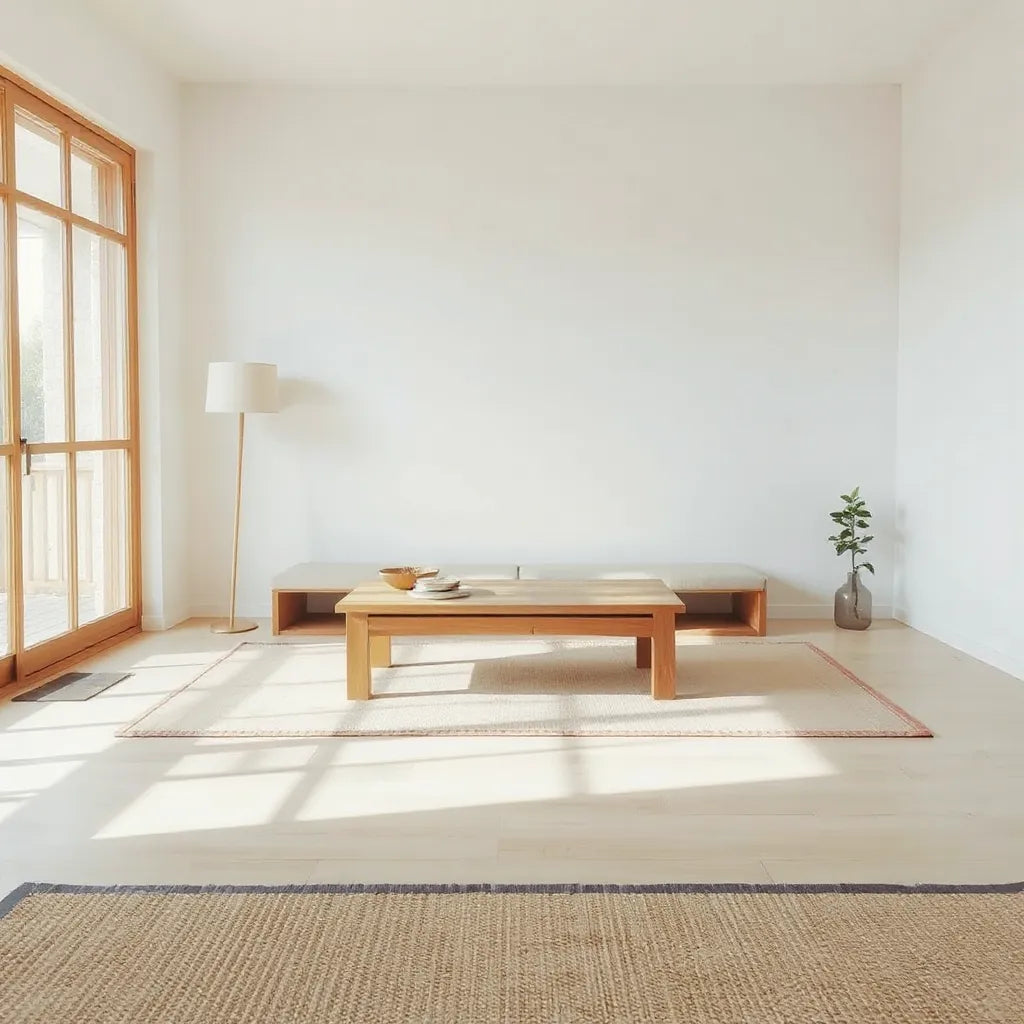
Use few pieces, natural materials and plenty of space.
- Leave space. Food on a plate with room around it looks calmer than a crowded plate.
- Layer natural textures. A wooden table, linen napkins and a ceramic teapot suit handcrafted plates.
- Serve tea in the same spirit. The Ocha Set is an earthy-toned ceramic teapot and drip tray with a raw, natural look; our Japanese tea cups guide covers the cups to go with it.
- Keep the centrepiece simple. One branch in a vase is enough.
Browse every plate, bowl and cup in our kitchenware collection.
How do you care for handmade plates?
Gently, and usually by hand.
Even where a plate is dishwasher safe, hand washing keeps glazes, textured edges and gold rims looking their best. Use warm water, mild soap and a soft sponge, and avoid abrasive scourers and harsh detergents. Dry pieces with a soft cloth before stacking them, and put a cloth or paper between textured plates so their edges do not rub. Check each product page for its own care guide, as finishes differ.
Frequently asked questions
What are wabi-sabi plates?
Wabi-sabi plates are ceramic plates that celebrate imperfection: uneven edges, varied glazes, visible texture and earthy colours. Instead of a perfectly matched factory set, each piece looks a little different, which gives the table a calm, natural feel.
Should a wabi-sabi dinnerware set match?
Not exactly. A wabi-sabi set usually shares a mood rather than a pattern: related earthy or muted tones, similar textures and a mix of shapes. Keep one or two things consistent, such as colour family or finish, and let the rest vary.
What pieces do I need for a wabi-sabi dinnerware set?
Start with a dinner plate and a bowl for each person, then add a few small dishes for sauces and sides and one or two larger serving plates. Rectangular and square plates, compartment plates and small dishes are what make a table look Japanese rather than Western.
Are wabi-sabi plates dishwasher safe?
It depends on the piece, so check each product page. Our Arigato and Sara plates are dishwasher safe, though hand washing is recommended to keep them looking their best; Doshim, Sutekina and Ichi pieces should be washed by hand only.
How do you care for handmade ceramic plates?
Wash them by hand with mild soap, warm water and a soft sponge, avoid abrasive scourers and harsh detergents, and dry them before stacking. Treat textured edges and gold rims gently, as they are the details that give each piece its character.
Can I return a handmade plate if it looks different from the photo?
Small differences in glaze, colour and texture are part of handmade ceramics, so they are not a fault. Returns are accepted only if an item arrives damaged or defective and is reported within 48 hours, which is why we send photos and videos before anything ships.
Are Nisu Home plates made to order?
Yes. Every piece is made to order, so timing depends on the piece; its product page shows the current estimate, and you can email hello@nisuhome.com to confirm it before you buy. We send photos and videos before shipping, and the order ships only once you approve them.


Leave a comment
This site is protected by hCaptcha and the hCaptcha Privacy Policy and Terms of Service apply.