

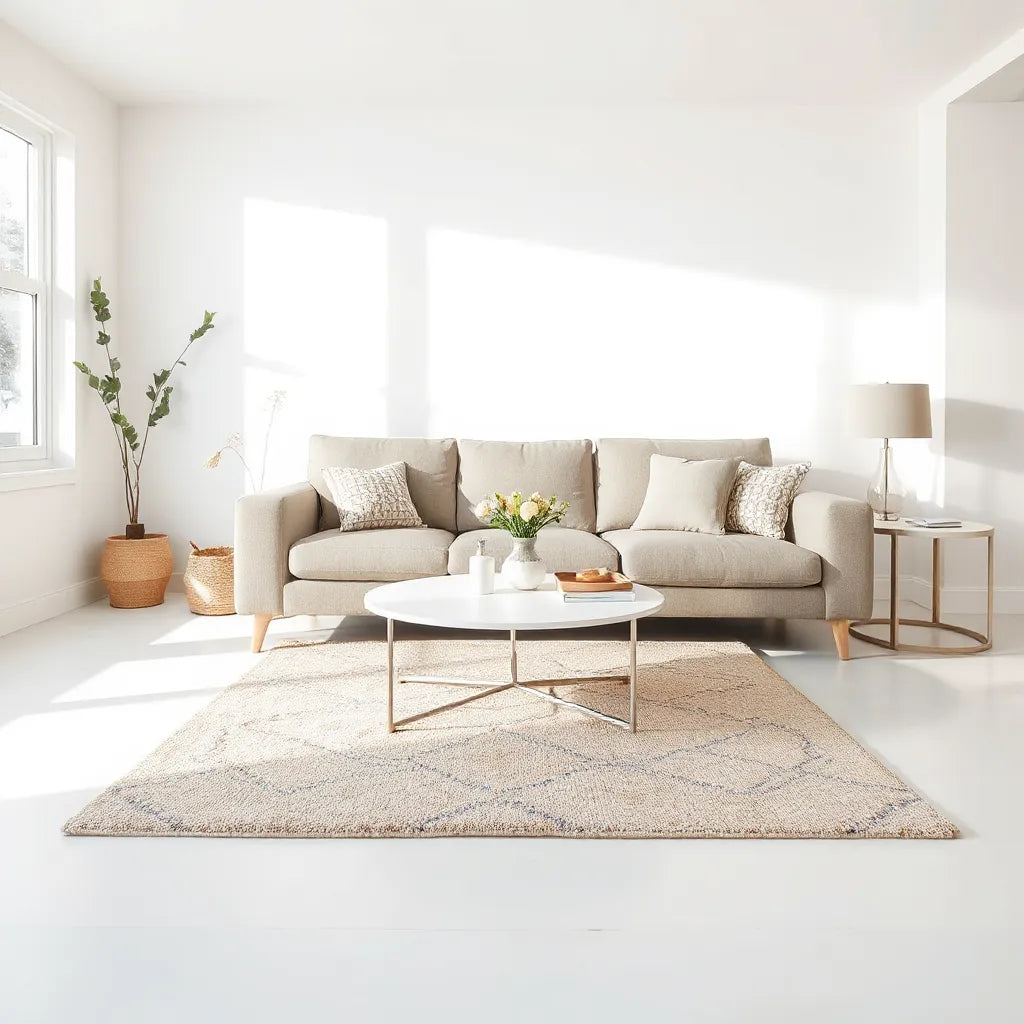
Updated on: 2026-07-15
Rugs do more than decorate. They define a space, improve comfort, and help tie furniture into a cohesive design. Choosing the right size, material, and style can prevent common issues like uneven wear and visual clutter. This guide explains practical selection rules, care considerations, and styling methods that work across modern and classic interiors.
Table of Contents
- 1. Myths vs. Facts
- 2. Personal Experience
- 3. How to Choose the Right Rugs for Your Home
- 4. Sizing and Layout Rules That Prevent Design Mistakes
- 5. Materials, Fibers, and Care Planning
- 6. Style and Color Strategies That Look Intentional
- 7. Final Thoughts & Takeaways
Myths vs. Facts
- Myth: Rugs are only for living rooms. Fact: Rugs also work in bedrooms, dining areas, hallways, and even entry spaces when you choose the right construction and pile height.
- Myth: Any rug size will “fit.” Fact: Correct proportions create balance. When a rug is too small, furniture connections look disconnected.
- Myth: Natural fibers are always delicate. Fact: Many natural options are durable when cared for properly, and the best choice depends on foot traffic and maintenance routines.
- Myth: Patterned rugs hide dust better. Fact: Pattern helps with visual contrast, but fiber type and pile density determine how debris shows over time.
Personal Experience
I used to treat rugs as a finishing step, something placed after furniture. The result was predictable: edges curled, the room looked visually divided, and the overall style felt less coordinated. The turning point was learning to select based on room function first. When I began matching rug size to the seating plan and choosing a fiber suited to daily traffic, the space started to feel calmer and more intentional. Even lighting and wall color looked more balanced once the floor area had a defined foundation.

Room layout arrows show rug sizing and furniture alignment
How to Choose the Right Rugs for Your Home
Rugs should be chosen for how your home functions, not only for appearance. Start with three questions: What is the room’s purpose, how much foot traffic does it receive, and what level of care is realistic for your household?
Match the rug type to the room
Different spaces benefit from different construction. For example, living rooms usually tolerate a wider range of pile heights and materials, while entryways need options that handle frequent movement. If a space will experience regular spills or heavy use, prioritize fibers and finishes that are easier to maintain.
Use the “feel test” in person when possible
Texture matters because rugs influence how the room reads visually and how comfortable it feels underfoot. If you can, compare samples and check how the surface texture reflects light. A plush surface can create warmth, while a lower profile can create clarity and make furniture lines feel crisp.
Consider underlay and stability
Even the most attractive rugs can look misaligned if they shift. A suitable rug pad improves stability and protects flooring. It can also help reduce friction, which supports cleaner edges and steadier daily movement.
Anchor the design with one dominant element
Many design problems come from having too many focal points. Choose one dominant element and let the rug support it. If your sofa fabric is highly textured, a simpler rug pattern can reduce visual competition. If your furniture is more neutral, a rug can introduce warmth through color or motif.
To connect styling choices across your space, some customers look for furniture pairings that share a similar aesthetic direction. For instance, modern seating lines can work well beside warm neutral rugs when the upholstery tone complements the floor palette. If you want ideas for a cohesive look, you can explore seating options such as Izumi chair styles and build your rug selection around the same color temperature.
Sizing and Layout Rules That Prevent Design Mistakes
Rugs are frequently returned or replaced because of sizing errors. The easiest way to avoid this issue is to treat the rug as a boundary that organizes furniture. Instead of focusing only on where the rug “starts and ends,” plan how it interacts with the legs of your furniture.
Living room seating plan
In most living rooms, the goal is to ensure furniture legs sit on the rug. A common approach is to place the front legs of the sofa and chairs on the rug. This creates a stable visual group. If you have a larger sectional, extend the rug so it remains centered under the seating area rather than slipping to the edge of the room.
Dining areas and clearance
For dining spaces, rugs must accommodate chair movement. Choose a rug size that allows chairs to pull back without catching on edges. A rug that is too narrow will create a frequent trip hazard and will visually compress the dining zone.
Bedrooms and bed placement
In bedrooms, rugs can frame the bed and soften the transition from floor to bedding. A practical rule is to select a rug wide enough that it extends beyond the sides of the bed, at least enough for the first step when getting in and out.
Hallways and narrow paths
In hallways, proportions matter. Choose a rug width that aligns with the walking path and does not feel squeezed. If the hallway is long, repetition and pattern consistency can add rhythm. If your hallway lighting is dim, lighter rug tones can help reflect light and prevent a heavy look.

Diagram shows rug edges aligned with seating and chair clearance
Materials, Fibers, and Care Planning
Material selection influences comfort, appearance, and maintenance. Before purchasing rugs, identify what you want to optimize: stain resistance, softness, visual texture, or longevity under daily foot traffic.
Common rug fibers and what they imply
Many homeowners choose between natural fibers and synthetic options. Natural fibers can offer distinct texture and an organic look. Synthetic fibers often provide consistency, strong performance, and easier maintenance. The best choice depends on your tolerance for upkeep and the real conditions of your household.
Pile height and everyday performance
Pile height affects how a rug feels and how it handles debris. Lower pile rugs generally maintain a cleaner look and can be easier to vacuum. Higher pile rugs can feel more luxurious, but they may show footprints and require more deliberate cleaning to keep the surface even.
Color stability and fade resistance
Sunlight can impact the way color ages. When a rug sits near windows, prioritize fade-resistant selection and use curtains or blinds when needed. This approach helps preserve the original tone and reduces uneven aging across the rug.
Cleaning routines that protect the rug’s appearance
- Vacuum regularly with a suitable setting to protect fiber integrity.
- Use spot cleaning promptly. Blot rather than scrub to avoid spreading.
- Rotate the rug periodically if it receives uneven light or foot traffic.
- Keep dampness controlled. Excess moisture can damage underlayers and backing.
If you are building a cohesive home style, remember that rug care is part of long-term value. Many interiors pair rugs with furniture that has clean lines and stable finishes. When selecting bar or dining seating, consider matching the floor tone to the chair palette so you do not rely on the rug to do all visual work. For example, you can coordinate with Honin coffee table and choose a rug that complements the table’s finish warmth.
Style and Color Strategies That Look Intentional
The most effective rug designs look deliberate rather than accidental. You can create this effect through thoughtful color temperature, pattern scale, and harmony with wall and furniture tones.
Start with a color temperature match
Rooms typically lean warm or cool based on wood tones, metal finishes, and upholstery. Choose a rug that aligns with the dominant temperature. Warm-toned rugs complement honey and walnut finishes, while cooler tones often suit lighter woods and gray metal accents.
Use pattern scale to control visual weight
Large patterns can add energy, but they also attract attention. Small patterns can provide subtle texture and a calmer look. If your furniture already has strong visual textures, consider reducing pattern intensity to prevent the room from appearing busy.
Match the rug’s tone to the largest surfaces
Look at the sofa, bed, and main curtains or blinds. The rug should connect to these large surfaces through shared undertones. This is especially important when your furniture is a neutral shade. Neutrals can be warm, cool, or muted, and the rug must reflect that nuance.
Consider contrast for definition
Even if the rug and furniture colors are in the same family, you can still create definition using contrast. Contrast can come from value differences, pattern clarity, or fiber texture. A slightly darker rug can ground a room with light walls. A lighter rug can brighten a space with deeper furniture tones.
Some homeowners use rugs to unify multiple seating styles in open-plan layouts. When you have different pieces across the same floor area, aim for continuity. Keep one or two color signals consistent and let the rug provide the connective layer. If you are choosing chairs for an adjacent dining or café-like nook, selecting a cohesive chair direction can simplify your rug plan. You may find inspiration in Min chair styling, then select a rug that supports that look through complementary undertones.
Final Thoughts & Takeaways
Rugs create structure. They define zones, soften transitions, and make furniture appear more intentional. To select confidently, plan for room function first, then choose size with furniture interaction in mind. Decide on materials and pile height based on traffic and maintenance, not only on appearance. Finally, connect the rug’s color temperature and pattern scale to the dominant surfaces in the room.
When these elements align, the result is not only more attractive interiors but also a more durable design choice. Choose with clarity, measure before you commit, and prioritize stability with an appropriate underlay. Your space will look more grounded from day one.
Q&A Section
How do I determine the correct rug size for my living room?
Plan around furniture legs and visual grouping. In many living rooms, placing the front legs of the sofa and chairs on the rug creates a cohesive seating zone. Measure the seating area first, then choose a rug large enough to keep the group balanced. If your rug is consistently sliding or looks truncated, increase the size and ensure the rug is centered under the seating.
What rug material is best for high-traffic areas?
Look for fibers and constructions that match your cleaning routine and foot traffic level. Lower pile rugs often maintain a neater look and can be easier to vacuum. For households with frequent movement, prioritize durability and fade resistance where sunlight is present. If spills are likely, choose options that are easier to blot and spot-clean without damaging the surface.
Should I use a rug pad, and how does it affect the final look?
A rug pad is often essential for comfort and stability. It reduces slipping, protects flooring, and helps the rug sit flatter. The right pad can also improve the way the rug lays at the edges, which influences how clean and intentional the room feels. When the rug is stable, the entire design reads more precise.
About the Author Section
Nisu Home
Nisu Home is a home styling and interior selection authority focused on creating comfortable, well-coordinated spaces. The team brings expertise in design principles, material performance considerations, and practical home integration. Readers rely on Nisu Home for guidance that supports confident purchasing decisions. Thank you for reading.
Disclaimer: This article provides general guidance on selecting and maintaining rugs. Results depend on product construction, home conditions, and maintenance practices. Always follow the care instructions provided by the rug manufacturer.

Leave a comment
This site is protected by hCaptcha and the hCaptcha Privacy Policy and Terms of Service apply.