

Updated on: 2026-07-15
Rustic lighting fixtures can add warmth, texture, and architectural character to nearly any interior. When selected thoughtfully, they also improve daily usability by balancing brightness, glare, and placement. This guide explains how to choose finishes, shapes, and mounting styles that fit your space. You will also find practical steps for layering light and maintaining a cohesive rustic look across rooms.
1. What rustic lighting fixtures are and why they matter
2. Key benefits of rustic lighting fixtures
3. Step-by-Step Guide to selecting rustic lighting fixtures
3.1 Choose style and materials that match the room
3.2 Get sizing and mounting right
3.3 Plan light layering for comfort and function
3.4 Focus on bulbs, color temperature, and controls
What rustic lighting fixtures are and why they matter
Rustic lighting fixtures are lighting pieces designed to evoke the look and feel of natural materials, traditional craftsmanship, and grounded warmth. The best examples often combine metalwork, aged finishes, wood tones, and textured glass. The result is an atmosphere that feels welcoming without becoming visually cluttered.
In design terms, rustic lighting is not only about aesthetics. It also supports how a space functions day to day. Correct placement can reduce harsh shadows, highlight textures you want to show, and create visual comfort for reading, dining, and conversation. When lighting is layered properly, the room looks intentional, even if the furniture style is mixed or transitional.
Key benefits of rustic lighting fixtures
- Warm visual tone: Many rustic designs naturally produce a cozy ambience that supports relaxation and social spaces.
- Material depth: Textured finishes and layered components add dimension to walls, ceilings, and nearby decor.
- Style flexibility: Rustic elements can pair with modern, farmhouse, industrial, and classic interiors when proportions are consistent.
- Better emphasis on architecture: Directed light can frame wood grain, stone surfaces, and built-in shelving.
- Timeless appeal: Traditional silhouettes and aged finishes are less trend-dependent than purely decorative styles.

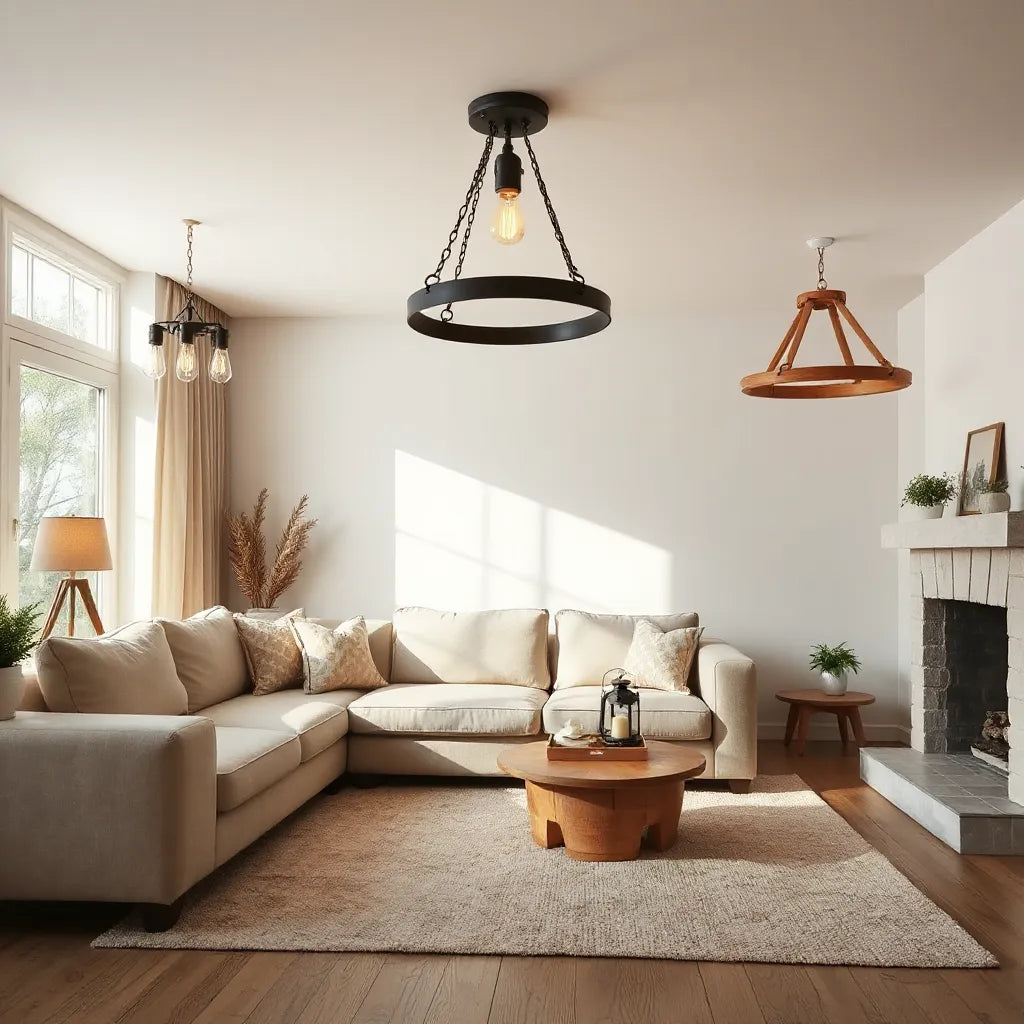
Aged metal, warm glass, textured wood wall accents
Step-by-Step Guide to selecting rustic lighting fixtures
Choose style and materials that match the room
Start with the visual language of the space. Rustic lighting fixtures can range from lightly weathered to fully distressed. Select a direction that aligns with your existing materials, color palette, and architectural lines.
- Match metal finishes: If your room uses black hardware, consider dark metalwork. If you have brass accents, look for warm-toned finishes that do not look overly reflective.
- Coordinate with wood tones: Keep the undertone consistent. Honey and oak-style tones pair well with warm browns and ambers. Greige or cool woods pair better with muted stains and subdued metals.
- Use glass thoughtfully: Clear glass can feel crisp and more contemporary. Frosted or seeded glass adds softness and reduces glare while preserving brightness.
- Preserve proportions: A chunky fixture can anchor a room, but it needs enough visual “space” to avoid appearing oversized.
As a reference point for balance, many interiors benefit from combining one stronger focal light with simpler secondary layers, such as wall sconces or recessed options.
Get sizing and mounting right
Size is one of the most common reasons lighting fails to look cohesive. An oversized fixture can dominate the ceiling plane. An undersized fixture may not provide adequate illumination or may look accidental.
Use these practical guidelines:
- For pendant or hanging lights: Ensure the fixture sits at a comfortable viewing height and maintains proper clearance over dining surfaces or pathways.
- For wall-mounted fixtures: Place them so light is centered at typical eye level or slightly above for flattering coverage.
- For ceiling fixtures: Prioritize scale relative to the room. A low ceiling often benefits from a flush or semi-flush design.
- For multi-light arrangements: Keep spacing consistent and avoid uneven distribution that creates dark corners.
Measure your available mounting height and the distance to nearby visual elements such as shelves, curtains, or artwork. Rustic lighting works best when it respects existing lines.
Luna Light
Plan light layering for comfort and function
Rustic lighting looks most natural when it is layered. Layering means you combine ambient illumination with task and accent lighting, rather than relying on a single overhead source.
- Ambient layer: Use a main ceiling or central fixture to set the overall brightness and tone.
- Task layer: Add targeted light at reading nooks, kitchen prep areas, or work zones. This can be achieved with adjustable lamps, sconces, or directional fixtures.
- Accent layer: Highlight textures such as framed art, beams, stone features, or shelving. Accent light brings out depth and makes rustic materials look richer.
In living rooms, consider pairing a statement light with a secondary source near seating. In dining spaces, use a main fixture that visually anchors the table, then support the room with softer surrounding lamps.
Focus on bulbs, color temperature, and controls
Fixtures often receive the most attention, but bulbs and settings drive perceived comfort. The same rustic shade can feel calm or harsh depending on lamp output and color temperature.
- Choose a warm color temperature: Many rustic interiors benefit from warmer tones that resemble candlelight and natural wood warmth.
- Match brightness to the room: Use sufficient lumens for the area, then soften with diffusing shades when needed.
- Prefer dimming control: A dimmer improves everyday usability. It also helps adjust mood for dinner, relaxation, and entertaining.
- Consider beam and glare: Seeded or textured glass often reduces glare. Directional lighting may require careful placement to avoid eye discomfort.
If you are creating a cohesive look across multiple rooms, select bulbs with consistent color temperature so transitions feel seamless.
Install and maintain for long-term performance
Correct installation protects both safety and visual quality. It also helps rustic materials age gracefully rather than appear neglected.
- Verify compatibility: Confirm voltage requirements, mounting compatibility, and bulb type before final installation.
- Use stable mounting points: Ensure the electrical box is secure and the fixture sits straight to prevent uneven gaps.
- Clean with care: Dust textured surfaces with a soft brush. For metal finishes, use gentle cleaners suited to the finish type to avoid residue.
- Protect delicate components: If the fixture has glass elements, clean without aggressive pressure and avoid abrasive cloths.
Seasonal maintenance improves appearance and ensures performance. When light output seems reduced, check for dust buildup before replacing bulbs.

Layered light zones: ambient glow, task focus, soft accents
FAQ Section
How do I choose rustic lighting fixtures that work with a modern interior?
Select one rustic element as a visual anchor, such as an aged metal finish or textured glass. Keep the rest of the design clean and simple. Consistent proportions and a limited color palette help rustic lighting integrate with modern lines.
What bulb color temperature is best for a rustic look?
Warm color temperatures usually align with rustic interiors because they reinforce a cozy ambience. If dimming is available, warmer bulbs combined with dimming control typically deliver the most comfortable results across daytime and evening settings.
Can rustic lighting fixtures be used in small rooms?
Yes. In smaller rooms, prioritize scale and avoid overly bulky designs. Choose fixtures that provide adequate brightness without dominating the ceiling plane, and rely on layered lighting so the room feels open instead of dim or flat.
How many lighting sources should a room include?
Most rooms feel balanced with at least two layers: one primary light for overall ambience and one secondary source for tasks or accent. If the space is large or has strong architectural features, adding a third layer can enhance depth.
Summary & Final Thoughts
Rustic lighting fixtures offer a practical way to create warmth, depth, and lasting style. By choosing finishes that align with your materials, sizing fixtures correctly, and layering ambient, task, and accent light, you achieve comfort that looks intentional. If you want a starting point for your lighting plan, review options that match your preferred metal tone and glass texture, then build around that focal piece.
Explore Luna Light and refine your rustic lighting strategy with a cohesive, room-by-room approach.
About the Author Section
Jordan Miles is a design and e-commerce content specialist who focuses on interior lighting, material pairings, and practical styling for everyday living. With expertise in Shopify content planning and product storytelling, Jordan helps homeowners make confident choices that improve both appearance and function. Visit Nisu Home for more home design guidance. Thank you for reading.
Disclaimer: This article provides general design guidance and selection tips only. Electrical work and fixture installation should be performed by a qualified professional where required.

Leave a comment
This site is protected by hCaptcha and the hCaptcha Privacy Policy and Terms of Service apply.