

Updated on: 2026-09-16
Home décor for minimalist style is not about having less furniture. It is about choosing pieces that create clarity, comfort, and visual balance. When you focus on proportion, material honesty, and a limited palette, every item earns its place. The result is a space that feels calmer, easier to maintain, and more intentional. This guide explains practical strategies you can apply room by room.
1. The Purpose of Minimalist Home Décor
Minimalist design is often misunderstood as emptiness. In practice, it is a disciplined approach to selection. Home décor for minimalist style aims to reduce distraction and increase usefulness. It uses fewer elements, but it relies on better decisions: cleaner lines, smarter organization, and intentional negative space.
A minimalist home typically feels easier to navigate. Sightlines are clearer. Surfaces look less crowded. Light moves more freely through the room. This does not require a cold aesthetic. Comfort can still be central, especially when textiles, warm wood tones, and supportive seating are chosen thoughtfully.
Minimalism also improves daily life. When items have dedicated storage, there is less visual clutter and less time spent searching for essentials. The home becomes more responsive to the people living in it.
2. Home Décor for Minimalist Style: Myths vs. Facts
-
Myth: Minimal décor must be white and empty.
Fact: Neutral palettes help, but color can exist in controlled amounts and warm undertones. -
Myth: Minimalism means owning only a few items.
Fact: Many possessions can still fit a minimalist approach if they are organized and visually contained. -
Myth: Minimal spaces cannot be comfortable.
Fact: Comfort comes from supportive seating, layered textiles, and proper lighting. -
Myth: Every piece must be identical.
Fact: Cohesion comes from repeating materials, finishes, and proportions, not from uniformity.
3. Core Design Rules That Keep Spaces Minimal
The most effective minimalist spaces follow a few repeatable principles. These rules prevent the common mistake of “starting over” with a new shopping list. Instead, you build a consistent system.
Use a limited palette, then vary texture
Start with two or three primary tones. Add a small supporting shade if it enhances warmth. Then, keep the palette steady while changing texture. For example, matte surfaces can balance subtle sheen in textiles or ceramics.
Prioritize scale and proportion
Minimalism highlights what you choose. If a piece is visually too large, it dominates the room. If it is too small, it looks lost. Measuring key sightlines and door clearances helps you avoid awkward proportions.
Let negative space do real work
Open areas are not “missing.” They are a design feature. Negative space creates breathing room and makes the remaining pieces feel more intentional.
Adopt the one-in, one-out mindset
Minimalism stays stable only when your selection process stays consistent. When you add a new item, remove or store one item that no longer supports your daily routine or aesthetic goal.

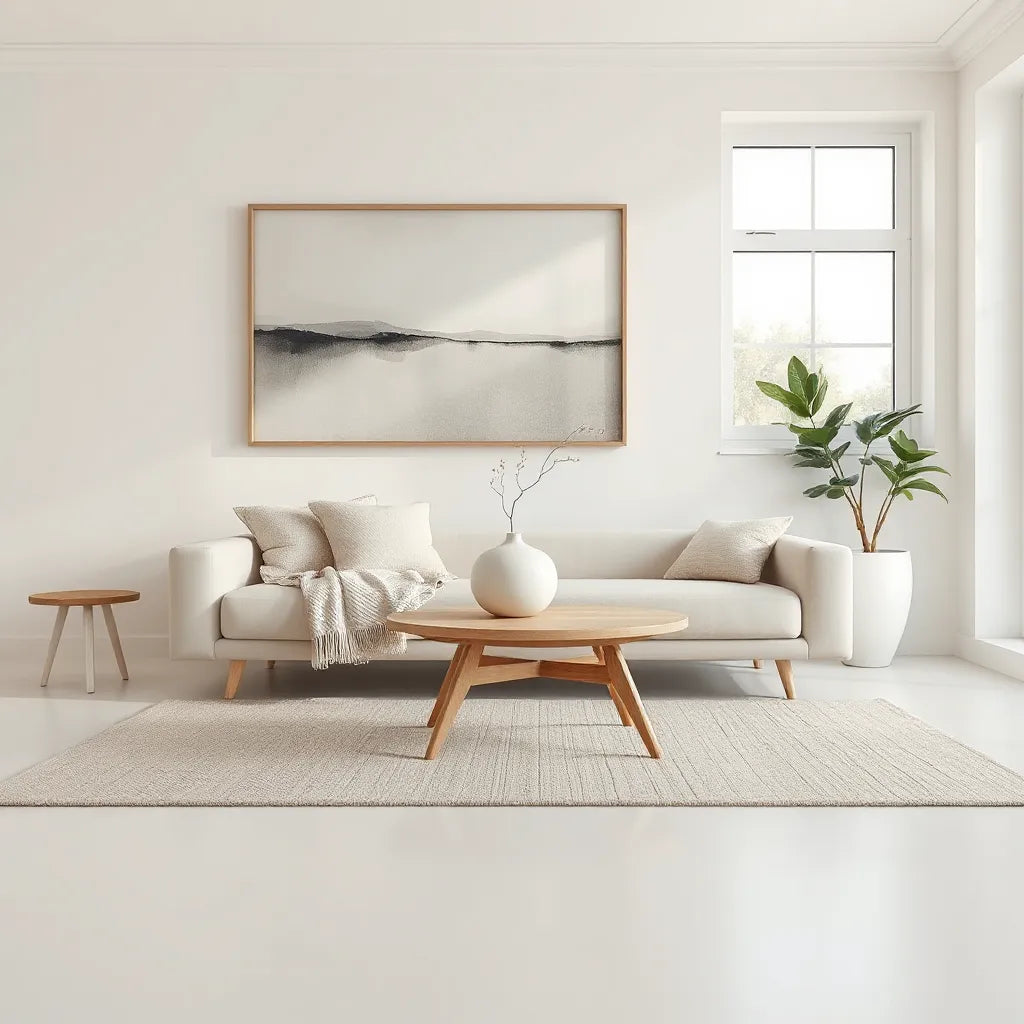
Balanced lines, open space, and layered neutrals
4. Layout and Storage: The Foundation of Calm
Minimalism succeeds or fails based on layout and storage. Visual clutter often comes from items that lack a clear home. When essentials are staged to be put away quickly, surfaces stay calm.
Begin with high-traffic areas. For a living room, focus on the path between seating and the entry point. For a kitchen, consider where frequently used items should be accessible. Place storage near points of use rather than near points of decoration.
Vertical storage is especially useful for minimalist style. Shelves and cabinets can hold books, baskets, and display objects while keeping counters clear. Even when you own many items, closed storage reduces visual interruption. When items are displayed, display them intentionally in small groups with consistent spacing.
Consider function first. A minimalist home should make everyday actions straightforward: charging devices, sorting mail, storing cleaning tools, and putting away everyday accessories. A clean look is a consequence of efficient behavior.
5. Visual Rhythm Without Visual Noise
Rhythm is what makes minimal design feel dynamic instead of static. Visual rhythm can be created through repetition. Repeating shapes, finishes, or spacing helps your eye move calmly across the room.
To reduce visual noise, control the number of distinct visual accents. Patterns can work, but they should be limited in scale and frequency. If you use a patterned textile, pair it with plain surfaces elsewhere. If you add a sculptural object, keep surrounding items simpler.
Match finishes across key areas
Pick one or two metals or finishes for hardware and small accents. Keep them consistent in the entry, living room, and dining zone. This creates a unified look even when the room is divided into different functions.
Choose lighting that supports the mood
Lighting determines how your minimalist palette reads. Warm light can soften stark neutrals. Layered lighting, such as an overhead fixture plus a floor or table lamp, reduces harsh shadows and makes the space feel inviting.
Good lighting also reduces the need for extra décor. When the room feels balanced through light, you can keep décor minimal while still achieving warmth.
6. Materials and Colors That Stay Timeless
Timeless minimalist home décor relies on honest materials. Natural textures provide depth without excessive ornament. The most durable minimalist palettes often include warm whites, soft grays, natural wood tones, and grounded earthy hues.
Consider these material strategies:
- Wood with visible grain for warmth and contrast against smooth surfaces.
- Stone or stone-like finishes for a calm, architectural feel.
- Textiles with subtle variation for comfort, such as linen, cotton, or woven blends.
- Matte ceramics for decorative objects that still feel restrained.
When selecting color, use one accent hue rather than multiple. For example, a muted green can appear in a plant, a framed print, and a small accessory. Keep each accent spaced apart so it remains intentional rather than cluttered.

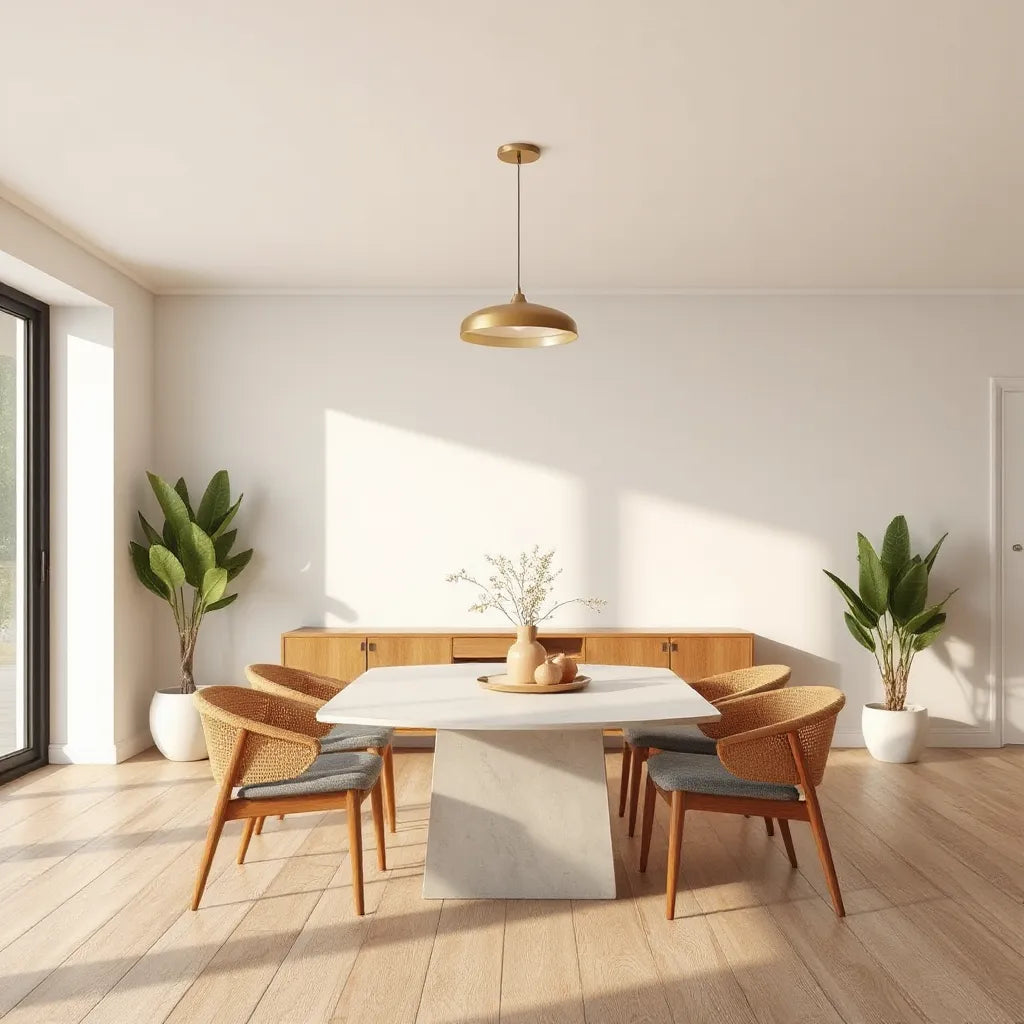
Natural textures and muted tones in harmonious layers
7. Choosing Statement Pieces the Minimalist Way
Minimalist homes do not avoid statement pieces. They avoid random statements. A statement piece should support the room’s function and reinforce the overall palette or proportion system.
Look for pieces with:
- Clear silhouette that fits the room scale.
- Quality materials that show depth through texture.
- Purpose so the piece does not exist only for display.
- Compatible finishing that aligns with your existing hardware and color story.
Seating often serves as a minimalist statement. When chairs have clean lines and balanced proportions, the room can feel both modern and warm. If you are building a dining or lounge area, consider streamlined chairs that do not visually overwhelm the space. You can explore seating options that match a minimalist direction by browsing relevant categories on Izumi chair styles or Toshiro chair options.
For bar-height spaces or open kitchen concepts, selecting compact seating with structured geometry can help maintain clear sightlines. If your design includes a bar zone, you can review minimalist seating ideas at Emi bar stool to see how form and proportion can support a calmer dining area.
8. Room-by-Room Plan for a Minimalist Look
Living room
Start with one large anchor: a sofa or sectional with a simple shape. Choose a neutral fabric and add one warm layer, such as a textured throw. Keep the coffee table surface purposeful. Use closed storage for remotes and small devices. For décor, select a single art piece or one cluster of framed works with consistent spacing.
If you enjoy reading, place a small side table within reach and store books in a basket or a shelf. This keeps the room visually quiet while still being practical.
Kitchen and dining
Minimal kitchens rely on clarity. Store everyday cookware in a way that reduces exposure on counters. Use a small set of serving pieces that match your palette. In dining areas, keep centerpiece styling simple. A bowl or a tray can work well when it is not constantly changed.
For dining seating, consistent lines help the room feel unified. Consider chairs that visually match your overall tone and scale.
Bedroom
The bedroom is where minimalism should feel peaceful. Choose bedding in calm neutrals and focus on comfort. Avoid stacking décor. Instead, use one or two items with purpose, such as a framed print above the headboard and a bedside lamp with a simple shade.
Under-bed storage can significantly reduce visible clutter. Even when the room is small, storage discipline can preserve negative space and keep the environment calm.
Home office
For a minimalist office, control cables, paper, and tools. Use a desk with clean surfaces and limited accessories. Store paperwork in drawers or bins labeled for quick retrieval. Display items only when they support the work cycle, such as a single notebook, a pen holder, and a functional organizer.
9. Final Thoughts & Takeaways
Home décor for minimalist style is a strategy for clarity. It prioritizes function, thoughtful selection, and a consistent visual system. When you limit the palette, control the layout, and choose materials that age well, the home becomes easier to maintain and more comfortable to live in.
The fastest path to a minimalist look is not buying more. It is removing the items that create noise, then selecting replacements based on proportion, texture, and purpose. With a steady process, your space will feel calm without becoming empty.
Q&A
How do I start minimal décor if my home already feels full?
Start with one room and define a clear goal for function and visuals. Remove items that do not support daily use, then store the remaining pieces with dedicated containers or closed storage. Keep surfaces mostly clear and use a limited palette so the room feels cohesive even during the transition.
Can I use color in minimalist interior design?
Yes. Minimalism does not require a blank palette. Use one accent hue and repeat it in small doses across the room. Keep the main tones neutral and allow texture to add depth. This approach maintains calm while preventing the space from feeling flat.
What is the best way to avoid clutter in a minimalist home?
Assign storage locations for daily items and make return-to-place simple. Use bins, drawers, and closed cabinets to reduce visual exposure. Maintain a short weekly routine to reset surfaces and remove items that no longer belong. Minimalism stays effective when maintenance is realistic.
About the Author
Nisu Home
Nisu Home is dedicated to home décor for refined everyday living, with expertise in minimalist design principles, material selection, and space planning. The team focuses on helping customers build cohesive interiors that balance calm aesthetics with practical function. Their approach emphasizes proportion, texture, and timeless color systems. For further inspiration, visit Nisu Home.
Disclaimer: This article provides general design guidance. Always consider your personal preferences, local conditions, and product specifications when planning and purchasing home décor.

Leave a comment
This site is protected by hCaptcha and the hCaptcha Privacy Policy and Terms of Service apply.