

Updated on: 2026-07-02
Table of Contents
- Did You Know?
- Expert Tips
- Personal Anecdote
- Design Principles for Minimalist Floral Arrangements
- Choosing Flowers and Foliage for a Calm Look
- Vases, Line, and Structure
- Color and Texture: Less Noise, More Depth
- Seasonal Planning Without Overthinking
- Care, Longevity, and Reuse
- Kabin Vase Spotlight for Clean Presentation
- Summary & Takeaways
Minimalist floral arrangements for modern spaces
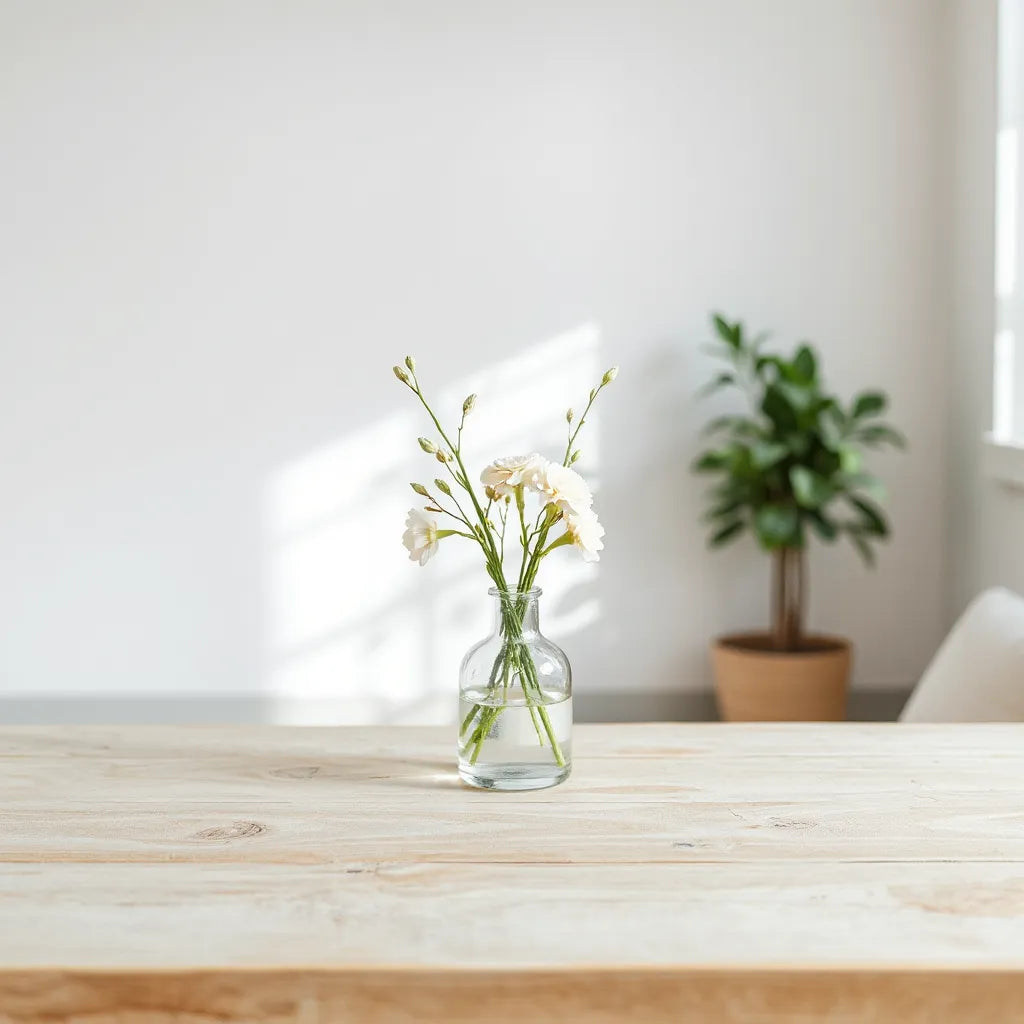
Minimalist floral arrangements turn ordinary spaces into quiet focal points. They rely on restraint: fewer stems, deliberate spacing, and a clear visual line. When flowers are styled with intention, the result feels calm rather than crowded. This approach works for entryways, dining tables, shelves, and even small apartments. It also supports a practical mindset, since you can create a refined look with fewer materials.
The goal is not to eliminate beauty. The goal is to remove distraction. You choose a small set of stems, then shape them with negative space and thoughtful placement. Over time, this style becomes a personal system that is easy to repeat and adapt.
Did You Know?
- Negative space helps arrangements feel lighter and more intentional.
- One strong stem can create a focal point without adding volume.
- Foliage often provides structure and balance better than extra blooms.
- Muted palettes can make seasonal flowers look cohesive for longer.
- Simple vessel shapes improve the way light moves through stems.
Expert Tips
- Start with a single “hero” element, such as one flower type or one elegant stem.
- Limit the stem count, then focus on spacing instead of adding more material.
- Use asymmetry for a modern feel; aim for balance, not mirror symmetry.
- Trim stems evenly and place them at different heights for rhythm.
- Choose one texture to lead, such as airy grasses or smooth leaves.
Personal Anecdote
I once tried to cover every bare surface in my home with fresh flowers. The outcome looked busy, even though the blooms were beautiful. After adjusting to minimalist floral arrangements, I kept only a few stems and removed anything that competed for attention. Within minutes, the room looked more composed. I noticed that the flowers no longer felt like decoration. They became a gentle design element, like a quiet piece of art.
Design Principles for Minimalist Floral Arrangements
Minimalist design is built on editing. In floral styling, editing means choosing fewer elements and assigning each one a purpose. A minimalist arrangement typically follows three principles: clarity of form, controlled volume, and purposeful spacing.
1) Clarity of form
Before you place a single stem, decide what the arrangement should communicate. It may communicate vertical elegance, soft movement, or calm symmetry. When your intention is clear, each stem placement becomes easier. You can also avoid the common mistake of mixing many shapes at once, which often creates visual noise.
2) Controlled volume
Consider the arrangement as a silhouette. Minimalist floral arrangements often use one main silhouette rather than multiple overlapping layers. A narrow vase with a few tall stems can create a clean column effect. A wide vessel can support a low, horizontal line with a small cluster of blooms at one end.
3) Purposeful spacing
Spacing is the difference between “small” and “minimal.” Small arrangements can still feel cluttered if stems are packed closely. Minimalism uses gaps on purpose so the viewer can rest their eyes. Those gaps create negative space that makes the flowers appear more refined and intentional.

Clean negative space around a single tall stem
Choosing Flowers and Foliage for a Calm Look
Flower selection sets the tone. Minimalist floral arrangements usually work best with varieties that offer either a strong silhouette or a soft texture. When in doubt, choose fewer types and let shape do the work.
Choose one lead flower
Select one flower type that provides the main visual message. Examples include blooms with defined petals and clear centers. Then, add supporting stems that echo the same color family or a compatible neutral tone.
Use foliage as structure
Foliage creates volume without requiring multiple bloom types. Large leaves, slender fronds, or simple greenery can hold the composition in place. In many minimalist styles, foliage is the “framework,” while flowers act as accent points.
Avoid competitive blooming
Some flowers have busy forms, layered petals, or wide heads that fill the frame quickly. In a minimalist arrangement, these flowers can overwhelm the space if you include too many. If you love a bold bloom, pair it with calm greenery and allow it to be the centerpiece.
Work with odd moments of growth
Minimalism often feels more natural when you accept slight asymmetry. A stem that leans a bit can improve the composition, as long as the overall line stays coherent. This approach also helps you use stems you already have instead of discarding them.
Vases, Line, and Structure
The vase is not a container only. It is a design element that influences proportions, light reflection, and how the arrangement “reads” from across a room. Minimalist floral arrangements often pair well with vessels that have clean lines and stable silhouettes.
Match proportion to stems
Tall stems need vertical space. Compact stems need a vessel that keeps the composition low. If the vase neck is too narrow for your stems, you will compress the arrangement and lose the intended negative space. Select a vessel that allows stems to express their natural line.
Choose stable shapes
Minimalism tends to look best with a consistent geometry. A round mouth with a straight body can create calm stability. A wider opening can support a shallow arrangement with gentle movement. Avoid using a highly ornate vessel if your flowers already carry strong character.
Build structure before adding blooms
Start with greenery or supporting stems. Place them to form a base line and an optional second height. Then add blooms sparingly, as accent points rather than full coverage.
Color and Texture: Less Noise, More Depth
Color control creates coherence. Minimalist floral arrangements often use a limited palette and a clear relationship between tones. You do not need to be monochrome, but you should know how many colors you want visible at one time.
Use a limited palette
Many minimalist styles use two main tones plus one neutral. For example, a soft white flower and muted green foliage can be balanced with a warm beige stem accent. This prevents color clashes and keeps the arrangement readable.
Anchor with neutral greens
Green is not one color. Some greens lean cool, others warm. Choose greens that help your main blooms stand out. If your blooms are delicate, neutral greens create contrast without competing saturation.
Mix textures carefully
Texture adds depth even when volume is low. Pair airy elements such as grass-like foliage with smooth petals. Keep the number of textures limited so the arrangement remains cohesive.
Use dried accents for visual continuity
If you want an arrangement that remains attractive after blooms slow down, consider adding a small, intentional dried element. Use it sparingly so it supports the composition rather than taking over.
Seasonal Planning Without Overthinking
Minimalism is easiest when you plan within seasons. Instead of forcing a specific flower, choose what is available and adapt the composition. The minimalist approach is flexible because it depends on form and spacing more than on exact species.
Follow seasonal availability
When spring offers lighter blooms and delicate greenery, build a lighter arrangement with soft curves. When autumn brings deeper tones, adjust the palette and keep stem count low to preserve calmness.
Repeat your own style system
Create a “template” you can reuse: one vessel shape, one lead flower category, and one supportive foliage type. This system helps you create consistent minimalist floral arrangements even when the exact stems vary.
Plan for different rooms
A hallway may need a vertical line that guides movement. A dining table may need a low silhouette so conversation stays comfortable. A shelf may need controlled height so decor does not appear cluttered.
Care, Longevity, and Reuse
Minimalist arrangements also benefit from better care. Because there are fewer stems, each stem becomes more important. Treat the arrangement like a composed set rather than disposable decoration.
Start with clean vessels
Rinse the vase and refresh water before styling. Clean surfaces reduce bacterial buildup and help stems hydrate properly.
Trim and hydrate consistently
Make clean cuts and remove leaves that would sit below the water line. Refill water regularly and re-check stem placement as the arrangement relaxes over time.
Refresh by editing
When one stem declines, remove it early. Replace it with a similar-height stem or simply adjust the remaining stems so spacing stays intentional. Minimalism remains attractive even as the arrangement evolves.
Kabin Vase Spotlight for Clean Presentation
One reliable way to achieve a refined look is to pair minimalist stems with a calm vessel. A strong vessel shape supports line, prevents clutter, and helps the viewer focus on negative space. A simple, elegant vase also makes it easier to repeat the same styling approach across rooms.

Kabin Vase shown as a clean vessel choice
Kabin Vase

Minimal vase forms holding a few accent stems
Summary & Takeaways
Minimalist floral arrangements create calm visual order by focusing on form, spacing, and a limited palette. Start with one lead flower or one dominant line, then build with foliage for structure. Choose a vase shape that supports your stem height, and refine color choices so nothing competes for attention. With consistent care and simple editing, your arrangement can stay attractive even as stems change.
Key actions you can apply immediately:
- Choose fewer stems and leave intentional gaps between them.
- Build structure with greenery before adding blooms.
- Select a limited color set to maintain visual coherence.
- Use a calm vessel shape to emphasize line and negative space.
Q&A Section
How many stems should I use for minimalist floral arrangements?
Use enough stems to create one clear silhouette and one intentional focal point. Many minimalist styles work well with a small stem count because negative space is part of the design. If you are uncertain, begin with fewer stems than you think you need, then add only when the line looks incomplete.
What is the best color strategy for a minimalist look?
Limit the palette to two main tones plus a neutral or subtle accent. Choose colors that either match in undertone or create gentle contrast. If you prefer variety, keep the color count steady by selecting stems that belong to the same family, such as soft whites with muted greens and warm beige accents.
How do I make a minimalist floral arrangement look modern instead of sparse?
Modern minimalism usually comes from line and balance, not emptiness. Vary stem heights, keep one dominant direction, and use foliage to create texture. Instead of adding more blooms, improve the composition by adjusting spacing and creating a clear visual rhythm.
About the Author
Nisu Home
Nisu Home is a home and lifestyle brand focused on refined interiors and intentional living. The team specializes in minimalist styling concepts, thoughtful product pairing, and practical design guidance for everyday spaces. By combining clean visual principles with real-world usability, Nisu Home helps readers create arrangements that feel composed and enduring. Thank you for reading and for choosing a calmer approach to floral design.
Disclaimer: This article is for general informational purposes only. It does not provide medical advice or guarantees of product performance. Always follow care instructions for your specific flowers and any materials used in your home.

Leave a comment
This site is protected by hCaptcha and the hCaptcha Privacy Policy and Terms of Service apply.