

Updated on: 2026-09-24
A sculptural statement piece is more than décor. It is a focal element that adds depth, character, and visual rhythm to a room. When chosen with proportion and material in mind, it supports the rest of the interior design rather than competing with it. The right piece can also elevate everyday spaces by making them feel intentional and complete.
Table of Contents
Common Mistakes
Many buyers approach a sculptural statement piece as if it were only an aesthetic accent. This often leads to poor fit, weak impact, and avoidable returns. A strong focal item must serve the space, not just look attractive in isolation.
- Ignoring scale: A dramatic form can still feel small or overwhelming when measurements are not considered.
- Overcrowding the view: Too many competing elements reduce the clarity of the focal point.
- Choosing the wrong material mix: Texture and finish should harmonize with existing surfaces to prevent visual friction.
- Missing lighting strategy: Shadows and highlights shape how a sculptural form is perceived.
- Skipping a placement plan: A piece placed too close to walls or pathways can look cramped and feel impractical.
These errors are not purely visual. They affect daily usability and the long-term satisfaction that comes from a design that works in real life.
Buyer’s Checklist
Use this checklist to evaluate a potential purchase with clarity. It prioritizes design performance, not only appearance.
- Purpose of the focal point: Decide whether the piece anchors a seating zone, defines a corridor moment, or frames a dining area.
- Scale and clearance: Confirm width, height, and depth in relation to surrounding furniture and walkways.
- Material harmony: Match finishes and texture direction with floors, walls, and textiles.
- Visual weight: Heavier silhouettes require more negative space; lighter forms can work in tighter compositions.
- Color control: Select a palette that supports neutral bases or strengthens an accent color scheme.
- Lighting compatibility: Ensure the piece will be highlighted by natural light and complemented by lamps or overhead fixtures.
- Functional fit: If it is a chair, table, or storage element, confirm ergonomics and practical use.
- Care requirements: Check cleaning instructions and durability expectations for your household routine.
Choosing the Right Size and Placement
Scale is the most common determinant of whether a sculptural statement piece feels refined or accidental. A large form placed in an under-sized room can overwhelm. Conversely, a small form may fail to read as a focal point. Measure not only the item, but also the negative space around it.
For placement, begin with sightlines. Stand where people naturally enter the room and scan toward likely focal areas. The piece should appear intentional from multiple angles, not only from one position.
When you plan seating, allow comfortable circulation. Leave space for movement, and ensure the piece does not block doorways or interrupt the flow between zones. In open-plan layouts, a sculptural element can subtly define boundaries without the need for partitions.
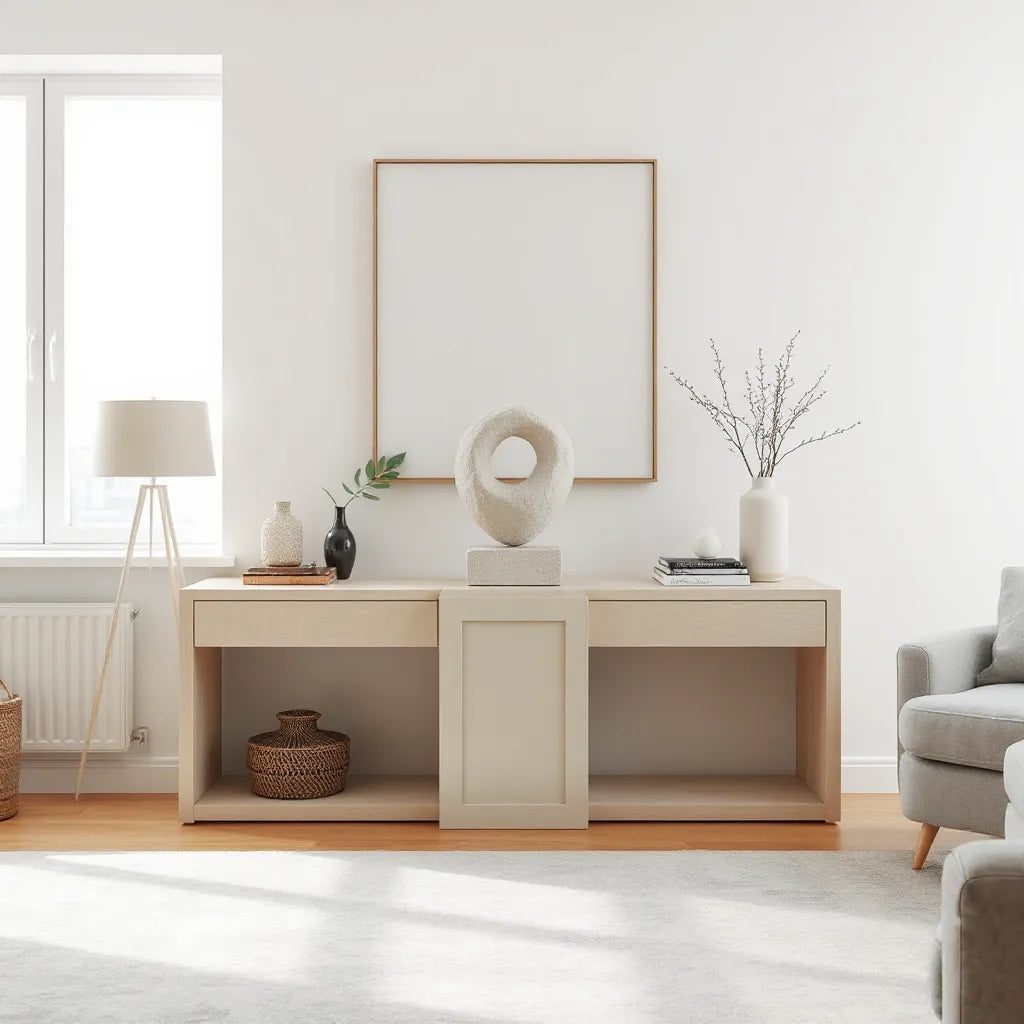
Balanced silhouettes and empty space guide proper placement
Materials and Texture Considerations
Texture is where sculptural design becomes tactile. Even when two pieces share similar shapes, different materials create distinct emotional impact. Smooth finishes can feel sleek and modern. Curved forms in matte materials often read as warm and contemporary.
Think about how the piece interacts with existing surfaces. If your room has polished stone or glossy tile, a matte or fabric surface can soften the overall atmosphere. If your room is already textured, a controlled finish can prevent a crowded feel.
Also consider how light behaves on the surface. Glossy materials reflect highlights more clearly, which can enhance dramatic contours. Matte textures diffuse light, which can make the form feel calmer and more grounded. Select the surface behavior that matches your intended mood.
Finally, evaluate durability. A sculptural piece often becomes a daily reference point in your home. Choosing materials that align with your cleaning routine supports long-term satisfaction.
Style Compatibility and Visual Balance
A sculptural statement piece should lead the visual story, but it still needs support. The rest of the room provides the context that makes the form feel intentional. To achieve balance, avoid mirroring the statement element in every other item. Instead, use restraint and let key elements repeat in subtle ways.
For example, if the focal piece has strong lines, keep adjacent furniture shapes simpler. If the sculptural form is softly rounded, pair it with furniture that has either gentle curves or clean, minimal geometry. Repeating one design language detail—such as a curved back, a sculpted edge, or a tapered leg—can unify the composition without creating monotony.
Color balance matters as well. A statement piece can be neutral and still feel dramatic. Monochrome sculptural designs rely on form, shadow, and texture to create depth. Alternatively, a bold accent piece can energize a room with a calm base of off-whites and natural woods.
If you want a fast method to evaluate compatibility, imagine the room without one element at a time. Does the room still feel cohesive? The goal is a composition where the focal piece looks placed, not pasted.
Care and Longevity
Longevity is a practical part of design value. Sculptural furniture and décor tend to feature unique surfaces and detailing. Proper care preserves contours, finish tone, and visual clarity.
- Use gentle cleaning tools: Microfiber cloths and soft brushes help avoid surface wear.
- Prevent residue buildup: Wipe spills quickly and avoid harsh cleaners unless the manufacturer approves them.
- Manage sunlight exposure: Direct, intense light can change color over time. Use curtains or reposition where needed.
- Inspect hardware and structure: Periodic checks maintain stability, especially for furniture with moving joints or frequent use.
- Follow material-specific instructions: Fabric, wood finishes, and metal coatings require different approaches.
When you treat the piece as part of routine maintenance rather than an occasional task, it stays visually crisp and architecturally relevant for years.
Yokina Chair - designer armchair UK

If your goal is a sculptural statement piece with day-to-day comfort, an expressive chair can function as both seating and architecture. Pair it with a simple side table and a textured rug to support the silhouette without clutter. For interior inspiration, explore a comparable seating option here: Yokina Chair details.
Additional sourcing strategy for cohesive interiors
When you shop across categories, try to keep design language consistent. A strong approach is to choose one anchor material and repeat it subtly. For instance, if the statement piece features warm wood tones, repeat that warmth in a cabinet, console, or table. If the focal form is metallic with cool undertones, echo the same finish in lighting hardware or accessories.
You can also build around a reliable seating foundation. If you are planning a curated lounge zone, consider browsing complementary seating options such as Izumi chair or Toshiro chair. This makes it easier to maintain balance while still allowing one item to carry the spotlight.
How to style around a sculptural focal element
Styling should amplify the form, not disguise it. Use three layers of support: a base layer, a texture layer, and an accent layer. The base layer can be a neutral rug or simplified wall color. The texture layer includes textiles such as linen or bouclé. The accent layer can be one or two objects with complementary proportions.
Keep accent items smaller than the statement piece. If the sculptural element is tall, choose shorter accents. If it is wide, choose slimmer accents. This proportional logic helps the focal form remain dominant while still feeling styled.
Finally, use negative space intentionally. Empty wall area, open tabletop surface, and clear pathways help the sculpture read as designed. The most memorable interiors often feel spacious, even when they contain many objects.
FAQ
What makes a piece feel like a sculptural statement piece rather than decor?
A sculptural statement piece has a clear silhouette and purposeful presence in the room. It attracts attention because of its shape, proportions, and surface behavior. Decorative items can add charm, but the statement category typically anchors a zone and creates visual structure.
Can a sculptural statement piece work in a small room?
Yes. Choose a form with a controlled visual weight and leave adequate space around it. In smaller rooms, a narrower or vertically oriented piece often reads better than a wide, heavy silhouette. Focus on placement near sightlines and use lighter surrounding furniture to prevent crowding.
Which materials are best for long-term satisfaction?
Materials that align with your cleaning routine and lifestyle tend to deliver the best long-term results. Durable surfaces with appropriate care requirements maintain their look over time. If you prefer low maintenance, prioritize finishes that respond well to gentle cleaning and resist daily wear.
How should I balance bold shapes with existing furniture?
Match one design language element and simplify the rest. If the focal piece has strong curves, keep adjacent items either minimal or softly curved. If it has sharper geometry, choose furniture with clean lines and avoid adding extra visual complexity. This balance preserves the focal impact while improving cohesion.
Wrap-Up & Final Thoughts
Choosing a sculptural statement piece is not only a style decision; it is a structural one. When you evaluate scale, placement, materials, and lighting together, the piece becomes a natural anchor rather than a visual interruption. Use a clear checklist, measure carefully, and style with negative space and proportional restraint.
If you want a focal element that feels intentional from every angle, start with the room plan and then select the form that best supports it. For additional interior inspiration and curated options, you can explore more from Nisu Home and refine your selection with confidence.
Q&A Section
Is it better to choose neutral or bold colors for a sculptural focal item?
Neutral sculptural pieces often provide long-term flexibility, especially when your room palette evolves. Bold colors can work beautifully when they are balanced with quieter surfaces and restrained accessories. Choose the direction that matches your willingness to refresh the room over time.
How many statement elements should a room include?
In most living rooms and dining spaces, one true statement element is enough. Additional focal accents can be smaller or more subtle, but the main sculptural form should remain the clearest visual priority. This approach produces calm cohesion and prevents visual competition.
Should the statement piece match the style of other furniture?
Consistency is helpful, but exact matching is not required. The key is visual balance. A sculptural focal item can coexist with different styles if the materials, proportions, and color temperature feel compatible. When these fundamentals align, the room reads as curated rather than mismatched.
About the Author
Nisu Home is a design-focused publication specializing in interior styling, furniture selection, and material-aware recommendations. The author brings expertise in curated home aesthetics and practical buyer guidance. A clear, objective approach helps readers select pieces that look refined and function comfortably. Thank you for reading, and may your next design choice feel confidently grounded.


Leave a comment
This site is protected by hCaptcha and the hCaptcha Privacy Policy and Terms of Service apply.