

Updated on: 2026-08-13
Table of Contents
Key Benefits of Sculptural Silhouette Vases
Sculptural silhouette vases combine functional form with visual presence. They are designed to be noticed from across a room, even when they hold only fresh stems or minimal greenery. Their appeal is not limited to one style category. These vases can serve as a focal point in modern interiors, a texture layer in warm minimal spaces, and a curated accent among layered decor.
When you select a vase for a display, you are choosing proportion, negative space, and light behavior. Sculptural silhouettes excel in those areas. Their contours can soften hard surfaces, add rhythm to shelves, and bring structure to open-plan living. Below are practical benefits you can expect when you style sculptural pieces with intention.
- Instant visual hierarchy: A distinctive outline creates a clear focal point and reduces the need for extra decoration.
- Versatility across seasons: Neutral colors and refined shapes work with seasonal stems, dried arrangements, and minimalist sprigs.
- Works with multiple design themes: Contemporary, Japandi, Scandinavian, and gallery-inspired interiors can all benefit.
- Improved styling flexibility: Because the vase is the star, you can keep floral volume modest and still achieve impact.
- Elevated material feel: Ceramic or stone-like finishes often add tactility that complements wood, linen, and metal accents.

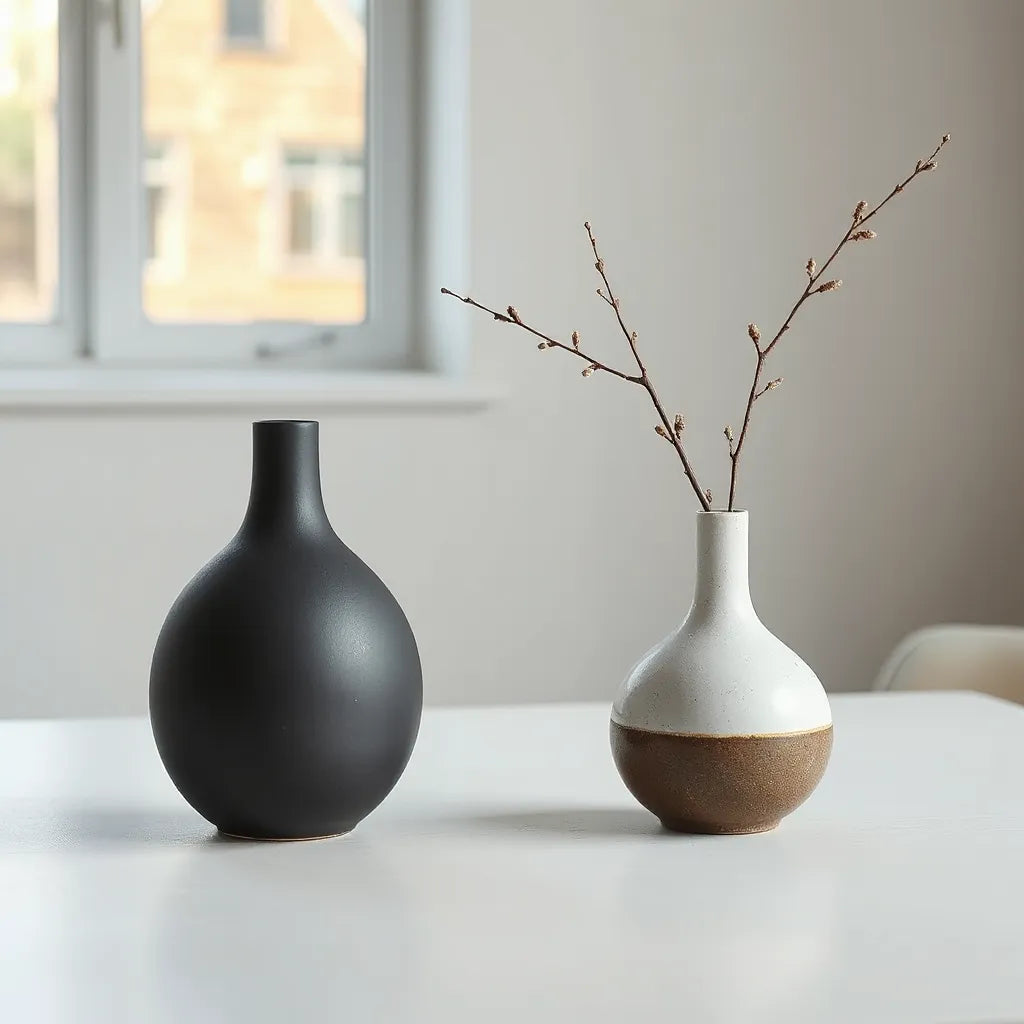
Bold outline, soft shadows, balanced negative space
How silhouette shapes influence a room
Silhouette refers to the recognizable outline of an object. In interior styling, that outline is what the eye reads first. A rounded form can make a space feel calmer and more approachable. A taller, slender profile can visually extend vertical sightlines. A wide base can ground a composition on a console table or dining sideboard.
These shapes also affect how highlights move across the surface. When natural light reaches a vase, subtle curves can produce gentle tonal shifts. In low light, the vase becomes a quiet glow point against darker textiles or furniture finishes. This is one reason sculptural silhouette vases pair well with ambient lighting such as table lamps or wall sconces.
Step-by-Step Guide to Styling Sculptural Silhouette Vases
Styling a sculptural silhouette vase should feel deliberate, not complicated. The goal is to build a balanced composition where the outline of the vase remains readable. Follow a sequence that covers placement, stem selection, proportion, and final refinement.
1) Choose the placement with an eye for sightlines
Start by identifying where people naturally look when they enter a room. Common high-impact areas include a living room mantel, an entry console, a dining table centerpiece, or a shelf near artwork. Place the vase where its silhouette will not be interrupted by clutter or competing objects.
For narrow spaces, pick a vase with a strong vertical line. For wider surfaces, consider a shape that spreads gently across the table width. If you style multiple pieces, keep the tallest silhouette near the back edge so the outline remains continuous.
2) Select stems that respect the vase profile
Sculptural silhouettes can hold fresh-cut stems, dried botanicals, or even minimal branches. To preserve the outline, choose stems that either echo the vase shape or contrast it in a controlled way.
- For tall silhouettes: Use vertical stems such as ornamental grasses or slender branches.
- For rounded silhouettes: Use softer, curved greenery to mirror the form.
- For dramatic silhouettes: Keep stems sparse so the outline remains clearly visible.
If you prefer a modern look, limit the number of plant types. One stem family with varying lengths often looks more composed than mixed bundles. This approach also makes your vase the main design element.

Curved silhouette meets minimal stems for calm balance
3) Use the right height and volume ratio
A frequent styling issue is disproportion between the vase and the stems. As a rule, the stems should contribute to the silhouette without overwhelming it. In most settings, stems that rise to about one-and-a-half to two times the vase height achieve a refined look. If the vase is very tall, shorter stems can still look intentional when they remain centered.
Volume matters on the sides as well. If the vase has a wide body, keep the stem spread narrower than the maximum width. This prevents the arrangement from looking crowded and preserves the graphic quality of the outline.
4) Build a subtle backdrop with color and texture
Once the vase silhouette is stable, refine the surrounding environment. Consider the color of nearby textiles, wall tones, and wood grains. Neutral interiors often benefit from contrast: a darker vase against light linens, or a lighter vase against a warm wooden cabinet. If your room is already high contrast, choose softer tonal pairings.
Texture also supports the display. A sculptural vase placed near a woven runner, a linen curtain fold, or a matte ceramic surface reads as cohesive. Avoid highly glossy clutter nearby, as it can blur the vase silhouette.
5) Apply finishing details that increase clarity
Small adjustments can make the difference between decorative and styled. Center the vase so its silhouette is aligned with the tabletop edge or the centerline of a shelf. Trim any stems that curve in unpredictable directions. If using water, ensure the water level does not spill or discolor the display surface.
For a clean look, choose a single visual focal point. If you already have a large artwork behind the vase, keep the stems modest. If the area is visually calm, you can allow a bit more height and drama.
6) Let the vase do the work: minimal floral styling
Sculptural silhouette vases are well suited for minimal arrangements. Instead of covering the mouth with heavy bouquets, try one or two branch stems with negative space around them. This technique emphasizes the vase contour and turns the arrangement into a quiet sculpture. The result is elegant and easy to maintain.
Kabin Vase,  View Kabin Vase
7) Pair the vase with complementary Nisu Home pieces
Silhouette vases integrate well with sculptural furniture lines and clean storage surfaces. If your room uses modern seating, a vase can add organic softness without introducing visual clutter. For example, you may style a vase near a compact coffee table or alongside a chair with defined edges.
Consider placing a vase by your dining area next to a Izumi chair for a balanced contrast of clean lines and organic curves. Alternatively, pair it with an architectural storage piece such as an Asuka cabinet so the silhouette remains visible against a calm backdrop.
8) Maintain visual consistency across multiple vases
If you display more than one sculptural vase, keep a consistent approach. You can group vases of different sizes if their silhouettes are from the same design family. Another option is to use one hero vase and one supporting shape with softer presence. Ensure the supporting vase does not compete with the central outline.
For shelf displays, arrange by height progression rather than random placement. This allows each silhouette to remain readable and keeps the shelf from feeling busy.
FAQ Section
What makes a vase a sculptural silhouette vase?
A sculptural silhouette vase is defined by its recognizable outline and artistic profile. The design aims to be visually impactful even with minimal stems, and the form remains readable from multiple angles.
How do I keep the stems from hiding the vase shape?
Choose stems with controlled height and limited spread. Trim stems so they rise neatly from the opening and preserve negative space around the outline. When in doubt, use fewer stems and let the vase contour remain clear.
Can sculptural silhouette vases work in small rooms?
Yes. Select a vase with a silhouette that supports the space. For smaller surfaces, favor a slimmer profile or a shorter arrangement that stays centered. Avoid overcrowding the surface with multiple decorations so the vase remains the focal point.
Summary & Final Thoughts
Sculptural silhouette vases bring structure, softness, and quiet drama to everyday interiors. By choosing strong placement, respecting the vase profile with stem selection, and maintaining proportion through negative space, you create displays that look curated rather than cluttered. If you are ready to elevate your styling, explore a sculptural focal piece and pair it with understated textures for a refined, modern result.
Visit Nisu Home to discover design-forward options that support a clean, artful living environment.
About the Author
Nisu Home is a design-oriented brand with expertise in modern interior styling and furniture aesthetics. This author focuses on practical, design-led guidance that helps readers create refined spaces with confident, well-proportioned decor choices. For anyone seeking a more elevated home presentation, the approach emphasizes clarity, balance, and durable visual impact. Thank you for reading and for building a more intentional home environment.

Leave a comment
This site is protected by hCaptcha and the hCaptcha Privacy Policy and Terms of Service apply.