

Updated on: 2026-07-09
A modern coffee table can anchor your living space while improving everyday function. It helps organize essentials, supports décor, and keeps traffic flow smooth. The right size, height, and material choice also affects how your room feels at a glance. This guide walks you through practical selection criteria and styling rules you can apply immediately.
1. What a modern coffee table does for your room
2. How to choose size and height
3. Materials and finish options to consider
4. Layout and style approaches that work
5. Key advantages of a contemporary centerpiece
6. Quick tips for buying with confidence
7. Summary and next steps
8. Q&A
What a modern coffee table does for your room
A modern coffee table is more than a surface for drinks and books. It visually connects seating, defines the center of the room, and creates a deliberate pause between functional areas. When the table is sized correctly and styled with intention, the room reads as composed rather than accidental.
In many homes, the living room must serve multiple purposes: conversation, family time, remote work, and casual entertaining. A well-chosen centerpiece supports those needs without clutter. For example, a tabletop with the right depth reduces the urge to place items randomly on nearby surfaces. As a result, you gain both order and comfort.

Seating zone layout lines, centered tabletop, balanced décor clusters
How to choose size and height
Size and height are the most common reasons a table feels “right” or “off.” Start with the seating layout. Place the table so it supports easy reach from sofas and armchairs. A simple rule is to allow comfortable walking paths around it and enough clearance for chairs to pull out or shift.
Proportion to seating
Consider how much of the table you want visible between the sofa and chairs. If your room has a large sectional, a smaller table can look swallowed by the space. If your room is already tight, a wide table can make the living area feel constrained.
- For sofas with a chaise: prioritize a table width that spans the main viewing area.
- For paired chairs: align the table so both seating pieces share the same focal center.
- For sectional corners: consider shape to avoid blocking lines of sight.
Comfort and usability height
Table height influences how naturally people place their hands, rest elbows, or reach for items. A table that is too tall competes with seating and feels like an obstacle. A table that is too low can force awkward reaching and makes the tabletop less practical.
- Use the “reach test”: sit in your usual spot and imagine where the tabletop should meet your hand.
- Account for rugs: a thick rug can change perceived height and spacing.
- Plan for trays or ottoman usage: if you style often with serving pieces, leave room for practical stacking.
Shapes that fit different rooms
Round and oval tables can soften corners and improve circulation. Rectangular tables often look crisp and structured, especially in rooms with straight lines. Square options work well when you have symmetrical seating or when you want a defined square focal point.

Circulation arrows, round versus rectangular outlines, spacing guides
Materials and finish options to consider
Materials determine not only appearance, but also daily maintenance and long-term durability. A modern coffee table can feel warm and inviting or sleek and graphic depending on the material pairing and finish. Choose based on your lifestyle and how the table will be used.
Wood, veneer, and engineered finishes
Wood remains a popular choice because it adds warmth and works with both neutral and bold décor. Veneer and engineered wood can deliver a consistent grain look, which supports a clean modern aesthetic. If you entertain often, consider a finish that resists everyday scuffs and wipes clean.
- Look for sealed finishes: they simplify routine care.
- Match undertones: align wood tones with your floors and shelving.
- Consider edge details: edges influence how the table reads up close.
Metal accents and glass surfaces
Metal details can create a lighter visual footprint, which is helpful in compact rooms. Glass tops can amplify brightness, especially in rooms that receive less natural light. However, glass may show fingerprints more easily, so it may be better suited to households that enjoy quick, consistent cleaning.
- Metal: choose finishes that coordinate with lighting and hardware.
- Glass: evaluate glare and reflections near windows.
Stone-inspired surfaces and composites
Stone-like finishes add an elegant, architectural feel. They also tend to maintain a stable look over time, which suits modern interiors built around minimal lines. If you prefer a low-visual-maintenance option, consider a finish designed for easy wipe-down.
Layout and style approaches that work
The most convincing modern look comes from thoughtful placement and a repeatable styling system. You do not need constant decor changes. Instead, choose a strategy that fits your habits and the room’s scale.
Use one center object
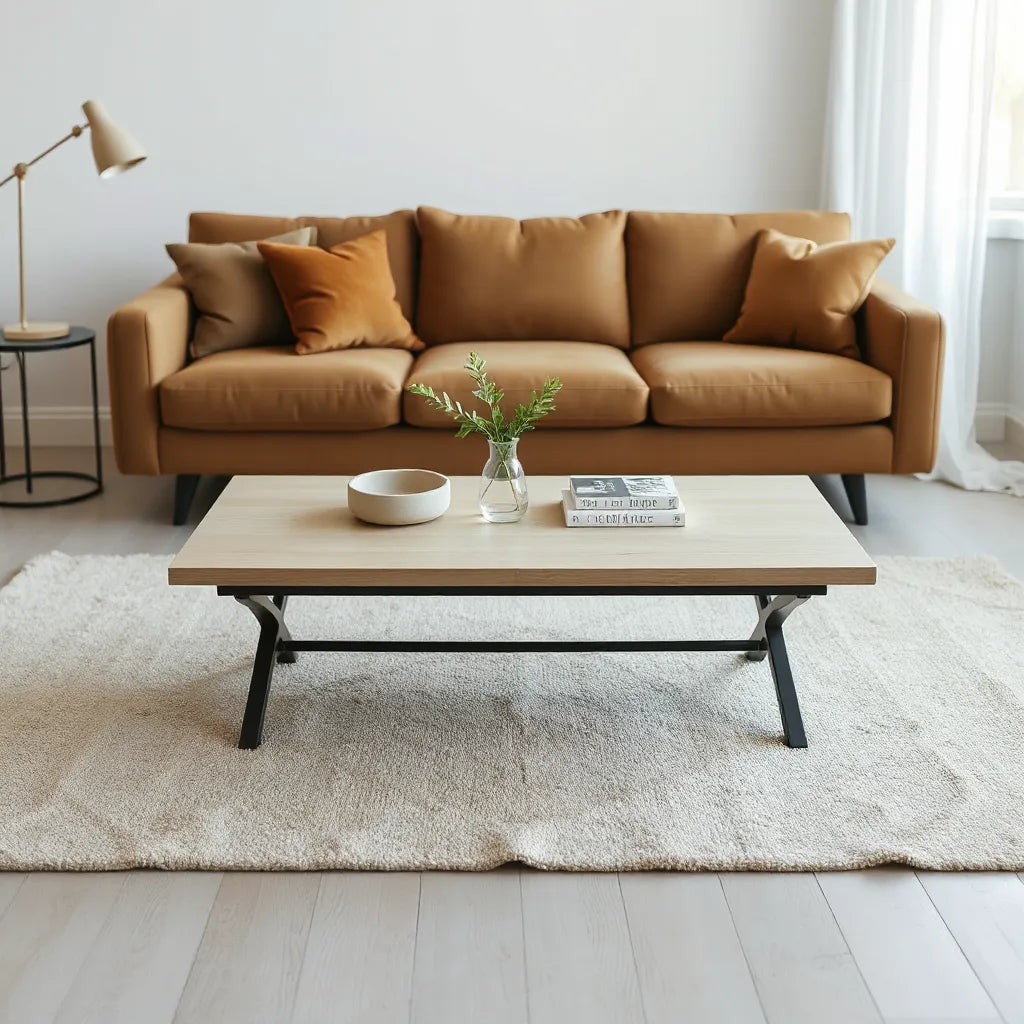
Modern interiors often perform best with a controlled composition. Select one anchor piece and build around it. A tray, vase, or sculptural container can unify smaller items and prevent the tabletop from appearing scattered.
- Choose a base tray or platter to hold smaller objects.
- Use a single height element, such as a short vase or book stack.
- Keep negative space visible so the table feels intentional.
Trays and organizers for daily order
Trays create visual rhythm and make it easier to reset the surface quickly. Use them for coasters, remote controls, and small personal items that often collect near seating. This approach keeps clutter contained without removing functionality.
Coordinate with rug pattern and wall color
Because the table is central, it should connect to the dominant design elements. If your rug has a bold pattern, select a table with calmer visual texture. If your rug is subtle, you can introduce contrast with a stronger finish or metal accents.
A practical product example you can evaluate
To see how a modern form can match an organized living room, review this option:
Ureshii Coffee Table

Shop Ureshii Coffee Table
Use it as a reference point for proportions, finish tone, and overall presence. Compare it with your seating height and the visual weight of your rug to decide whether it supports the same calm, modern center the rest of your room provides.
Key advantages of a contemporary centerpiece
Choosing a contemporary centerpiece style delivers benefits that extend beyond appearance. The right table improves everyday ergonomics and helps maintain a cleaner living area. The advantages below reflect what most homeowners experience when the selection is aligned with room scale and lifestyle.
- Improved reach and comfort: appropriate height supports natural movement from seating.
- Stronger visual organization: a dedicated center surface reduces random placement on nearby furniture.
- Better flow through the room: correct clearance prevents bottlenecks around the seating area.
- Versatility across decor seasons: neutral finishes and balanced shapes work with changing accents.
- Durable, design-forward materials: quality finishes simplify maintenance and help the piece stay presentable.
If you are also updating surrounding pieces, consider coordinating chair silhouettes with the table’s visual lines. For inspiration on contemporary seating pairings, you can explore these options from Nisu Home: Izumi Chair, Toshiro Chair, and Honin Coffee Table.
Quick tips for buying with confidence
- Measure twice: confirm both tabletop dimensions and clearance around seating.
- Prioritize usable surface: ensure it supports daily items, not only display objects.
- Match visual weight: lighter finishes pair well with minimal rooms; heavier finishes suit larger layouts.
- Check edge and finish quality: details affect how modern the table looks in close view.
- Plan for styling speed: choose shapes that make trays, coasters, or centerpieces easy to arrange.
- Coordinate hardware and undertones: align metal finishes and wood tones with nearby furniture.
- Test the layout at home: place the table first, then style. Adjust before you commit to décor.
Summary and next steps
A modern coffee table should do three things: define the center of the room, support comfortable reach, and maintain a clean, organized look. The most reliable decisions come from matching size to your seating plan, selecting a finish that fits your maintenance habits, and using a simple styling system with trays and one main anchor.
Next, measure your available space and list the items you want to keep on or near the table. Then shortlist options based on height, tabletop depth, and visual weight. If you want a cohesive refresh, review complementary pieces from Nisu Home and build the room around a consistent design language.
Explore living room furniture at Nisu Home
Q&A
How do I know whether a modern coffee table is the correct size for my living room?
Measure the width of your seating arrangement and keep clear paths around the table. Place it so you can reach the tabletop comfortably without stretching. If chairs sit near the table, verify there is enough room for movement and routine use. When possible, test with masking tape or paper cutouts to confirm proportions before purchase.
What height works best for a modern coffee table with typical sofas?
The best height allows relaxed hand placement and easy access to items placed on the surface. A quick approach is to sit in your usual position and estimate whether your forearm can rest naturally while your hand reaches the tabletop. Also account for rug thickness, as it can visually shift perceived height and spacing.
Which materials are most practical for everyday use?
For most households, sealed wood finishes, durable laminates, and easy-wipe surfaces tend to provide steady day-to-day performance. If you prefer minimal maintenance, choose finishes that resist stains and require only routine cleaning. If you select glass or metal-heavy designs, plan for slightly more frequent wipe-down to keep surfaces looking polished.
How should I style a modern coffee table without making it look cluttered?
Use one anchor object and keep the rest of the styling grouped. A tray can contain smaller items and create a tidy boundary. Choose limited heights, such as one vase or one compact stack of books, and leave intentional empty space so the tabletop feels composed. This method scales well across seasonal changes and reduces frequent rearranging.
Can I place a modern coffee table in a small living room?
Yes, but you should reduce visual bulk and prioritize circulation. Choose a shape that improves movement, such as round or oval, and keep the table surface aligned with your seating. Selecting a lighter finish and maintaining clearance from surrounding furniture helps the room feel open rather than crowded.
About the Author
Nisu Home contributor and home design specialist with expertise in contemporary living room layouts, materials, and practical styling systems. The focus is on helping readers select furniture that fits real routines, not only catalog aesthetics. Thank you for reading, and may your next styling decision feel clear, confident, and easy.
Disclaimer: This article provides general guidance for home furnishing decisions. Measurements and suitability depend on your specific room layout, furniture dimensions, and personal preferences. Always confirm product specifications and return policies before purchase.


Leave a comment
This site is protected by hCaptcha and the hCaptcha Privacy Policy and Terms of Service apply.