

Updated on: 2026-06-18
Minimalist living room furniture helps you create a calmer, more intentional space. It reduces visual clutter and makes everyday routines easier. With the right layout and a focused palette, each piece can look better and feel more functional. This guide covers practical buying criteria, setup steps, and common tradeoffs.
Table of Contents
Pros & Cons of Minimalist Living Room Furniture
Minimalist living room furniture is not only about fewer items. It is about choosing furniture that supports daily use, improves visual order, and makes room design feel purposeful. When executed well, it can raise comfort while lowering stress caused by clutter.
Key Pros
- Cleaner visual flow: Fewer lines and surfaces reduce visual noise.
- More functional space: Clear pathways make movement easier and safer.
- Easy to maintain: Less surface area often means less cleaning time.
- Better long-term flexibility: Neutral furniture and timeless forms adapt to changing decor.
- Focal point clarity: One or two standout elements become more noticeable.
Key Cons
- Risk of feeling empty: Minimalism can look unfinished if proportions and comfort are ignored.
- Storage challenges: Without smart storage, fewer pieces may not hold belongings effectively.
- Higher upfront selection pressure: Since you buy fewer items, each choice must fit your room and lifestyle.
- Potential comfort tradeoffs: Some people choose aesthetics over seating comfort, leading to dissatisfaction.
- Maintenance of the system: Minimalism requires ongoing decluttering and disciplined organization.

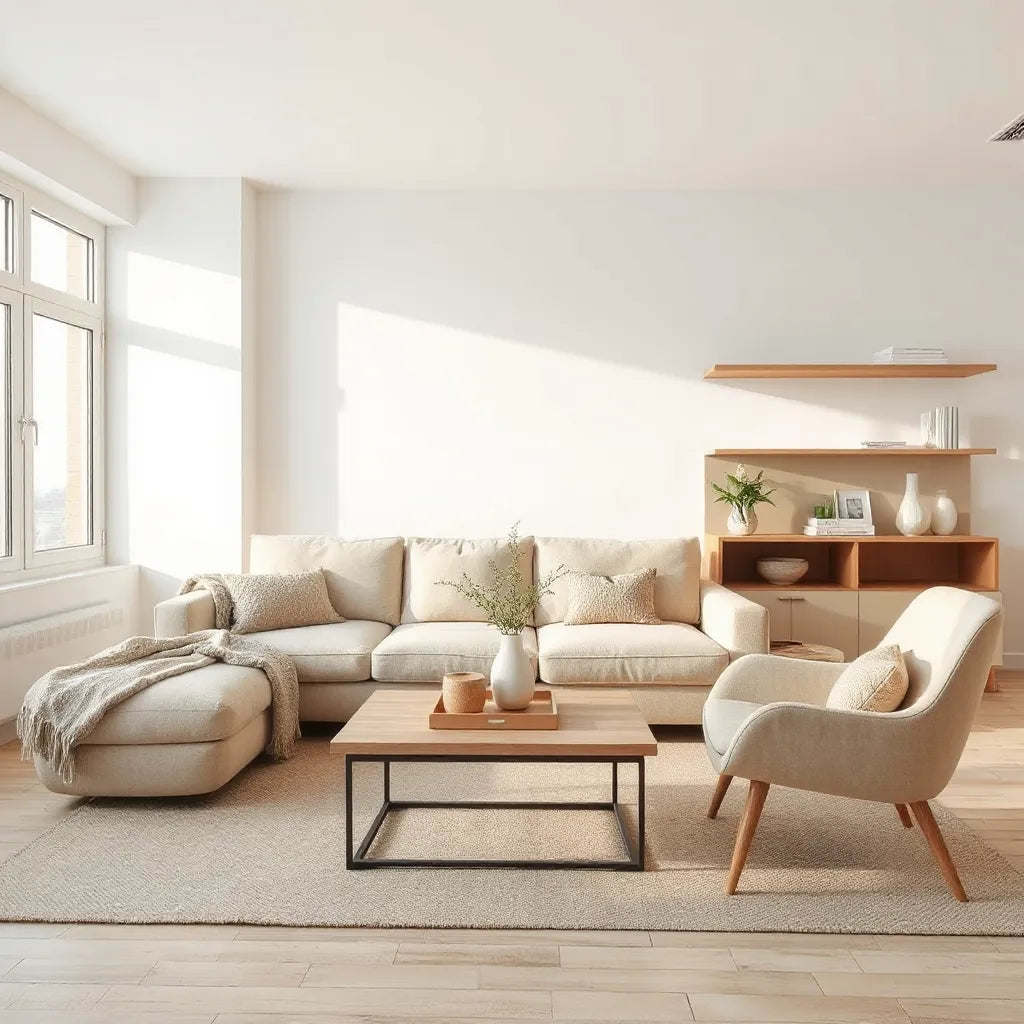
Room layout with clear walking paths and open space
Step-by-Step Practical Guide
To build a livable, attractive layout, you need a method. Follow these steps to select and arrange minimalist living room furniture with confidence. The goal is to balance restraint with comfort and to design for everyday routines.
Start With Goals and Living Habits
Before you browse furniture, define what your living room must do. Ask how you use the room most often. For example, do you host guests, relax with family, work from home, or play games? Then identify the friction points today, such as insufficient seating, poor circulation, or surfaces that collect items. Your goals should guide every selection, from seating height to table placement.
Also decide what you want to feel when you enter the room. Many people prefer a calm tone, quick tidying, and a more organized visual field. When you clarify these objectives, minimalist living room furniture becomes a practical strategy rather than a decorative trend.
Measure and Map the Room
Accurate measurements prevent costly mistakes. Measure the room length, width, and ceiling height. Note where doors open, where windows place natural light, and where electrical outlets are located. Then map circulation zones: the areas that people need to walk through comfortably.
As a general planning rule, keep clear paths from entry points to seating and to primary walking lanes. If you want a media center, measure the TV or display size and the viewing distance. If you want a conversation area, confirm that chairs or accent seating can angle toward the sofa without blocking movement.
Choose Key Pieces First
Minimalist rooms work best when you select a small number of foundational items. Start with seating and then add supporting pieces. Consider the following approach:
- Sofa as the anchor: Choose a sofa with proportions that match the room size. Oversized seating can dominate a small space, while a sofa that is too small can feel awkward.
- One or two supporting seats: Add an additional chair or a compact lounge option if you need extra seating for guests.
- Coffee or side surface: Select a table that supports daily tasks such as drinks, books, or a remote.
When selecting accent chairs, look for a clean silhouette and a comfortable seat depth. If your plan includes a bar-height feature, a compact stool can add function without visual bulk. For example, you can explore minimalist-friendly options like Izumi Chair for a refined seating presence, or consider Min Chair when you need a lighter visual footprint.
Prioritize Storage and Hidden Clutter Control
Clutter tends to collect where you store it, not where you intend it to go. Minimalism succeeds when storage is planned from the start. Look for furniture that either hides belongings or reduces the need for open storage.
Practical storage ideas for a minimalist living room include:
- Low-profile media storage: Use cabinets with doors instead of exposed stacks.
- Closed sideboard solutions: Keep chargers, remotes, and everyday items out of sight.
- Hidden organization: Prioritize drawers or compartments in tables.
- Compact footprint storage: Place storage along walls to preserve open central space.
If you want a cleaner backdrop, a cabinet can serve both storage and visual alignment. You can view a suitable option such as Asuka Cabinet to support a less cluttered look.

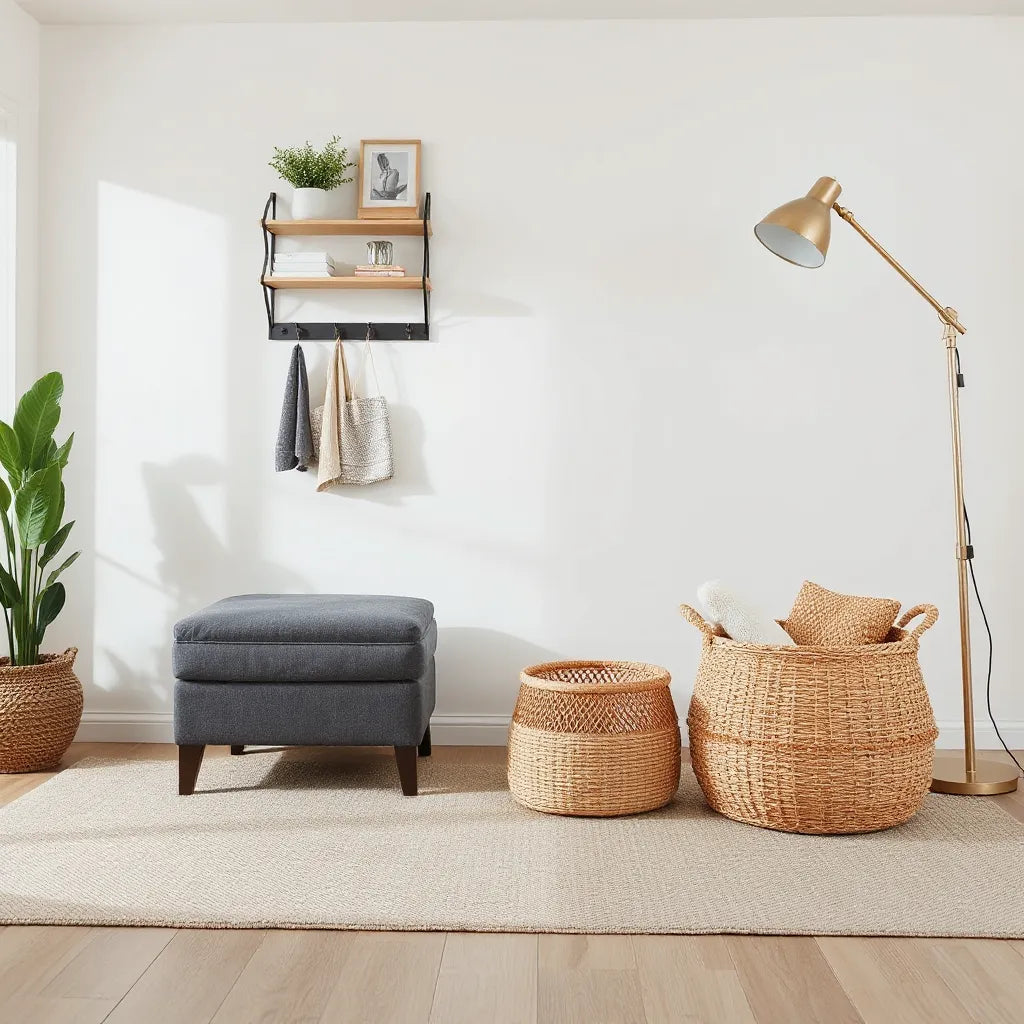
Closed storage concept with concealed clutter and neat lines
Select Materials and Colors for Cohesion
Color and material choices strongly influence whether a minimalist living room feels warm or cold. A minimalist palette does not have to be monochrome. It should be consistent. Select two to three main tones and one accent shade at most.
To create cohesion, match materials across key furniture pieces. For instance, keep wood undertones consistent. If you prefer light finishes, combine them with textiles that add warmth. If you prefer darker tones, balance them with brighter fabrics or layered lighting.
Textiles are also critical. A simple sofa in a neutral tone can look flat without a rug or thoughtful layering. Choose a rug that defines the seating area and anchors the room. Then add curtains, cushions, and throws with subtle textures rather than busy patterns.
Style With Restraint and Function
Minimalism does not mean empty surfaces. It means fewer items, placed intentionally. Use the rule of visible purpose: each decorative element should either support function or provide calm visual texture.
Good minimalist styling decisions often include:
- One statement object: A single large art piece or a simple sculptural item.
- Curated symmetry: Repeat a small motif in two locations for balance.
- Limited decor count: Choose a small group of books, a single tray, or one vase arrangement.
- Use trays for everyday items: Consolidate small objects onto one surface so they look deliberate.
For families and busy households, prioritize surfaces that are easy to reset after daily use. For example, place remote controls and small items in a tray. Replace scattered items with one dedicated container. This approach helps maintain an uncluttered look without requiring frequent stress-based tidying.
Maintain the System Over Time
Minimalist living room furniture remains effective only when the room stays aligned with your plan. Set a simple routine for reset and review. This can be weekly or monthly, depending on household needs.
A practical maintenance routine includes:
- Reset surfaces: Return items to their storage locations.
- Do a quick scan: Identify where clutter accumulates and address the cause.
- Remove duplicates: If multiple items serve the same purpose, keep one and store the rest.
- Reassess comfort: If seating feels uncomfortable, your minimal plan fails because you will avoid using the room.
Consider the long-term cycle. New items will arrive over time. The minimalist response is not resistance; it is deliberate addition and removal so the room keeps its visual clarity.
Wrap-Up
Minimalist living room furniture can deliver a calmer environment, clearer circulation, and a more intentional design. The strongest results come from planning first, measuring carefully, and choosing foundational pieces that align with your habits. Pair clean silhouettes with smart storage and cohesive materials to prevent a minimalist room from feeling empty or impractical.
If you are building your setup from scratch, start with seating and a functional surface. Then add storage that hides everyday items. Finish with restrained styling that supports daily living instead of creating more cleanup. This method keeps your living room both attractive and genuinely usable.
Q&A Section
How do I choose minimalist living room furniture for a small space?
Focus on proportions, circulation, and storage. Select a sofa that fits your room scale, then add one supporting chair if needed. Use a coffee table with a simple footprint and consider closed storage to prevent visual clutter. Finally, anchor the seating area with a rug that visually unifies the space.
What is the best layout for a minimalist conversation area?
Create a clear focal zone. Place the sofa as the anchor, then position chairs so they face inward without blocking walkways. Use a coffee table centered within reach and keep pathways open from entrances to the seating area. If you use a media setup, align it so that primary viewing does not require awkward angles.
Can minimalist furniture still feel comfortable?
Yes. Comfort depends on seat depth, cushion support, and appropriate height, not on quantity. Choose seating that matches your preferred lounging style and ensure that accent pieces support conversation. Add textiles such as cushions and a warm rug to improve comfort while keeping the visual line clean.
How many decorative items should I keep on minimalist surfaces?
A small, intentional number is usually best. Prioritize items that serve a purpose, such as a tray for daily accessories or a single vase arrangement. If a surface collects random objects, consolidate them into one container rather than spreading them across multiple spots.
What should I prioritize when buying storage for a minimalist living room?
Prioritize hidden storage for frequent-use items and low-profile organization for visual clarity. Look for cabinets with doors, drawers, or compartments that reduce what you see at a glance. Place storage along walls to maintain open central space and keep everyday items out of sight.
Where can I find minimalist-friendly seating and tables?
You can explore well-designed options from Nisu Home to support clean lines and functional layouts. Consider reviewing specific chairs and tables that match your room needs, then build around them with cohesive textiles and storage.
What internal options from Nisu Home match this style?
If you want a refined, less visually heavy look, start with seating and storage that align with a minimalist layout. You can view examples like Izumi Chair and Asuka Cabinet, then select a table solution that keeps the center area open.
About the Author
Nisu Home
Nisu Home focuses on practical, design-forward interiors with an emphasis on functional minimalism. The team evaluates layout logic, material cohesion, and long-term usability when recommending furniture concepts. This perspective reflects a commitment to calm, organized living spaces that remain comfortable over time. We invite you to build with intention and refine gradually as your lifestyle evolves.
Disclaimer: This article is for general informational purposes only. Product availability, specifications, and prices can change. For the most accurate details, consult the product pages on the official website before purchase.


Leave a comment
This site is protected by hCaptcha and the hCaptcha Privacy Policy and Terms of Service apply.