

Updated on: 2026-06-22
Functional home accessories help you turn everyday space into a practical, organized, and visually coherent environment.
When chosen with the room’s workflow in mind, these items reduce clutter and improve how quickly you can complete daily tasks.
This guide explains how to select, place, and maintain functional pieces so they support your lifestyle rather than compete with it.
You will also find answers to common questions about materials, sizing, and design consistency.
- What Are Functional Home Accessories?
- Why Functional Home Accessories Matter
- How to Choose Functional Home Accessories (Step-by-Step)
- Functional Accessories for the Entryway and Hall
- Functional Accessories for the Kitchen and Dining
- Functional Accessories for the Living Room and Work Area
- Maintenance Habits That Preserve Function and Style
- Common Mistakes to Avoid
- FAQ
- About the Author
What Are Functional Home Accessories?
Functional home accessories are decor and supporting items that serve an everyday purpose while still enhancing the appearance of a space. Unlike purely decorative elements, they address real friction points such as storage, movement, seating comfort, cable management, lighting control, and surface protection.
In practice, these accessories can include thoughtfully designed organizers, space-saving furniture add-ons, improved storage solutions, and accessory pieces that make daily routines smoother. The strongest selections combine three factors: usability, scale, and visual alignment with the rest of your interior.
Functional accessories also work across rooms. A single system approach, such as consistent materials or color accents, can make the entire home feel coordinated even when the items themselves differ in purpose.
Why Functional Home Accessories Matter
Functional accessories reduce friction. They remove obstacles from your routine and create predictable locations for items you use frequently. That predictability supports a calmer environment and makes cleaning easier because surfaces are not constantly interrupted by misplaced objects.
They also influence the way a room flows. When seating, storage, and surfaces are matched to how people actually move, the space becomes more intuitive. You can expect fewer workarounds, fewer last-minute searches for keys, and less visible clutter.
Finally, these accessories are a practical way to refresh a home without major renovations. Strategic placement can transform the entry experience, improve dining comfort, and increase the effectiveness of work-from-home areas.
How to Choose Functional Home Accessories (Step-by-Step)
Start with a clear objective. Rather than shopping by category alone, define what must improve. The goal could be better organization, easier hosting, improved seating stability, or more efficient use of vertical surfaces.
Then follow a repeatable selection method.
- Map your daily routine. Identify the moments where you lose time, such as placing bags at the door, searching for chargers, or rearranging dining items before guests arrive.
- Measure before you decide. Confirm clearance for doors, pathways, and seating. Accurate dimensions prevent visual clutter created by items that are too large or too tall.
- Choose a material strategy. Select finishes that fit the room’s cleaning habits. For example, easy-wipe surfaces suit high-traffic spaces, while softer textures can improve comfort in seating zones.
- Match the room’s design language. Consider line direction, tone, and texture. Accessories should visually support the architecture rather than compete with it.
- Prioritize stability and usability. Functional accessories should feel secure in place. If an item shifts during normal use, it will eventually get removed or ignored.
Once you have these basics, refine your choices by focusing on how the accessory supports a process. Storage is most effective when it is near the activity it serves, and seating accessories should improve comfort without obstructing movement.

Room workflow map with arrows and storage zones
Functional Accessories for the Entryway and Hall
Your entryway sets the tone for organization. The best functional home accessories here keep items ready for daily departure and simplify the transition from outdoors to indoor life.
Improve drop zones
Create a consistent landing area for keys, wallets, and small bags. When surfaces are clear, entry tasks become automatic and clutter does not migrate across the room. Choose organizers that allow quick access without requiring constant rearrangement.
Use vertical space
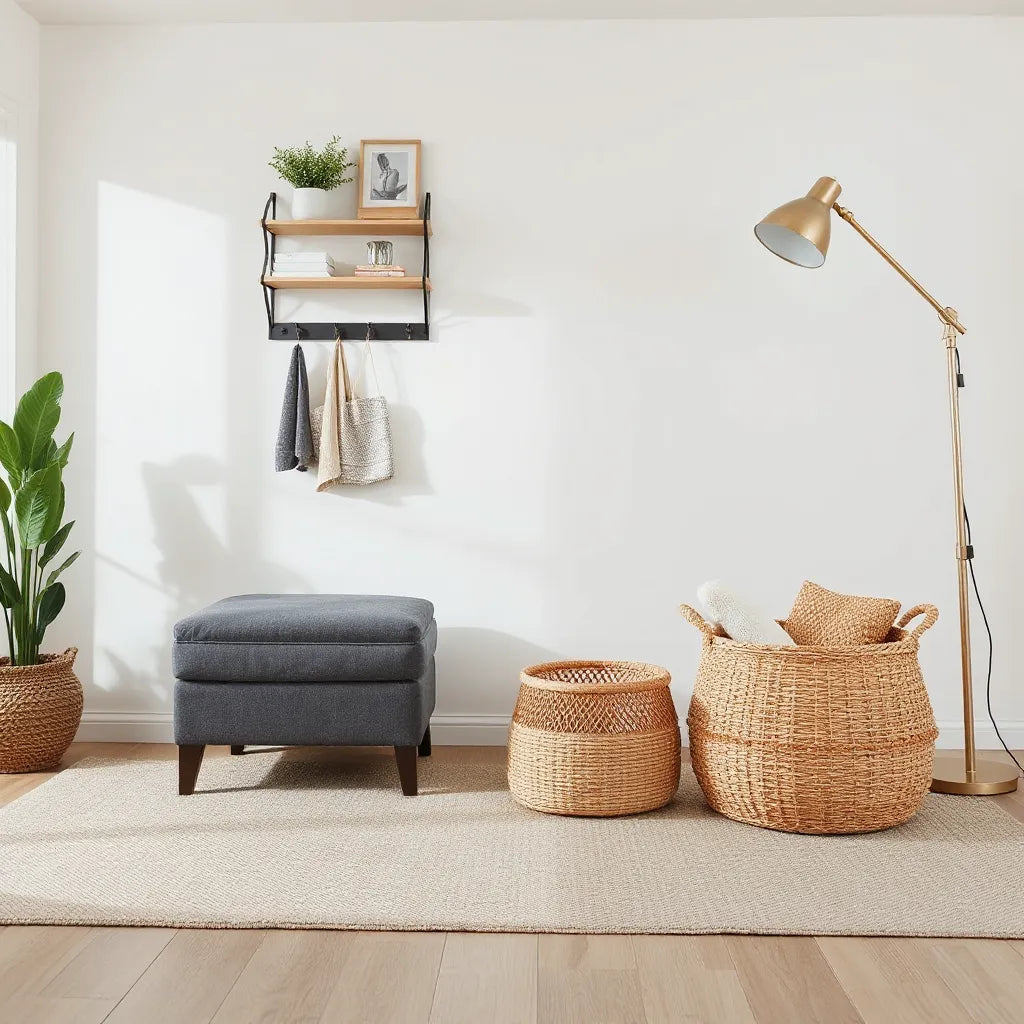
Hallways often have limited floor area. Wall-mounted systems and height-efficient storage reduce visual crowding. Vertical storage also prevents items from collecting on the floor, which improves both safety and appearance.
Support footwear and seasonal items
Seasonal storage is one of the largest drivers of household clutter. Functional accessories that separate categories, such as everyday footwear versus infrequent items, reduce the chance of unsorted piles.
If you are also planning event hosting, consider how your entry supports guests. A smooth guest arrival experience depends on clear pathways and accessible seating options. If you need party planning resources, you may find ideas at Party Savvy.
Functional Accessories for the Kitchen and Dining
In kitchen and dining spaces, functionality directly affects comfort, speed, and hosting flow. Well-chosen accessories can make meal preparation more efficient and improve the experience of shared time at the table.
Upgrade seating comfort with the right chair support
Dining seating is not only about appearance. It affects how long people can sit comfortably and how easily they can move around the table. When chairs are balanced in height and stability, guests settle faster and daily meals feel more pleasant.
As an example of design-forward seating, you can explore options such as Toshiro chair to see how form and practicality can align in a dining setting. The key idea is that functional accessories should support movement, not restrict it.
Protect surfaces and manage small clutter
Surface protection reduces ongoing wear and keeps daily cleaning manageable. Select accessories that prevent heat marks and scratches on frequently used areas. Use organizers that contain smaller items, such as utensils and dining accessories, so the table stays visually clean.
Create practical hosting readiness
Hosting often demands quick transitions. Keep frequently used serving tools and napkin stations in predictable locations. This reduces the time spent searching and helps you focus on conversation. The dining area becomes a controlled environment rather than a chaotic staging zone.

Dining staging diagram with clear serving flow
Functional Accessories for the Living Room and Work Area
Living rooms and home offices require a specific balance. They must look inviting while also supporting focus, storage, and everyday use. Functional home accessories are most effective when they reduce visual distractions and keep tools within reach.
Control cable and device clutter
Work areas accumulate chargers, cables, and small devices. Use cord routing strategies and containment solutions to keep cables out of sight. A clean cable plan also improves safety by reducing tangled wires and preventing accidental pulls.
Use storage to reduce “floating objects”
Many living rooms suffer from items placed on surfaces without a defined home. Functional accessories create a place for common objects such as remotes, books, and charging accessories. Over time, the room feels more intentional because surfaces become calmer.
Choose seating that supports everyday postures
When comfort is consistent, people use the space more often. A supportive chair and side accessory placement can improve everyday routines, such as reading, casual work, or conversation. If you prefer compact seating, compare options like Min chair to understand how scale can support both comfort and a tidy visual field.
Maintenance Habits That Preserve Function and Style
Function depends on condition. Even the best accessory choices will lose performance if maintenance is neglected. Use a simple maintenance approach that matches each material and finish.
- Adopt a routine cleaning schedule. Regular light cleaning prevents buildup that can affect sliding, stability, and appearance.
- Use appropriate cleaning methods. Select cloth types and cleaning agents that match the surface. Avoid practices that can damage finishes or coatings.
- Inspect frequently used hardware. Check for loose screws, wobbling structures, and worn components. Early fixes prevent larger issues.
- Protect high-contact areas. Add preventive care in zones that experience frequent touch, such as seating edges, handle areas, and tabletop contact points.
- Reset storage systems. Periodically review how items are stored. If categories drift, clutter returns even with the same organizer.
These habits preserve both visual quality and practical performance, so the space continues to support daily life rather than slowly becoming harder to manage.
Common Mistakes to Avoid
Functional home accessories should feel effortless. Several common errors can undermine that goal.
Buying by aesthetics alone
Appearance matters, but functionality is what determines long-term satisfaction. An accessory that looks good but is difficult to use will likely be moved or ignored.
Ignoring scale and clearances
Oversized items create bottlenecks and make rooms feel crowded. Always confirm clear walkways and correct spacing around seating and storage zones.
Overloading surfaces
Even functional items can clutter the visual field if too many are placed at once. Choose fewer items with clearer purpose and give each category a defined area.
Using mismatched finishes without a plan
Too many unrelated textures can make a room feel inconsistent. A material strategy helps: choose a small number of tones and repeat them across accessories for visual harmony.
Neglecting guest flow
In social settings, movement matters. Ensure that functional accessories do not obstruct pathways and that seating placement allows easy access to tables and common areas.
FAQ
How do I know which functional home accessories will truly improve my space?
Identify one recurring problem first, such as where items collect, where you lose time, or what surfaces become messy most often. Select accessories that directly solve that issue and place them near the activity that causes the friction. This approach limits impulse purchases and increases long-term satisfaction.
What sizes should I measure before buying storage or seating accessories?
Measure the available width, depth, and height where the accessory will sit or move. Also confirm clearances for doors, walkways, and seating movement. If the item is used frequently, include a small buffer zone so normal use does not force awkward adjustments.
Are functional home accessories compatible with minimalist or traditional design styles?
Yes. Function can be expressed through subtle design choices such as clean lines, consistent tones, and practical placement. Minimalist interiors benefit from concealed or streamlined storage, while traditional spaces can use functional pieces with classic finishes and proportions.
How can I maintain functionality if my household has high traffic?
Choose durable materials, clean regularly using surface-appropriate methods, and inspect for loose hardware or wear. Storage systems should be easy to return to use. When items have a clear home, high-traffic homes stay organized with less effort.
About the Author
Nisu Home focuses on practical interior design and well-considered home solutions. As a topic expert in functional living, Nisu Home helps readers understand how to select accessories that support daily routines, maintain visual harmony, and improve comfort. For a deeper look at design-driven pieces, explore the collection at Nisu Home. Thank you for reading, and take action by choosing accessories that solve real daily problems first.

Leave a comment
This site is protected by hCaptcha and the hCaptcha Privacy Policy and Terms of Service apply.