

Updated on: 2026-08-24
Minimalist home ornaments help you create a calmer visual rhythm without sacrificing personality. They work best when you choose a clear theme, limit the number of pieces, and focus on proportion and negative space. With the right materials and finishes, these accents can make a room feel more intentional and easier to maintain. This guide covers practical selection criteria, pros and cons, and a buyer checklist for reliable results.
Did You Know?
- Negative space is not emptiness. It is a deliberate design tool that can make decor feel more premium and less cluttered.
- In minimalist styling, a single focal accent often performs better than multiple small objects placed randomly.
- Texture can replace quantity. Matte surfaces, brushed finishes, and subtle grain patterns add depth without visual noise.
- Lighting changes how ornaments are perceived. The same accent can look warmer or cooler depending on light temperature and direction.
Comparison: Pros & Cons
-
Pros
- Helps reduce visual clutter and makes rooms feel more organized.
- Supports flexible styling because fewer pieces are easier to re-arrange.
- Often pairs well with neutral palettes, natural wood, and modern furniture lines.
- Encourages better quality choices by limiting the number of items.
-
Cons
- If pieces are too similar, the room may feel flat without contrast or texture.
- Over-minimizing can remove character. The goal is restraint, not emptiness.
- Incorrect scale can make ornaments look lost rather than intentional.
- Some designs require careful cleaning and gentle handling due to delicate finishes.
Buyer’s Checklist
- Purpose: Decide whether the ornament is a focal point, a supporting accent, or a finishing touch.
- Theme consistency: Choose one style direction such as Scandinavian simplicity, modern calm, or natural texture.
- Color discipline: Select one primary neutral and one accent tone. Avoid adding too many new colors.
- Material fit: Match the ornament material to nearby finishes (wood, metal, stone, ceramic, fabric).
- Proportion: Ensure scale fits the surface and viewing distance. A piece that is too small will look accidental.
- Balance: Use the rule of visual weight. If the ornament is heavier, offset it with lighter elements or open space.
- Placement plan: Pre-visualize where the ornament will sit, including how it will look from doors and seating areas.
- Maintenance: Confirm the cleaning method you can realistically keep up with over time.
Minimalist Home Ornaments: What “Less” Should Look Like
If you are searching for minimalist home ornaments, start with a clear idea of how you want the room to feel. Minimalism is not only about removing items. It is about reducing visual friction so the remaining pieces speak with more clarity. In practice, that means selecting fewer accents with stronger design intent. A refined ornament should complement the room, not compete with it.
A useful approach is to treat each accent as a sentence in a short text. One well-chosen “sentence” can anchor the entire composition. Multiple weak sentences create noise. Consider placing one ornament on a console, shelf, or side table and then repeating a related visual element elsewhere, such as a similar material or a matching tone.
For many homes, the best minimalist result comes from pairing decor with functional furniture lines. When the furniture already has clean geometry, ornaments should add texture or a subtle silhouette rather than bold patterns. This strategy is especially effective in living rooms, entryways, and bedroom corners where visitors focus first.

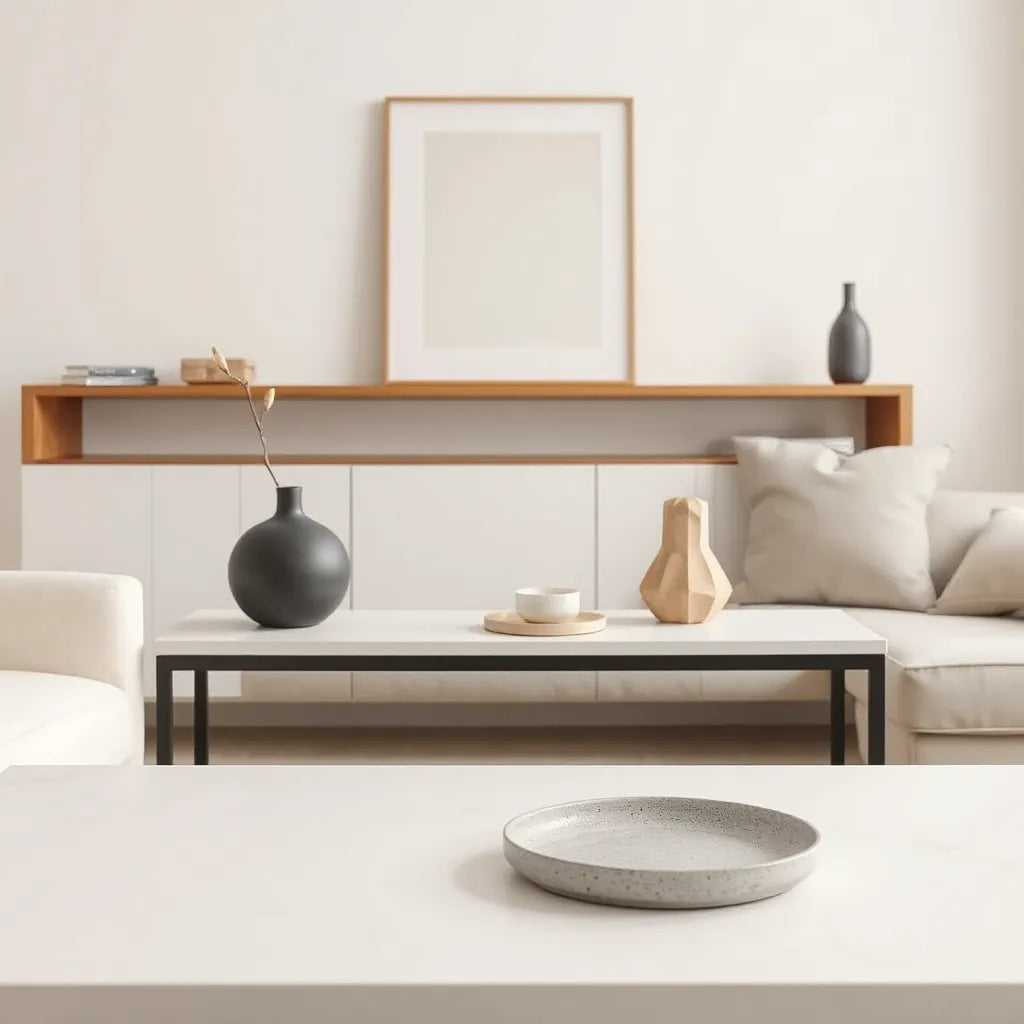
Negative space composition with neutral textures and strong lines
Define your ornament role before you shop
Ornaments can play different roles. Some create a focal point above a console or near a media wall. Others provide calm structure on a shelf. Still others act as gentle punctuation on a coffee table. Before purchasing, decide which role you need. When you align the ornament role to the space, you avoid the common mistake of collecting decorative items without a consistent plan.
To make this decision, review your room in daylight and evening light. Look for areas that feel incomplete. The right minimalist accent will often fill that gap by improving rhythm and proportion.
Materials and Finishes That Stay Timeless
Materials determine whether minimalist accents feel expensive or temporary. When you prioritize durable, neutral-friendly materials, the decor remains suitable even as your tastes evolve. Common choices include matte ceramics, brushed metal finishes, natural wood tones, and textiles with simple weaves. These materials introduce depth without loud color.
Finishes matter as much as materials. Matte surfaces hide minor imperfections and reflect less glare. Brushed or satin finishes tend to create soft highlights that look refined in varied lighting. If your room has glossy elements, balance them with matte ornaments to maintain visual calm.
Also consider how your existing surfaces behave. If your home has a lot of warm wood and fabric, ornaments in warm stone or sand-toned ceramic usually integrate well. If the room is dominated by cool grays and metal, neutral white ceramic or light oak accents often provide the clean contrast that minimalism requires.
Choose texture over repetition
Minimalism often succeeds through texture rather than quantity. A single sculptural form with a subtle pattern or grain can add dimension. If you want multiple accents, vary their shapes while keeping finishes consistent. For example, a smooth ceramic element can pair with a textured base, but both should share the same color temperature.
Placement, Scale, and Visual Balance
Even the most well-designed minimalist ornament can look wrong if the scale and placement do not match the space. Start with measurement. The ornament should not feel cramped beside other items, nor should it look floating without purpose. A practical rule is to evaluate the ornament at eye level and again from a seated position. The correct size will feel stable in both views.
Balance is the second factor. Visual balance does not always mean symmetry. It means the room feels steady. If you place one ornament on one side of a console, you can offset it with a second element elsewhere, such as a small tray, a book stack, or a plant container with similar visual weight. The key is to create a deliberate distribution of attention.
Height is another often-overlooked detail. A low ornament can work on a coffee table, but it may be visually lost on taller shelving without a supporting arrangement. When you build a vertical composition, keep the largest silhouette aligned with the highest “anchor” in the area, such as a wall art piece or a lamp shade.

Layered shelf styling with height variation and open gaps
Use an “anchor + supporting” arrangement
An effective method is to select one anchor point and support it with smaller, quieter elements. The anchor provides the main silhouette. The supporting elements repeat materials or colors without adding new visual topics. This method prevents over-styling and helps your space remain cohesive throughout the year.
When you style entryways, consider the viewing distance from the door. Objects placed too far can appear like clutter rather than design. For entry consoles, a single sculptural accent plus a functional item often achieves the best balance.
Maintenance and Budget Planning
Minimalist home ornaments can be easier to maintain than layered decor, but they still require care. Surfaces that collect dust quickly will show it faster when surrounding areas are uncluttered. Plan for routine cleaning with soft cloths and gentle products suited to the material. If your home has pets or high foot traffic, choose ornaments with finishes that tolerate frequent light cleaning.
Budget planning should focus on fewer purchases with stronger quality. Minimalism usually rewards better craftsmanship because you see and handle each piece more often. Instead of buying many low-cost accents, consider selecting one or two statement ornaments and then adding complementary items later if needed. This staged approach helps you learn your preferences without committing to a complete theme upfront.
If you are building a cohesive look, it can help to coordinate ornament styling with your furniture selection. For example, clean-lined seating can support a calm decor direction. If you want a practical starting point, you can explore seating options such as the Izumi chair to understand how modern silhouettes influence overall room tone.
For additional inspiration, some homeowners also benefit from browsing other home design assortments and styling resources. If you want a broader retail view, you can review offerings from Harappakart for general decor ideas that can be adapted to a minimalist direction.
Final Thoughts & Advice
Minimalist home ornaments are most effective when they support a clear design intention. Choose a limited set of accents that share a consistent palette, material language, and scale. Build around negative space so each ornament feels deliberate and visually calm. If you feel uncertain, begin with one focal piece and refine placement over time.
Keep your room flexible. Seasonal changes can be done through simple substitutions in color or texture while preserving the minimalist structure. When you treat decor as an ongoing edit rather than a one-time purchase, your space remains coherent and visually satisfying.
Q&A Section
How many minimalist ornaments should be on a table or shelf?
A practical starting point is one primary ornament plus one supporting element. For shelves, you can use two or three pieces if their colors and materials match and their heights create a clean rhythm. If the area looks crowded, reduce quantity before changing style.
What colors work best with minimalist home ornaments?
Neutral tones typically work best: white, cream, beige, light gray, and charcoal accents. You can also introduce one restrained color from your existing room scheme, such as muted green or soft terracotta, but limit it to a single accent hue to maintain visual consistency.
Are minimalist ornaments only suitable for modern interiors?
No. Minimalism can adapt to many interior styles. In traditional rooms, minimalist accents introduce calm structure. In Scandinavian spaces, they enhance natural light and textures. The defining factor is not the architectural period but the discipline of materials, scale, and negative space.
How do I choose the right scale without overbuying?
Measure the surface area and consider viewing distance. Then shortlist options by height and footprint. If possible, plan your placement before purchase and test the arrangement by visualizing the silhouette through online images or simple layout sketches.
What is the safest way to start if I want a minimalist look?
Begin with a single ornament that matches your room’s dominant materials. Place it as an anchor, then support it with one smaller element or a functional object. Once the space looks balanced, evaluate whether you need any additional accents.
How often should minimalist ornaments be cleaned?
In most homes, a light dusting weekly or every two weeks is sufficient, depending on air conditions. For deeper cleaning, follow the care guidance for the specific material. Since minimalist spaces show dust more clearly, consistency matters more than intensity.
Can I mix textures and shapes in minimalist home ornaments?
Yes, and it is often the most effective strategy. Vary shapes while keeping a consistent finish family. For example, mix matte ceramic with brushed metal or natural wood, as long as the color temperature remains aligned. This creates depth without visual chaos.
Do minimalist ornaments need to be perfectly matched?
They do not need to be identical. Minimalism emphasizes coherence, not sameness. Use consistent tones, repeated materials, and a shared design language so each ornament looks intentional even when styles differ slightly.
What common mistake should I avoid?
The most common mistake is adding too many items before establishing a focal point. Start with one anchor ornament and then refine. If you cannot identify a visual center, remove pieces until the room feels composed.
Can lighting change how ornaments look?
Yes. Warm light can make neutrals feel softer, while cooler light may enhance contrast. If you notice ornaments looking harsh or washed out, adjust lamp placement or bulb temperature before replacing decor.
What surfaces are best for displaying minimalist ornaments?
Flat surfaces with enough breathing room work best: consoles, side tables, and open shelving. Walls can also serve as a display context, but ensure the ornament size fits the wall scale and does not crowd nearby items.
Where can I find ideas for cohesive minimalist styling?
You can start with room-by-room analysis: identify dominant materials, select one accent palette, and then choose ornaments that align with those decisions. Observing how light moves across surfaces will also guide your selection and placement.
How can I make a small room feel more spacious with ornaments?
Use fewer pieces with larger negative space around them. Select ornaments that are visually light, such as slender silhouettes or matte finishes. Avoid placing multiple objects at the same height across a single surface.
Should I place ornaments near functional items?
Yes, when it supports the layout. A minimalist ornament next to functional objects can make the display feel purposeful. The goal is to create an intentional relationship rather than random decoration.
What should I do if my room feels too empty?
Add one well-scaled ornament and introduce texture through a single supporting element, such as a neutral tray, a book with a calm cover palette, or a soft textile layer. This preserves minimalism while restoring visual comfort.
Is it better to shop in sets or individually?
Individually is often better for minimalist home ornaments because it supports precise matching to your space. If you choose sets, ensure they share the same materials and tone and that each piece still has a defined role.
Do minimalist ornaments work in bathrooms or kitchens?
They can, provided materials are suitable for moisture and cleaning. Select finishes that tolerate frequent wiping and avoid designs that trap water or require delicate handling in high-humidity areas.
About the Author
Nisu Home
Nisu Home focuses on home styling strategy with an emphasis on clean design, practical selection, and cohesive interiors. The author brings experience in organizing decor systems that help homeowners create calm, modern spaces. Thank you for reading and applying these principles to your home with confidence.

Leave a comment
This site is protected by hCaptcha and the hCaptcha Privacy Policy and Terms of Service apply.