

Updated on: 2026-08-05
Clear dining spaces require more than good lighting. The right piece of furniture can define the entire mood of a room without visual clutter. Dining tables in minimalist design focus on proportion, calm surfaces, and practical durability. When you choose with intention, your table becomes a functional centerpiece that still feels light. This guide explains how to select, style, and maintain a minimalist dining table that supports everyday living.Table of Contents
Why Minimalism Works for Dining Spaces
Minimalism in dining is not the absence of personality. It is the discipline of selecting fewer elements that work harder. A dining table in minimalist design creates a clear focal point while preserving open sightlines. This matters in both small and large rooms, because the table visually anchors movement and conversation.
In practice, minimalist dining furniture tends to follow three principles: clean geometry, calm material expression, and balanced negative space. Clean geometry reduces visual noise. Calm material expression lets wood grain, stone texture, or matte finishes remain the main visual story. Negative space around the table helps the room feel composed rather than crowded.
Minimalism also improves daily usability. When the design is simple, it is easier to clean, easier to rearrange, and easier to pair with chairs, lighting, and tableware. This is why many homeowners treat the dining table as the foundation of a coherent interior.
How to Choose Dining Tables in Minimalist Design
Choosing the right table starts with function, then moves to style. A minimalist aesthetic should still support real meals, school work, and gatherings. Begin by defining your most frequent use case: weekday dinners, family hosting, remote work, or occasional entertaining. From there, select shape, scale, and structure that match your routine.
1. Select a shape that fits circulation and sightlines
Rectangular tables often suit longer rooms and standard seating layouts. Round or oval tables soften the visual field and encourage conversation, especially in open-plan areas. Square tables can work well for compact dining spaces, provided you plan seating clearance carefully.
2. Prioritize a stable base with visual calm
Minimalist tables commonly use streamlined legs, subtle supports, or well-integrated bases. Look for structural stability without bulky design features. A stable base allows chairs to align cleanly and reduces the need for frequent adjustments during use.
3. Match table height to your chair plan
Dining comfort depends on seat height and leg clearance. When chair height is correct, diners can sit comfortably and the table remains easy to reach. If you already own chairs, measure chair seat height and ensure the table offers adequate room for legs and posture.
4. Choose proportion over decoration
Minimalist design relies on proportion. A table that is too thin can look fragile and may feel less grounded. A table that is too heavy can overpower a room. The goal is a balanced visual weight that supports the space without dominating it.

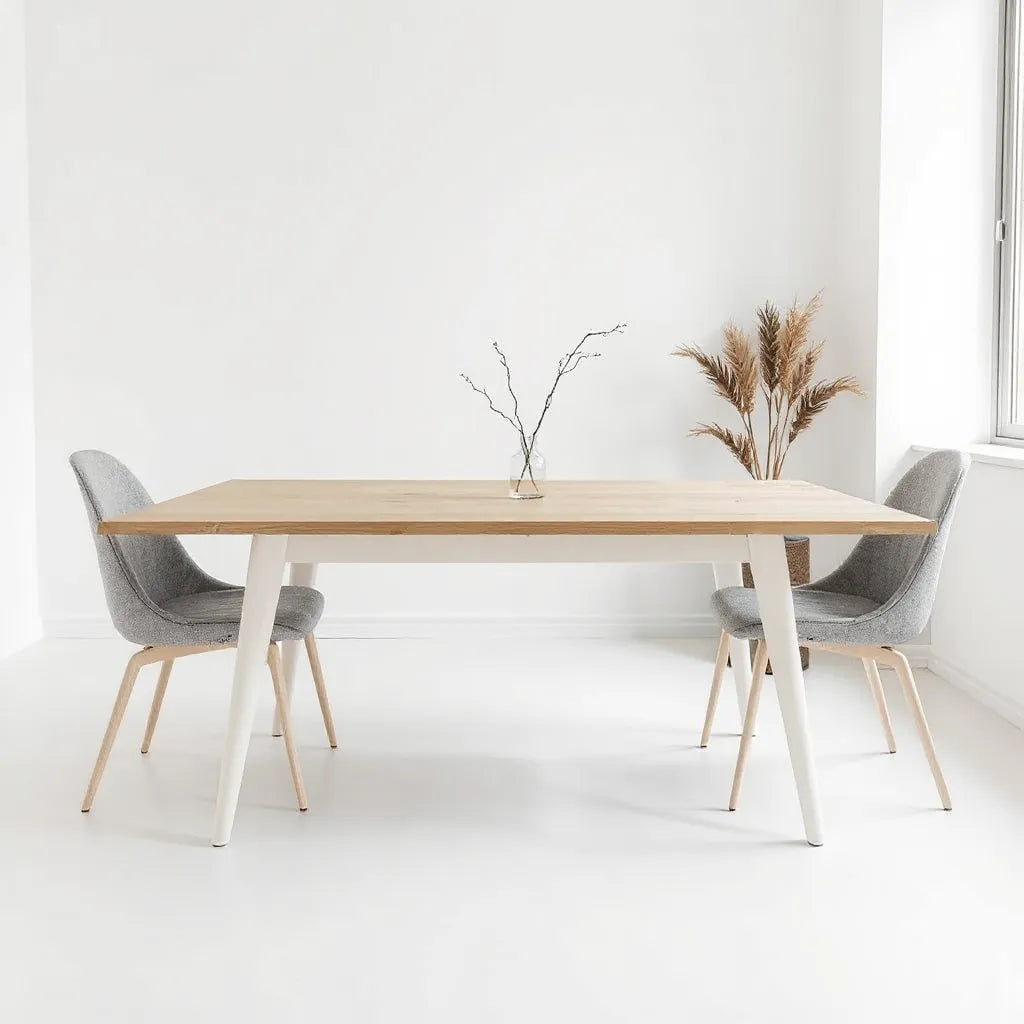
Simple silhouettes and clear spacing guide table selection
Once you confirm shape and scale, the next step is to select materials and finishes that align with your lifestyle and maintenance preferences.
Materials and Finishes That Stay Timeless
The best minimalist dining tables express material character rather than surface decoration. Material selection affects appearance, tactile comfort, and how the table handles everyday life.
Wood: Warmth with a natural visual rhythm
Wood offers warmth and visual continuity, especially in neutral interiors. For minimalist styles, look for clean edges and restrained grain presentation. A matte clear coat can reduce glare and keep the surface looking even over time.
Stone or stone-look surfaces: A refined, low-contrast finish
Stone surfaces can deliver an elegant, composed look. In minimalist environments, the key is consistent texture and controlled veining. If you prefer a cooler tone or a more formal dining mood, stone or stone-inspired finishes often fit well.
Metal accents: Use sparingly and with intention
Minimalist design can include metal elements, but they should support the structure rather than introduce complexity. Thin metal legs or subtle frames can add precision while keeping the overall visual language clean.
Color strategy: Choose one main tone, then repeat it
A minimalist table looks most coherent when its color appears elsewhere in the room. For example, wood tones can echo the color of flooring or wall trim. Neutral finishes such as natural oak, walnut, light ash, or matte black can coordinate with textiles and lighting.
Space Planning and Seating Proportions
Minimalism depends on space. Even a perfect table can feel uncomfortable if clearance is incorrect. Before purchase, plan around your dining area so movement remains fluid and seating stays comfortable.
Measure clearance for comfortable movement
Plan enough room for chairs to slide back without catching on nearby furniture. Aim for clear circulation paths to doors and walkways. If your room is narrow, consider a smaller footprint or a layout that uses fewer pieces.
Decide seating count based on real use
Minimalist interiors often feel best with fewer chairs that match the table’s proportion. If you frequently host larger groups, select a table that can scale visually through flexible styling, such as seasonal placemats or a tailored centerpiece rather than adding bulky accessories.
Use visual alignment to keep the space calm
When chairs align evenly and table legs sit in a consistent visual grid, the room feels ordered. Avoid mixing chair styles that clash in leg thickness or height. A cohesive chair set helps the minimalist table look intentional rather than accidental.
Minimal Styling: What to Keep, What to Remove
Styling is where many minimalist dining rooms fail. The goal is not to remove everything; it is to reduce distractions. A dining table in minimalist design should feel ready for use, not staged for a photo. Use styling principles that create order while leaving surface space available for daily tasks.
Choose one focal element, not three competitors
Consider a single centerpiece such as a low vase with a small arrangement, a simple tray, or a stack of coasters. Keep the height low so sightlines remain open. Avoid tall structures that block conversation.
Use tableware with consistent tones and textures
Select plates, bowls, and linens in limited tones. A neutral palette can include natural whites, warm beige, matte black, or light gray. Texture differences, such as linen and ceramic, add depth without visual clutter.
Let negative space do the work
Negative space makes the table feel calm. Avoid covering the entire surface with accessories. Leave room for serving, cutting, and everyday use. When the table is not crowded, diners naturally focus on the meal and each other.
Coordinate lighting and wall elements
Minimal dining tables are enhanced by lighting that matches their scale. Pendant lights with clean silhouettes can highlight the tabletop without adding visual noise. Wall art should be measured so it does not compete with the table as the primary focal point.

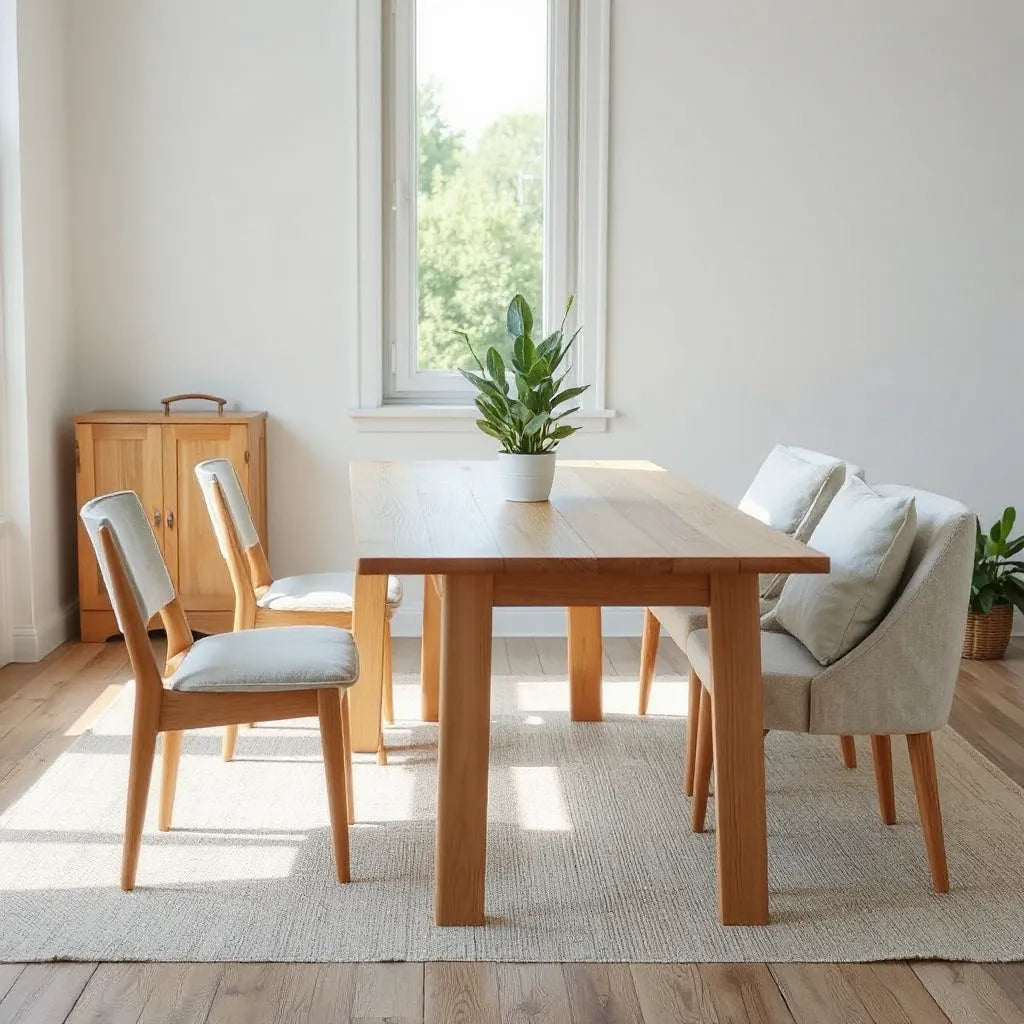
Low centerpiece, open sightlines, and restrained table tones
Minimal styling works best when you select chairs and supportive pieces that share the same design logic. If you are building a coordinated dining set, chair selection becomes part of the table experience.
Care and Maintenance for Everyday Durability
Minimalist furniture looks best when it remains clean and properly maintained. Daily care is simple and does not require specialty products. The aim is to protect surfaces, prevent residue buildup, and respond to spills quickly.
Use protective habits during everyday use
Place trivets under hot items and use coasters for beverages. This reduces heat marks, ring stains, and finish dulling. For glassware and serving dishes, avoid dragging items across the surface.
Clean with gentle methods
Most minimalist table finishes perform best with soft cloths and mild, non-abrasive cleaners. Wipe spills promptly and dry the surface to avoid water spots. If your table has a wood finish, avoid soaking the surface.
Manage seasonal humidity for wood tables
Wood can respond to humidity changes. Use a controlled indoor environment when possible and consider periodic surface conditioning with products intended for the specific finish type.
Inspect hardware and stability
If your table includes removable legs or modular connections, check fasteners periodically. Tighten gently to maintain alignment. Stability supports comfort and extends the furniture’s usable life.
If you are also coordinating seating, selecting chairs with compatible silhouettes can make care routines easier. A consistent set tends to sit cleaner and reduces the need for constant adjustment.
Buying Checklist Before You Decide
A minimalist dining table purchase should reduce uncertainty. Use this checklist to evaluate quality, fit, and long-term satisfaction.
- Measurements confirmed: table dimensions, clearance around chairs, and door or walkway space.
- Seating compatibility: chair height and leg clearance allow comfortable posture.
- Surface practicality: finish type matches your cleaning preferences and daily usage.
- Material expression: grain, texture, or tone aligns with the rest of your interior palette.
- Structural confidence: stable base design supports regular use without wobble.
- Styling flexibility: easy to dress with limited accessories and consistent tones.
To create a cohesive minimalist dining setup, you may also want to review chair options that share a clean, modern language. For example, modern dining seating options can help maintain visual consistency around a minimalist table.
If you prefer a slightly more sculptural look, consider how chair legs and back profiles visually connect with the table base. You can explore additional styles such as refined chair silhouettes to complement minimalist tabletop designs.
Frequently considered question: Is minimalist design only for small rooms?
No. Minimalism works in large rooms because it creates clear composition and preserves breathing space. In both cases, the table becomes a calm anchor that supports visual balance.
How do I prevent a minimalist table from looking too plain?
Use texture and repeat tones. For example, combine a simple tabletop with linen napkins, matte ceramic dishware, and a low centerpiece. Keep decorative items minimal, but select them with deliberate texture variety.
What should I prioritize if my dining area is used for work and meals?
Select a table surface that is easy to clean and organize. Keep a tray or organizer system for daily items, and rely on neutral styling so the table can shift between meal use and working sessions without visual clutter.
Author Bio
Nisu Home supports thoughtful home design with a focus on functional minimalism. Our expertise centers on furniture selection, material-aware styling, and practical maintenance habits for everyday interiors. We advise readers on how to build cohesive dining spaces that feel calm, durable, and visually balanced. Thank you for reading, and consider refining your dining setup with intentional choices that you will enjoy long term.

Leave a comment
This site is protected by hCaptcha and the hCaptcha Privacy Policy and Terms of Service apply.