

Updated on: 2026-07-08
Choosing the right fabric can change the look, comfort, and lifespan of a room. Cotton-linen upholstery blends the softness of cotton with the natural structure of linen. This combination suits both modern interiors and timeless settings. It also offers a practical balance between breathability and everyday durability when the finish, thread count, and care routine are chosen correctly. This guide explains how to select, maintain, and style cotton-linen upholstery with confidence.
Practical Guide: How to choose cotton-linen upholstery
Cotton-linen upholstery has a distinct visual character. It typically shows subtle texture and a softly structured drape that can make furniture look more inviting. However, “cotton-linen” does not describe one single fabric. The performance depends on the weave, blend ratio, yarn quality, dye method, and how the fabric is finished.
Select the right weave for your use case
Upholstery fabrics are produced in different weaves, such as plain weaves and more complex constructions. A tighter weave can resist snagging and helps maintain a crisp appearance. A looser weave can feel more relaxed but may require careful placement away from frequent abrasion.
Consider how the piece is used daily. Dining chairs, frequently handled armchairs, and pet-prone areas benefit from denser weaving. Low-traffic accent pieces can use a more open look if maintenance access is easy.
Evaluate the blend and how it affects feel
In a typical cotton-linen mix, cotton contributes smoothness and color depth, while linen adds that natural, airy texture. Blends also change how the fabric reacts to humidity and long-term wear. A higher cotton proportion often feels softer earlier, while a higher linen proportion can create a more pronounced, crisp surface.
For seating that must remain visually consistent, select a fabric with a stable dye process and a finish that reduces shifting over time. If you favor a lived-in appearance, linen-forward blends often develop a natural patina.
Confirm color performance and stain resistance
Color choice affects both aesthetics and maintenance. Light shades can show wear faster, while deeper tones often hide minor marks. Still, cotton-linen upholstery is a natural-fiber option, which means stain removal should be handled with care and correct techniques.
When possible, confirm whether the fabric has an upholstery-grade treatment designed for everyday protection. Then, plan for spot cleaning using gentle methods. Avoid saturating the fabric. Instead, use controlled moisture and blotting to limit ring marks.

Textured fabric swatches in balanced warm and neutral tones
Check construction details before committing
Even the best cotton-linen upholstery can look uneven if the furniture build is not aligned with how fabric behaves. Look for stable frame construction, well-tensioned upholstery, and seams positioned to reduce stress points. If you are upholstering furniture yourself, plan seam allowances carefully because linen texture can show line changes more clearly than smoother fabrics.
Also check how the fabric is handled around corners and edges. A good upholstery job will keep the weave pattern aligned and avoid stretching that can distort the surface. Proper backing and cushion layering can also reduce rubbing that leads to early pilling.
Use a practical selection workflow
To choose confidently, use a short evaluation sequence:
- Match the fabric to the room’s lighting. Natural light can make linen texture more visible.
- Decide on the desired visual outcome: refined and tailored, or relaxed and organic.
- Assess traffic and risk. Place the most stable fabrics where contact is highest.
- Confirm cleaning compatibility. Ensure you have the right brushes, cloths, and stain procedure.
- Compare sample panels side by side over the same period of time.
Key advantages of cotton-linen upholstery
Cotton-linen upholstery is favored for a reason: it offers a visual softness while maintaining a practical level of resilience. Many designers select it because it can balance comfort with an elevated look. The fabric tends to pair well with wood, metal, and natural textiles, which makes it versatile for many interior styles.
Comfort with an organic texture
Natural fibers can feel breathable and comfortable. Cotton contributes to a softer hand feel, while linen adds an open, tactile texture. When used in upholstery, that combination often creates a surface that looks warm without appearing overly glossy or plastic-like.
Style versatility across interior themes
Subtle texture can work with both minimalist and traditional spaces. Cotton-linen upholstery can appear refined in neutral palettes and can also support stronger styling when paired with pattern textiles. It pairs especially well with light woods, matte metals, and layered soft furnishings.
Breathable nature for everyday living
Breathability can improve comfort during daily use, particularly in rooms where airflow matters. While every home is different, natural-fiber blends can support a more comfortable seating experience than heavier, more sealed fabrics.
Long-term visual appeal when cared for properly
When maintained with correct cleaning practices, cotton-linen upholstery can retain its character and avoid sudden appearance changes. Fabric texture can mask minor surface changes better than ultra-smooth options. Over time, natural fibers can develop a gentle patina, which many homeowners consider a desirable outcome.
Designed to layer with other textiles
Cotton-linen works well with throws, rugs, and curtains that use wool, cotton, or linen. Because texture is already present, it can reduce the need for heavy visual patterns to achieve interest. You can build depth using tone, weave, and scale rather than relying solely on color contrast.

Neutral seating styling with layered textiles and soft shadows
Where cotton-linen upholstery performs best
Not every piece requires the same fabric behavior. Cotton-linen upholstery can be an excellent choice for several furniture categories, provided expectations are aligned with daily use.
- Living room seating where comfort and appearance are both priorities.
- Bedroom seating accents that benefit from a soft, inviting surface.
- Dining chairs used with planned cleaning routines.
- Home office seating when combined with protective covers in high-traffic periods.
For high-contact environments, such as homes with frequent outdoor footwear use or constant heavy abrasion, it is still possible to use cotton-linen. The key is to select a denser weave and implement consistent care.
Complementary furniture pairing strategy
Fabric texture looks best when materials share a consistent design language. Matte wood tones often enhance the natural look of cotton-linen upholstery. Metal frames with a powder-coated finish can add contrast without making the fabric appear overly casual.
If you are selecting furniture for a cohesive room, consider how seating proportions will interact with textile texture. A structured frame can highlight the fabric’s weave and keep the overall silhouette clean.
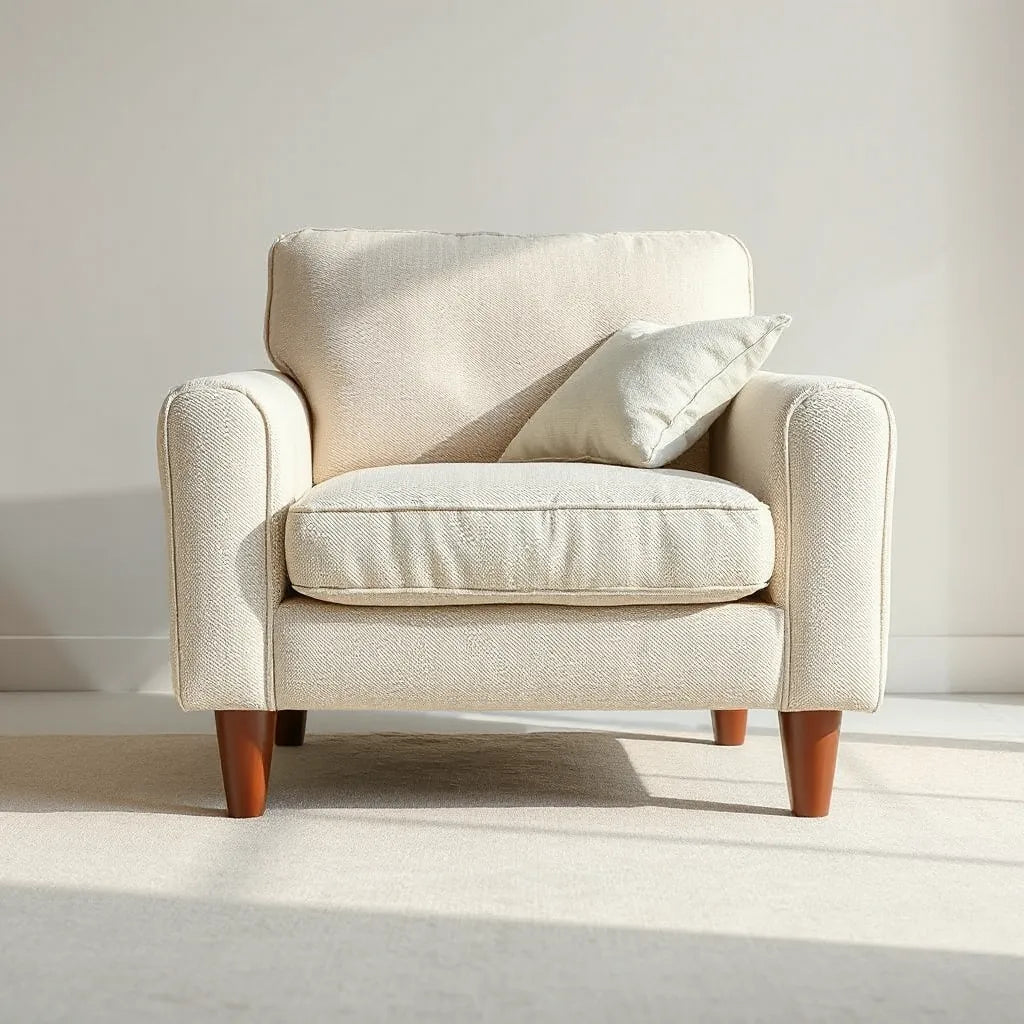
Yokina Chair - designer armchair UK

For styling inspiration, evaluate how an armchair shape complements woven textures. A well-proportioned chair can make cotton-linen upholstery appear intentional and balanced rather than visually busy. If you are exploring Scandinavian or minimal silhouettes, a chair with clean lines often supports the natural look of cotton-linen upholstery.
Summary & next steps
Cotton-linen upholstery can provide an elegant, natural look with comfortable daily performance. The best results come from choosing the right weave density, confirming color stability, and matching the fabric to how the furniture will actually be used. Maintenance matters: gentle spot cleaning, correct drying practices, and regular brushing help preserve texture and tone.
Next steps:
- Request fabric swatches and compare them in the lighting conditions where the furniture will sit.
- Define your care routine before purchase, including spot-clean tools and blotting cloths.
- Choose density and construction based on traffic level, not only on appearance.
- Test a small, hidden area if you plan to treat stains.
Q&A: Cotton-linen upholstery
Is cotton-linen upholstery suitable for everyday seating?
Yes, it can be suitable for everyday use when the fabric is selected for the intended traffic level. A denser weave and appropriate upholstery construction generally improve resistance to abrasion. Consistent spot cleaning also reduces the risk of permanent marks.
How should I clean cotton-linen upholstery without damaging the texture?
Use gentle methods and avoid oversaturating the fabric. Blot spills with a clean, absorbent cloth and work slowly from the outside toward the center. For routine upkeep, use a soft brush or vacuum with a fabric-safe attachment. If your upholstery requires a specific cleaner, follow the manufacturer guidance for upholstery-grade products.
Will cotton-linen upholstery fade over time?
Natural-fiber blends can fade when exposed to strong sunlight or repeated high-heat drying methods. To reduce fading, position furniture away from direct glare and use window coverings where necessary. For deeper color options, stable dye processes typically provide stronger long-term color retention.
Does cotton-linen upholstery pill easily?
Pilling depends on yarn quality, weave tightness, and abrasion frequency. Denser constructions usually pill less than open weaves. Regular brushing and careful handling around friction points can also reduce the look of pills over time.
About the Author
Nisu Home
Nisu Home is a home design and upholstery-focused brand that supports thoughtful product selection through practical material knowledge. Our expertise centers on fabric behavior, comfort-first design, and durable styling choices that fit real living spaces. We aim to help customers make informed decisions that remain attractive over time. Thank you for reading, and we welcome you to explore our selection at Nisu Home.
Disclaimer: This article is for general guidance only. Always follow the care instructions supplied by the upholstery manufacturer and test any cleaning method on an inconspicuous area first. Results vary based on fabric composition, dye finish, usage, and maintenance.


Leave a comment
This site is protected by hCaptcha and the hCaptcha Privacy Policy and Terms of Service apply.