

Updated on: October 12, 2026
Contemporary armchairs blend streamlined design with everyday comfort. The right choice depends on your room layout, seat size, upholstery performance, and style balance. Common errors include ignoring scale, choosing fabric without considering lifestyle needs, and overlooking support. This guide explains how to evaluate armchair features and match them to your interior goals, with practical buying criteria you can apply immediately.
Why Contemporary Armchairs Matter in Modern Living
Choosing seating is one of the fastest ways to shape how a room feels. Contemporary armchairs provide a focused design element, while still supporting daily relaxation. They often feature clean lines, refined proportions, and upholstery that suits a modern lifestyle. When selected thoughtfully, they can anchor a living room, soften the visual impact of hard surfaces, and improve how guests experience your space.
In this article, you will learn how to evaluate contemporary armchairs beyond appearance. You will also learn which features affect comfort, how to choose scale for your floor plan, and how to prevent common buying mistakes that lead to dissatisfaction after delivery.
Common Mistakes to Avoid
Many armchair purchases fail not because the chair looks wrong, but because it is wrong for the room and routine. Avoid these issues early, and you will make a more reliable decision.
Ignoring room scale: A chair that looks elegant in a showroom can overwhelm a small corner. Measure the space around the intended seat before you select the final footprint.
Overlooking seat and back proportions: Seat depth, back height, and arm height influence comfort. If these are not compatible with your body type and sitting habits, you may experience fatigue quickly.
Choosing fabric for aesthetics only: Upholstery must match your lifestyle. High-traffic households need abrasion-resistant materials and upholstery that is easier to maintain.
Matching style too tightly: Contemporary design works best when you maintain balance. If every piece is the same tone and texture, the room can feel flat. Use contrast in shape, color, or pattern.
Forgetting clearance for movement: Armchairs require space for door swings, circulation, and side tables. Poor clearance can reduce usability and make the room feel cramped.
Pros & Cons Analysis
Contemporary armchairs bring clear benefits, but they also have practical trade-offs. Use the following checklist to align expectations with reality.
Benefits of contemporary armchairs
Strong visual presence: Clean silhouettes and intentional proportions create a deliberate focal point.
Versatile styling: Neutral upholstery and modern frames often integrate well with both minimalist and transitional interiors.
Comfort-forward design: Many contemporary options focus on supportive seating rather than purely decorative forms.
Room zoning: An armchair helps define conversation areas in open-plan layouts.
Potential drawbacks
Space requirements: Even compact models usually need adequate circulation clearance around the chair.
Material sensitivity: Some upholstery types can show wear faster if they are not suited to your household needs.
Style can limit flexibility: Extremely specific forms may not integrate easily with future decor changes.
Cost variation: Quality frames, upholstery, and joinery often affect price, so budgets should be set with priorities in mind.
Visual Guidance: Layout and Comfort
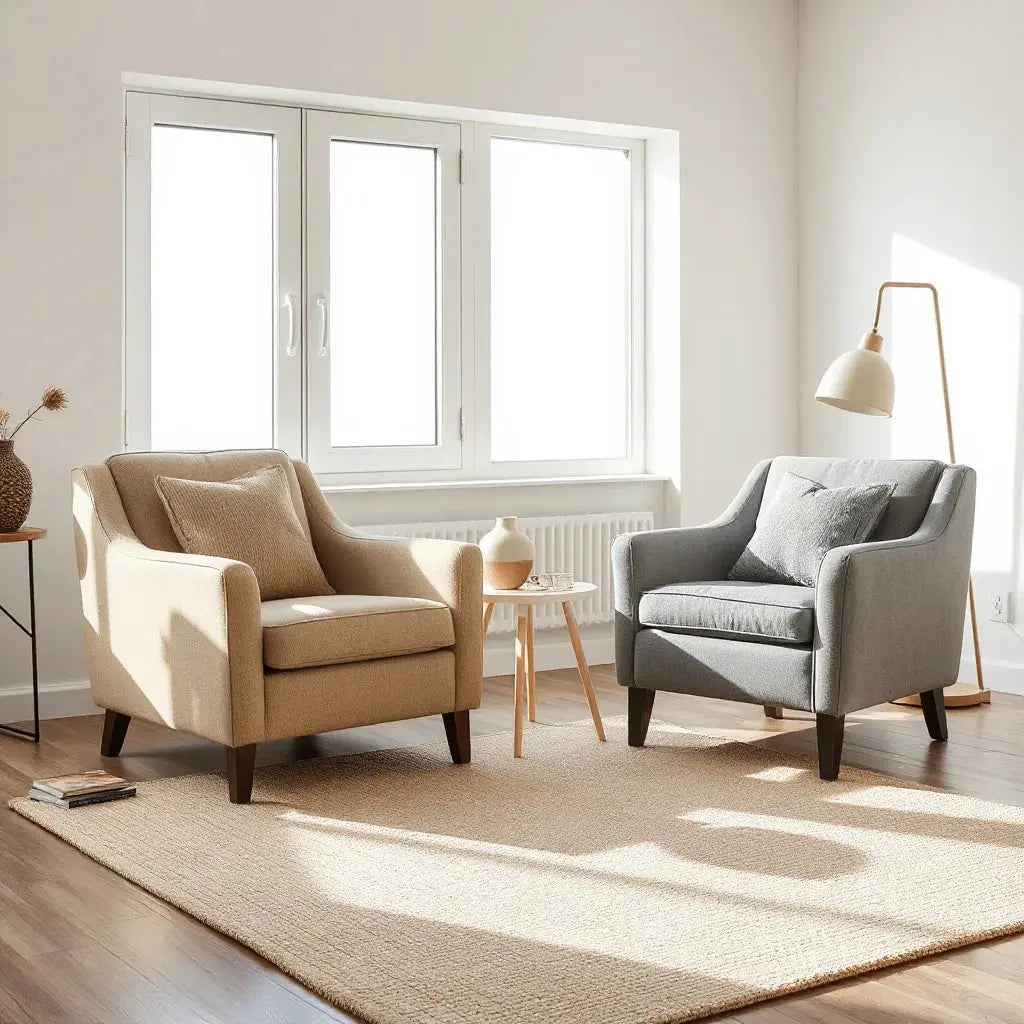
Comfort depends on fit, and fit depends on measurement. Start by selecting the intended placement, then verify clearances and seating angles. Contemporary armchairs typically feature structured forms, so you should confirm that the chair will align with your table height, reading posture, and walking paths. In addition, consider whether you want the chair to act as a standalone accent or part of a seating grouping.
Check seat depth and ensure your thighs feel supported without excessive pressure behind the knees.
Confirm arm height so elbows rest naturally while you read, converse, or work.
Verify back height for lumbar support and relaxed posture.

Measure room clearances and check seat depth visually
To reduce risk, treat the purchase like a fit check. If you frequently host guests, prioritize comfort features that remain satisfying for a range of body types. If you sit for longer sessions, emphasize supportive back design and stable arm structure. For smaller rooms, choose designs that keep visual weight low through slimmer legs or open profiles, but still provide real support.
How to choose the right scale
Scale is the difference between a chair that feels integrated and one that feels intrusive. A contemporary armchair should match other elements in the room. Compare chair height to nearby tables and shelves. If you place the chair near a side table, the top surface should be reachable without stretching.
As a general planning approach, leave room for movement between the armchair and nearby furniture. For conversation layouts, keep walkways open so guests do not feel constrained.
Styling contemporary armchairs without design fatigue
Modern interiors can become repetitive when too many elements share the same proportions. Contemporary armchairs help prevent that issue. The key is to create contrast in at least one dimension: shape, tone, or texture. For example, a chair with a sculptural silhouette can balance a room with flat cabinet fronts. Or, a chair upholstered in a warm neutral can soften the visual impact of cool-toned surfaces.
When you style an armchair, think in layers. Start with base materials, then add texture, then finish with accent color. This approach reduces the chance of selecting a chair that looks correct on its own but clashes in context.
Visual Guidance: Style and Material
Material choice determines both appearance and daily practicality. Contemporary armchairs typically use upholstery and frame combinations that aim to balance visual refinement with everyday use. Before choosing, evaluate how the material will age in your environment. If you have pets or frequent guests, prioritize fabrics that resist abrasion and support straightforward cleaning routines.
Upholstery considerations
Texture: Matte textures often hide minor wear better than high-gloss surfaces.
Color: Mid-tone upholstery can be more forgiving than very light shades in high-traffic spaces.
Performance: Choose fabrics designed for household use rather than decorative-only textiles.
Frame and structure considerations
Stability: A well-built frame should feel firm when you sit and when you shift position.
Support: Look for cohesive construction that keeps the back and seat aligned during use.
Visual weight: Sleek contemporary frames can make a room feel more open when floor space is limited.

Layer color swatches with fabric textures and frame outlines
How to integrate an armchair into common room layouts
Each room has its own rhythm. For a living room, position the armchair to encourage conversation. Place it near a sofa or facing a focal point such as a media console or artwork. In a reading corner, align the chair with a lamp and consider the natural viewing direction. In an office lounge area, aim for ergonomic comfort and easy access to side surfaces.
If you want a cohesive contemporary look, reuse design cues across items. Keep the color palette consistent, but vary the texture. For instance, a fabric armchair can pair well with smooth surfaces like glass and metal. This contrast adds depth without creating visual noise.
Quick Tips
Use these short steps to evaluate contemporary armchairs with less guesswork.
Measure the placement area and verify circulation space before selecting a specific model.
Prioritize seat depth and back height for your typical sitting posture, not only for how the chair looks.
Choose upholstery that fits your lifestyle, including cleaning needs and wear resistance.
Select one contrast element, such as a different tone or texture, to prevent the room from feeling flat.
Test the chair visually against nearby furniture scale. If the chair dominates the scene, adjust placement or size.
For multi-use rooms, choose designs that maintain comfort without sacrificing a clean profile.
Recommended way to compare options
Instead of comparing only appearance, create a simple evaluation order: comfort fit first, then materials, then structure, then style alignment. This method reduces the likelihood of selecting an attractive chair that underperforms in real use.
For a practical reference point, you can explore the following chair option from our collection.
Toshiro Chair

Wrap-Up & Key Insights
Contemporary armchairs can elevate your interior by combining modern form with functional comfort. Strong decisions start with scale, then move to seat and back fit, followed by upholstery performance. When you avoid common mistakes such as mismatched proportions or lifestyle-incompatible fabrics, your chair becomes a long-term part of your home rather than a short-term purchase.
If you are ready to refine your seating plan, begin by measuring your space and selecting an armchair that supports your daily routine. Then build the surrounding styling with balanced contrast so the room remains cohesive and inviting.
Q&A Section
How do I know which size contemporary armchair will fit my space?
Measure the intended placement area and confirm clearance on all sides. Then compare chair dimensions with nearby furniture, especially side tables and pathways. Pay attention to seat depth and back height for comfort fit, not only the overall footprint.
What upholstery type is most practical for everyday use?
For daily living, prioritize upholstery that can handle frequent sitting, routine cleaning, and normal wear. Look for performance-oriented fabrics and choose a color tone that matches your household activity level, since mid-tone shades often hide minor marks more effectively than very light options.
Can contemporary armchairs work in non-modern interiors?
Yes. Contemporary armchairs adapt well when you match the room’s palette and reuse one design cue, such as a shared neutral tone or a consistent texture. Adding contrast in shape or fabric can also help the chair feel intentional rather than out of place.
Should I buy a single armchair or multiple pieces for a cohesive look?
A single chair can anchor a corner or balance a sofa layout. Multiple chairs create a stronger seating zone for conversation, but they require more space and tighter layout planning. Select the quantity based on how you want guests to use the room.
About the Author
Nisu Home shares practical guidance on interior styling and home furnishing selection. The team focuses on how modern design elements can support comfort, durability, and visual coherence in real living spaces. If you are building a room from the ground up or refining what you already own, you are in the right place. Thank you for reading, and we encourage you to choose seating with confidence.

Leave a comment
This site is protected by hCaptcha and the hCaptcha Privacy Policy and Terms of Service apply.