

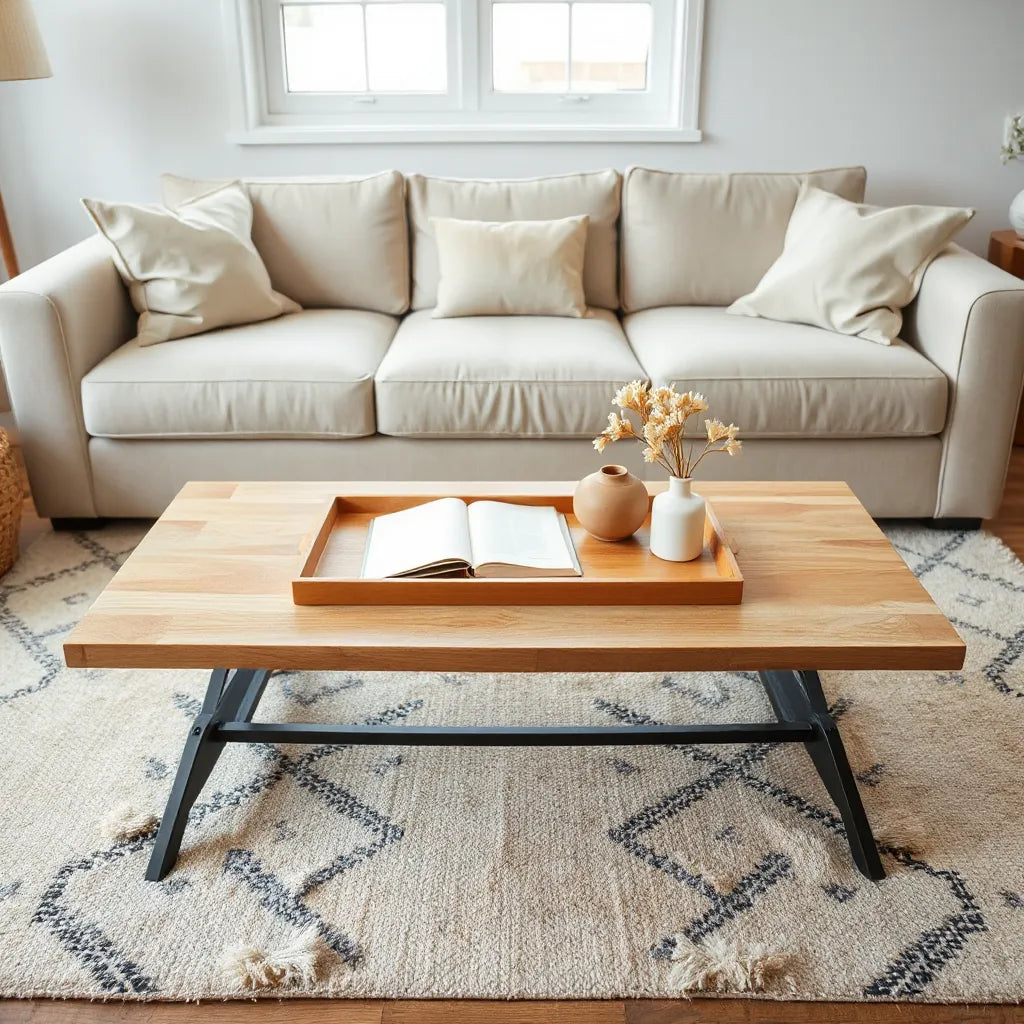
Updated on: 2026-07-13
Choosing the right Coffee Tables can improve both comfort and daily usability in your living space. The best choice depends on size, height, material, and how the piece fits your traffic flow. A thoughtful finish can also elevate the room’s style without requiring frequent changes. This guide explains common mistakes and offers practical recommendations for selecting a table that stays functional for years.
1. Sizing Coffee Tables for Your Room
2. Height and Proportions That Feel Right
3. Materials and Finishes for Long-Term Use
4. Placement Rules for Better Layout
1. Sizing Coffee Tables for Your Room
The most frequent reason people feel disappointed after purchase is simple: the table does not match the room’s scale. Coffee Tables are not only decorative surfaces; they influence movement patterns and the visual balance of seating. Start with your sofa and armchair dimensions. Then measure the open space where the table will sit, including the paths people use when walking between rooms.
A practical approach is to choose a table that supports everyday activities. If you often place a tray, books, or drinks on the surface, you need a top that is wide enough to prevent items from being pushed off. If your space is smaller, prioritize a compact footprint and consider storage options that reduce clutter.
For living rooms, allow space for comfort. People should be able to sit and reach forward without bumping knees against the table. Think about the number of seating pieces and how often you host guests. A larger gathering usually benefits from a broader surface or the option to add an additional side surface nearby.

Measuring tape, floor plan lines, seating rectangles
2. Height and Proportions That Feel Right
Height is a functional detail that strongly impacts daily use. When the surface is too high, it becomes awkward for seated activities such as reading or using a laptop. When it is too low, drinks and objects feel out of reach and may require constant adjustment. A well-proportioned table supports relaxed posture and natural hand movement.
To evaluate proportions, look at the height of your sofa cushions. In many modern interiors, the goal is a surface that visually aligns with the seat and supports comfortable reaching. Take a quick step: place a ruler or book stack at your desired height in the room, then sit on the sofa and check whether your hands can comfortably land on the top surface.
Also consider visual rhythm. Coffee Tables come in a range of top thicknesses and base designs. A chunky top can add stability to a bold sectional, while a lighter base can keep a small room from feeling heavy. If your seating has slim legs, a table with visible clearance can improve airflow and maintain a lighter look.
3. Materials and Finishes for Long-Term Use
Materials determine both durability and maintenance. Wood-based surfaces offer warmth and a timeless appearance. They also integrate naturally with most decor styles. If you select wood, look for a finish that resists everyday scuffs and supports easy cleaning. For households with frequent use, consider a finish that can handle regular wipe-downs without dulling quickly.
Metal frames and reinforced bases can add strength and stability, especially when the table is used with heavy items such as trays or decorative bowls. Glass or acrylic surfaces can make a room feel more open. However, they typically require more careful cleaning to maintain a clear appearance.
Finishes also affect how light moves through the room. A matte surface reduces glare and highlights texture, which can be desirable in bright spaces. A satin finish can balance practical visibility with an elegant sheen. If you prefer darker tones, ensure that the table does not dominate the visual weight of the room. Pairing a deeper finish with lighter textiles can create a controlled contrast.
In addition, think about how you will style the surface. If you frequently use trays for drinks or organize daily items, a textured finish can help hide minor wear. If you display a minimal look, a smoother top may better support a crisp, orderly visual.
4. Placement Rules for Better Layout
Even a well-sized Coffee Table can feel wrong if placement is careless. Begin by observing your seating arrangement and the direction of traffic. People should be able to walk behind or beside chairs without stepping around the table. If your room is open-plan, placement affects how the living area connects with other spaces.
Common guidelines help: the table should sit centered relative to the main seating and at an approachable distance from the sofa. Allow enough clearance for legs and movement when standing or reaching for items. If you have multiple seating zones, a single larger table may work as a central anchor, while a pair of nesting tables can adapt to different gathering sizes.
Next, evaluate how the table interacts with other furniture. Keep an eye on lighting, such as floor lamps and pendant shadows. A table placed too close to a lamp base can block light or create a visually cluttered corner. If you use a rug, consider whether the table should sit on the rug or align its legs with the rug border. This decision impacts how cohesive the seating area looks.
Finally, plan for styling. A surface should support functional items while still allowing negative space for aesthetics. Overfilling makes a room feel busy and can reduce usability. A balanced approach is to keep one primary decorative element and one practical organizer, then allow room for everyday movement.

Living room layout with clear walking paths and centered seating
5. Common Challenges
Shopping for Coffee Tables can be straightforward, but several recurring issues cause frustration after installation. The sections below highlight those challenges and offer clear solutions.
Challenge 1: The table is too small for the sofa
If the table does not reach far enough into the seating zone, it becomes difficult to use. Drinks, books, and trays end up on the floor or within reach of only one person. A better solution is to measure the effective reach area from the sofa arm position and match the table width to that usable zone.
Challenge 2: The table is the wrong height
Height mismatch creates comfort problems. Objects may feel awkward to place or retrieve. Correcting this is easiest when you evaluate the cushion height and test reach while seated. If you cannot test physically, compare typical furniture proportions in similar rooms and choose a height that visually aligns with the seat.
Challenge 3: Finishes do not match the room’s lighting
A finish that looks appealing under store lighting may appear too glossy or too dull in your home. To avoid this, choose a finish that complements your existing materials such as floors, cabinetry, and wall trim. If your room is bright, matte or satin finishes usually reduce glare and support a balanced look.
Challenge 4: Placement blocks pathways
Many rooms feel cramped because the table interrupts movement. Solve this by mapping foot traffic. Walk through the space as if hosting guests. If you need to step around the furniture to reach the entry, the table likely sits too close. Adjust the layout or choose a slimmer model with a lighter visual presence.
Challenge 5: Style choices ignore long-term practicality
Decorative tables can look beautiful yet fail under everyday use. If you plan to place frequently handled items on top, prioritize scratch-resistant finishes, stable bases, and easy-to-clean materials. If you prefer an open, airy appearance, choose materials that remain practical for daily care.
6. Comparison: Styles and Use Cases
Different Coffee Tables suit different living patterns. The table below summarizes practical pros and cons to help you choose with confidence. Use it as a decision aid, then validate with room measurements.
Standard rectangular tables
Rectangular designs are versatile for symmetrical seating and rectangular rugs. They often provide balanced surface area and straightforward styling.
- Pros: Stable layout, easy to center, broad usable surface
- Cons: Can dominate small rooms if oversized
Round tables
Round coffee tables can soften corners and improve flow in open spaces. They are especially helpful when multiple chairs face the table at different angles.
- Pros: Friendly for traffic flow, fewer sharp edges in tight spaces
- Cons: Less surface area for long trays
Lift-top and storage-forward options
When you need a functional surface for daily life, storage options can reduce clutter. Lift-top designs can also help with reading or working while seated.
- Pros: Hidden organization, improved usability for small rooms
- Cons: More complex mechanisms may require careful maintenance
Open-leg and minimalist bases
Minimalist designs help rooms feel lighter, particularly when furniture below is visible. They suit contemporary interiors and smaller spaces.
- Pros: Airy appearance, visual balance with modern seating
- Cons: May show more dust under the base
Wood-forward statement pieces
Some Coffee Tables emphasize craftsmanship and texture. They can anchor the room without adding visual clutter.
- Pros: Warm aesthetic, natural pairing with most decor
- Cons: Finish selection matters for cleaning and appearance
If you are building a cohesive living area, match the table tone with other furniture materials. For example, a wood-and-tone scheme can connect well with seating pieces. Explore complementary furniture at Honin coffee table to see how design choices influence proportions and surface presence.
7. Summary & Recommendations
Choosing the right Coffee Tables becomes easier when you focus on fit, comfort, and everyday practicality. Begin with room measurements and seating height so the top surface feels reachable and visually balanced. Select materials and finishes that match your lighting conditions and maintenance preferences. Then place the table with attention to traffic flow, rug alignment, and how the room will function during normal use and hosting.
Recommendation checklist:
- Measure width and clearance from the sofa and chairs before choosing a top size.
- Confirm height compatibility with your seating cushions for comfortable reach.
- Select a finish that suits glare levels and cleaning habits.
- Plan placement to protect walking paths and maintain a cohesive layout.
To complete your living room setup, coordinate the table’s style with your broader furniture palette. If you want to expand your seating options while maintaining a consistent design direction, consider related pieces from Izumi chair or explore storage and tone coordination through Asuka cabinet. These choices can help unify visual weight and create a more intentional room experience.
Disclaimer: This article provides general guidance for interior selection. Individual products, measurements, and layouts vary, so confirm dimensions and care requirements for any specific item before purchase.
8. Q&A
How do I measure a Coffee Table for my living room?
Measure the available space where the table will sit, then compare it to your sofa and chair positions. Focus on usable reach from seated positions, not only on the visual gap. Leave clearance for foot traffic and confirm that movement around the table is easy.
What is a comfortable height for Coffee Tables?
A comfortable height aligns with your sofa cushion height and supports natural hand reach. If the surface feels too high or too low when seated, adjust the selection to match your seating proportions. When possible, compare by using a temporary height reference such as a book stack.
Which materials are easiest to maintain?
Maintenance depends on finish and surface type. Wood with a durable protective finish is often straightforward for everyday cleaning. Metal frames can be robust, while glass surfaces may require more careful wiping to maintain clarity. Choose based on how often you clean and how you style the surface.
Should the Coffee Table sit on the rug?
There is no single rule, but cohesion usually improves when the table legs rest confidently on the rug or align with the rug border. Consider the scale of the rug and the room layout. If the table placement feels disconnected, adjust to create a more unified seating zone.
What style works best for small spaces?
Small spaces often benefit from lighter visual weight and efficient proportions. Consider round or slimmer bases for circulation and choose a finish that does not overwhelm the room. Storage-forward options can reduce clutter and keep surfaces functional.
Can I use multiple tables instead of one?
Yes. Nesting tables or a small secondary surface can adapt to different hosting needs. Multiple surfaces can also reduce congestion by spreading functional areas across the room. Ensure that combined footprint still preserves safe walking clearance.
How many times should I style a Coffee Table for daily use?
For practical balance, limit everyday styling to a small number of functional and decorative items. If you use trays, keep items organized so the surface remains usable for guests. Negative space improves visual clarity and supports regular use.
What should I do if my layout feels cramped?
Recheck clearance and traffic flow. Often, the solution is to move the table slightly farther from the sofa or choose a model with a slimmer profile. If the table is too large, switching to a smaller footprint or nesting setup can immediately improve comfort.
How can I match a Coffee Table with my existing furniture?
Match tone and finish direction rather than copying exact colors. Coordinate wood species, metal tones, and texture levels so the room reads as a single composition. If you prefer contrast, keep the contrast controlled by limiting the number of dominant finishes.
Is storage a priority when choosing Coffee Tables?
Storage is beneficial when you frequently place items that would otherwise accumulate on seating or shelves. Lift-top designs or built-in compartments can keep small necessities organized. If storage is not needed, prioritize comfort, height, and proportional surface area.
Which design details affect stability?
Stability depends on base structure, weight distribution, and overall construction. Look for solid joinery and a base that resists wobble. For daily use, prioritize design details that maintain a flat, level surface.
Can I choose Coffee Tables using only online images?
Online images can support style selection, but final decisions should include verified dimensions and clear photographs from multiple angles. If possible, review product specifications and confirm measurement fit against your room layout.
What is the best way to prevent scratches and wear?
Use coasters and protective pads for frequently moved items. Clean gently with appropriate products for the surface type, and avoid abrasive tools that can damage finishes. Preventive care typically preserves appearance and reduces long-term maintenance effort.
How do I choose between modern and traditional styles?
Choose based on your room’s dominant decor elements. Modern interiors often pair well with minimalist bases and clean lines, while traditional settings can benefit from wood richness and classic proportions. Select a table that bridges your dominant style with the seating and flooring tones already present.
What should I consider for hosting guests?
Guests need comfortable reach for drinks, trays, and small items. Choose a surface width that supports multiple placements and ensure there is sufficient clearance for movement. Consider round or storage-forward options if you want flexibility during gatherings.
Do Coffee Tables need to match other furniture exactly?
Exact matching is not required. Consistency in material family, finish tone, or texture depth can create harmony. A coherent contrast often looks more intentional than a perfect match that can feel repetitive.
How can I keep the table visually light?
Choose finishes that reflect light moderately and maintain slim proportions. Open bases and lighter tones can make the table recede visually. You can also balance visual weight with lighter textiles and a rug that anchors the seating area.
What is a good first step if I am unsure?
Start with measurements and confirm your priorities: comfort, storage, surface area, or style. Then narrow choices by material, finish, and base design. After that, validate placement against traffic flow and rug alignment.
Where can I find examples of coffee table design approaches?
Look for design references that demonstrate different shapes, base structures, and finish directions. Review photos showing scale with seating, and compare how each choice affects room balance. A consistent evaluation method will help you choose confidently.
How do I ensure my table fits my lifestyle?
Match table features to daily habits. If you read, work, or use trays often, prioritize functional height and surface usability. If you host frequently, choose a shape and size that supports multiple placements without clutter.
Can I change the look without replacing my Coffee Table?
Yes. You can refresh the appearance through styling, tray selection, and decorative accessories that align with the room seasonally. A protective surface approach also helps maintain the finish while you evolve the overall look.
About the Author
Nisu Home
Nisu Home is an interior-focused brand with expertise in functional living space design and thoughtful furniture selection. The team emphasizes practical proportions, durable materials, and cohesive styling that supports daily routines. For those building a comfortable home, Nisu Home provides guidance aimed at long-term satisfaction. Thank you for reading, and may your living space feel more intentional and effortless.

Leave a comment
This site is protected by hCaptcha and the hCaptcha Privacy Policy and Terms of Service apply.