

Updated on: 2026-08-11
Handcrafted coffee tables bring warmth, texture, and lasting utility to any living space. Unlike mass-produced furniture, they are typically built with careful attention to proportions, joinery, and finish quality. Choosing the right tabletop size, wood type, and leg design can improve both comfort and visual balance. With the proper care routine, a well-made table can remain a stable centerpiece for years.
Table of Contents
Why Choose Handcrafted Coffee Tables
Handcrafted coffee tables are designed with intention. Their value begins with craftsmanship: consistent joinery, careful edge treatment, and a finish that supports daily use. When a table is built in small runs, the maker usually prioritizes stability and proportion rather than speed. This approach creates a piece that feels grounded and visually complete, even when your room changes over time.
Another advantage is material character. Real wood and traditional finishing techniques show grain variation and depth that uniform surfaces cannot replicate. Those natural details make the table a focal point without requiring strong color. In practical terms, a quality table also tends to handle everyday impacts more gracefully, especially when the structure is well aligned and the legs are securely attached.
If you are refining a living room layout, a handcrafted table can also improve cohesion. The right height helps seating feel more connected, while the right footprint supports storage or styling. For customers who like coordinated home styling, it may help to consider complementary seating and surfaces. For example, you can review modern seating lines such as coffee-table styling ideas from Nisu Home to see how different silhouettes can share a consistent visual language.

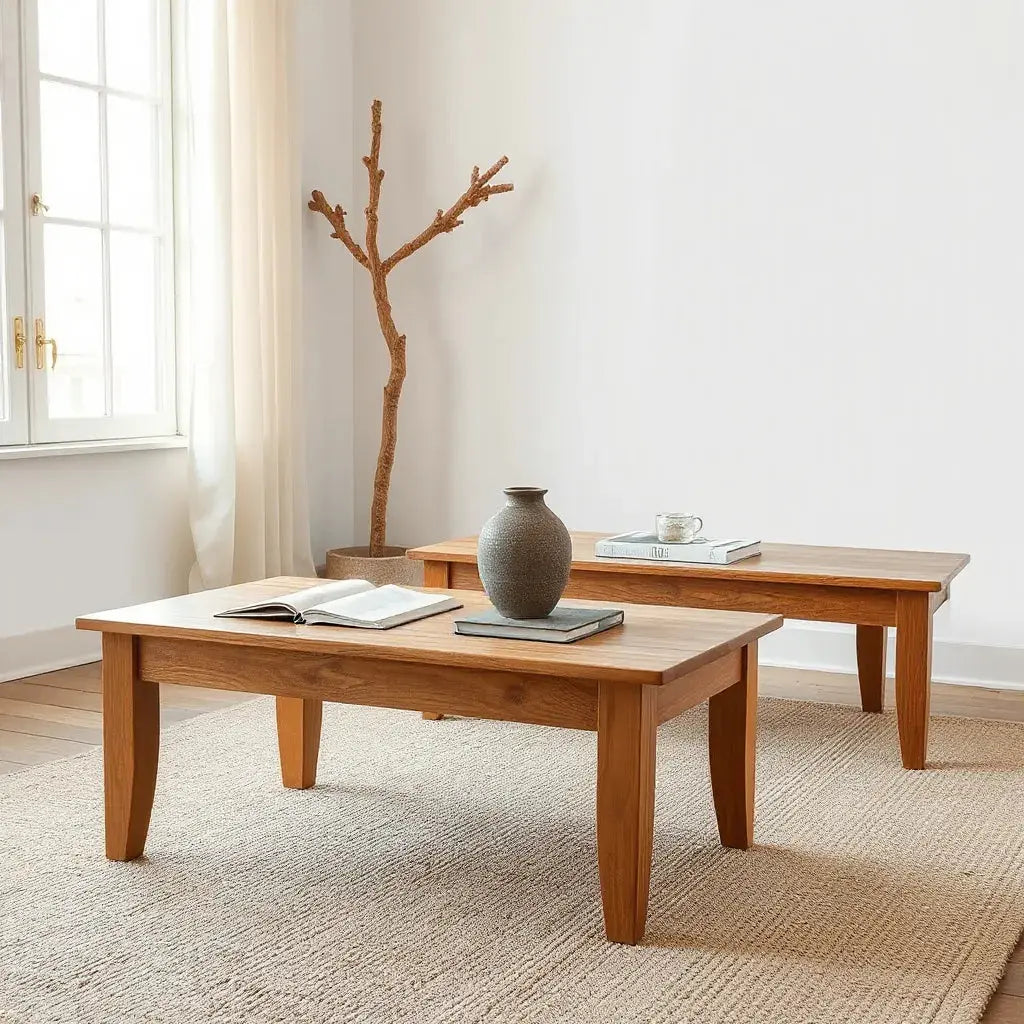
Wood grain patterns, joinery lines, and room balance
Materials and Construction to Look For
To choose the best handcrafted coffee tables, evaluate construction details rather than only appearance. Start with the tabletop. Look for a surface that feels smooth to the touch without being overly slick. A well-finished tabletop should resist minor scuffs and should not feel brittle around the edges.
Next, examine joinery and stability. Traditional methods such as dowels, mortise-and-tenon, or sturdy corner blocks often indicate stronger alignment. When the structure is rigid, the table will be less likely to wobble or develop uneven stress lines over time. If you can view the underside, check whether the legs connect with solid hardware and whether braces are present where they are most needed.
Wood choice also influences feel and longevity. Harder hardwoods generally tolerate wear better, while softer woods may show marks more easily but still develop an attractive patina. Even when the wood species differs, craftsmanship should remain evident through consistent thickness, straight edges, and clean finishing transitions.
Finally, assess the base design. Legs may be straight, tapered, or sculptural. The base should support the tabletop evenly, especially at corners. If you plan to place items frequently near the edge of the table, a sturdier frame reduces flex and helps maintain a reliable surface.
How to Measure and Plan Your Space
Space planning is where many purchases succeed or fail. Before selecting a table, confirm three measurements: clearance around the room, relationship to seating height, and tabletop coverage for your typical use.
Measure walkway clearance. Keep enough room for movement between the table and surrounding furniture. A clear path matters more than perfect symmetry.
Confirm seating height compatibility. A coffee table typically pairs well with the arm or seat height of your sofa and chairs. If the table sits too high, it interrupts comfort for drinks and snacks. If it sits too low, it reduces usefulness and makes styling feel distant.
Plan tabletop coverage. Consider what you place most often: coasters, books, a tray, or decorative objects. Measure the approximate footprint needed for those items, including space for clearing and rearranging.
Test visual proportion. Stand back and judge whether the table feels wide enough to anchor the seating area. A table that looks too small can make the room feel top-heavy, while an oversized one can make corners feel cramped.
As an example, a rounded or gently curved edge can soften the room and help with traffic flow. In contrast, a sharper rectangular silhouette may emphasize structure and create a more formal look. Your measurement decisions should align with your preferred atmosphere.
Using style and function together
A practical table does more than hold items. It supports daily routines, such as placing a cup after work, setting down a phone, or displaying a small arrangement. When the tabletop width matches your typical tray size, you reduce clutter and keep the room visually calm.

Room layout grid showing spacing, height alignment, and balance
Design Styles That Stay Relevant
Trends change, but handcrafted coffee tables often outlast the trend cycle because their design rests on proportion and material honesty. You can choose a style that remains coherent with different decor phases, especially when the table uses neutral tones and timeless form.
Common enduring approaches include:
Natural wood minimalism. Clean lines and visible grain create warmth without visual noise. This style pairs well with both modern and classic seating.
Low-profile centerpieces. A lower silhouette can make the room feel relaxed and encourages an open sightline.
Pedestal or base-focused designs. When the base structure is distinctive, it can become the anchor feature while the tabletop remains functional and easy to style.
Rectangular utility. Rectangular tables often suit families and hosting because they support trays, board games, and multiple display items.
If you want a cohesive living room, consider how other pieces echo the table’s design logic. For instance, pairing the coffee table with a chair style that uses compatible wood tones can improve harmony. You might explore options such as Toshiro chair styles to see how seating silhouettes can complement a central table.
How to Select a Finish and Care Plan
The finish is one of the most important determinants of daily performance. A good finish protects the surface while allowing the grain to show clearly. When you evaluate a handcrafted table, look for consistency across the tabletop, especially at edges and corners. Rough transitions can collect moisture and debris, increasing wear.
From a care perspective, your goal is to prevent water and abrasive contact. Use coasters under drinks and wipe spills promptly. For general cleaning, dry dusting is often sufficient. If the surface requires deeper cleaning, use a method that matches the finish type recommended by the manufacturer.
When considering long-term care:
Avoid harsh chemicals. Strong cleaners can degrade certain protective layers.
Protect from direct heat. Heat sources can damage the finish or cause uneven tone changes.
Use soft cloths. Microfiber or lint-free cloths help prevent scratches.
Reapply finish when needed. Some handcrafted tables benefit from periodic refinishing to preserve moisture resistance and color depth.
When you treat the surface as a protective system, the table becomes easier to maintain. Over time, a well-cared surface develops character while remaining stable and usable.
Installation and Placement Best Practices
Most handcrafted coffee tables are designed for straightforward setup, but correct placement protects both the table and your flooring. Begin by positioning the table on a level surface. If your floor is uneven, stability issues can appear even in well-built furniture. Check the table for rocking and adjust as needed.
If the legs do not include protective pads, consider adding felt pads to reduce friction and prevent surface wear. This is especially relevant for hardwood floors and delicate finishes. Also verify that the table is not pressed tightly against walls. A slight gap can help with air circulation and makes cleaning easier.
Styling placement matters as well. Use a tray for smaller items, because it makes cleaning simpler and limits scattered clutter. For taller items, keep them near the center rather than the edge to maintain visual balance.
For buyers interested in coordinated decor, it is helpful to align table tone with other textures in the room. If you are matching seating, ensure that the wood tone either complements or contrasts intentionally. For example, you can explore chair options from Nisu Home such as Hitsuji chair to understand how different shapes and finishes can still work together.
Common mistakes to avoid
Ignoring clearance. Tight spacing increases daily inconvenience.
Choosing the wrong height. The table should support comfortable use with your seating.
Overloading the surface. Visual clutter reduces the table’s natural impact.
Skipping protection. Coasters and cloth care prevent permanent damage.
FAQ
What makes handcrafted coffee tables different from mass-produced options?
Handcrafted coffee tables typically emphasize deliberate joinery, consistent finishing, and attention to proportions. In many cases, smaller production runs allow for tighter quality control, which can translate into improved stability and a more natural wood character.
How do I choose the right size for my living room?
Begin with clearance and seating compatibility. Measure space for walking around the table, then confirm that the table height supports comfortable reach from your sofa or chairs. Finally, estimate the tabletop footprint you need for trays, coasters, and everyday items.
What is the simplest care routine for a wood coffee table?
Use a soft, dry cloth for routine dusting. Wipe spills immediately and place drinks on coasters. Avoid harsh cleaners, and follow the finish guidance provided by the maker to help preserve protection and appearance.
Should I prioritize the tabletop or the base when evaluating quality?
Both matter, but you should evaluate structure first. A stable base reduces wobble and stress on the tabletop. After that, inspect the tabletop finish for smooth edges and even protection, because daily wear usually shows up where items contact the surface.
Closing Thoughts
Handcrafted coffee tables deliver more than function. They add texture, visual steadiness, and an enduring sense of craft to your home. By focusing on measurements, construction details, finish quality, and a realistic care plan, you can select a table that performs well and looks refined. Take time to compare options and choose the piece that fits your routine, not only your aesthetic.
If you are exploring complementary home furniture, consider reviewing related seating and styling ideas on Nisu Home to build a cohesive look around your central table.
About the Author
Nisu Home is an interior and lifestyle brand with expertise in curated home furnishings and design-forward material selection. This article reflects a practical approach to craftsmanship, proportion, and everyday usability for living spaces. With a focus on quality and timeless styling, Nisu Home aims to help customers make confident furniture choices. Thank you for reading, and take the next step toward a more refined living room.


Leave a comment
This site is protected by hCaptcha and the hCaptcha Privacy Policy and Terms of Service apply.