

Updated on: 2026-11-04
Luxury Furniture Collections combine refined design, durable materials, and thoughtful craftsmanship for long-term comfort and visual impact.
This guide explains how to evaluate quality, choose the right style for your space, and build a cohesive room with consistent textures and proportions.
You will also find practical care steps that help preserve finishes and maintain performance over time.
By the end, you will have clear recommendations for selecting statement pieces and pairing them with complementary essentials.
Table of Contents
Introduction
Choosing furniture is not only a matter of appearance. It is also a decision about daily comfort, durability, and how well your home feels as you live in it. When homeowners search for Luxury Furniture Collections, they usually want more than a single standout item. They want a coherent look, dependable materials, and pieces that age gracefully.
This article provides a structured approach to selecting upscale furniture assortments. You will learn how to evaluate construction details, match finishes, and plan room layouts so that every item supports a unified style. You will also receive care guidance to help protect upholstery, wood, and metal surfaces through years of use.
Product Spotlight
One practical way to explore a premium collection is to start with an anchor piece that influences the proportions of the entire room. For example, an accent seating option such as the Izumi chair can establish a refined silhouette, define visual height, and add texture contrast. When you build around a chair like this, you can then select complementary side tables, cabinets, and accent decor with consistent color warmth and finish character.
Beyond aesthetics, an upscale chair should deliver stable support and smooth usability. Look for balanced cushioning, a seat surface that feels comfortable for typical daily activities, and joinery that resists wobble. Even when a chair is visually compact, construction quality often signals the overall standard of the Luxury Furniture Collections you plan to buy.
Luxury Furniture Collections: What Makes Them Different
Luxury is rarely about decoration alone. It is usually the sum of design discipline and material intelligence. Luxury Furniture Collections typically share several traits that help justify the investment and improve long-term satisfaction.
1) Design that maintains proportion
Premium collections pay attention to line weight, edge detailing, and the relationship between large and small elements. When proportions are correct, a room feels intentional rather than crowded.
2) Materials selected for both beauty and performance
Upscale assortments often prioritize durable woods, stabilized finishes, and upholstery choices that are selected for texture, resilience, and cleanability. This balance allows furniture to look polished while supporting everyday living.
3) Craftsmanship you can feel in the details
Construction quality shows up in alignment, hardware consistency, and smooth surface transitions. When drawers glide evenly or panels meet without gaps, the furniture signals careful assembly and finishing.
4) Cohesion across pieces
A collection should feel like a system. Consistent tonal families, compatible metal finishes, and repeatable design language make it easier to create a coherent interior.

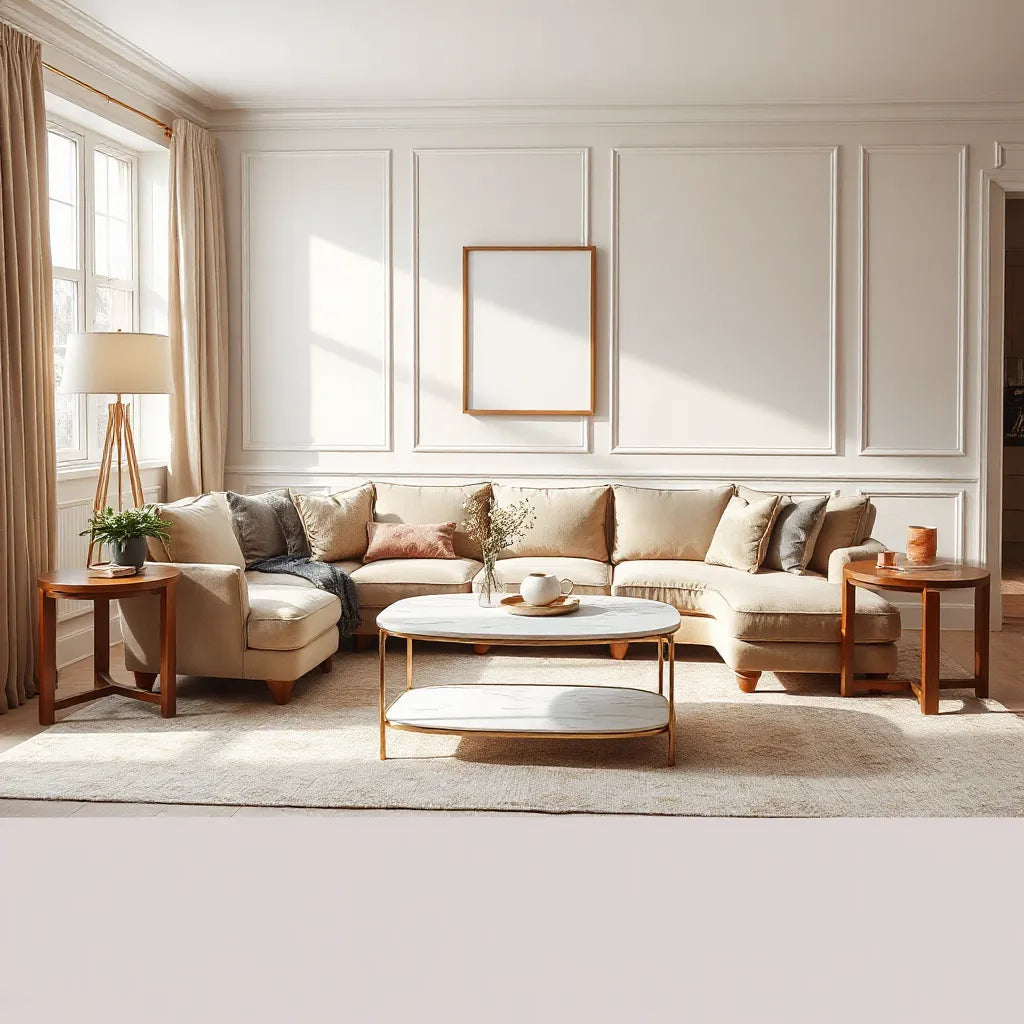
Room layout icons showing proportion, texture, and finish harmony
Step-by-Step How-To
To choose Luxury Furniture Collections confidently, follow this practical sequence. The steps below are designed to reduce decision fatigue and improve styling consistency.
-
Measure the space and define circulation paths.
Use tape measurements to confirm clear walkways. Plan for door swings, chair pull-out space, and safe turning radius. -
Pick a style direction before selecting finishes.
Decide whether you lean toward modern, classic, transitional, or minimalist. This prevents mixing design languages that fight visually. -
Select a main tone family.
Choose one primary wood or neutral color range. Then choose secondary tones for textiles and metals so the room looks balanced. -
Choose anchor pieces first.
Start with seating, a cabinet, or a coffee table. Once the anchor items define height and silhouette, it becomes simpler to select smaller complements. -
Match textures, not only colors.
Pair smooth surfaces with subtle grain or tactile textiles. This improves depth and helps the room look layered instead of flat. -
Verify functionality.
Check whether the chair seat depth supports natural posture, whether tables provide practical access, and whether storage solutions match your everyday needs. -
Plan a cohesive finish strategy.
Limit the number of metal tones. Keep hardware consistent across pieces to reduce visual noise. -
Style with intentional restraint.
Select a small set of decorative objects that repeat a material cue, such as brushed metal, warm wood, or textured fabric.
Visual Guidance
Even without committing to a specific product, you can improve your selection process by applying visual checks. Focus on how lines move through the room, how dark and light elements balance, and whether textures add depth. A premium collection usually makes those checks easier because design rules are consistent from piece to piece.
- Confirm the furniture height aligns with wall proportions and sight lines.
- Ensure textiles do not compete with wood grain or metal accents.
- Look for repeating design language such as edge shape or leg profile.
Personal Experience
I approached my own living area the way many shoppers do: I chose items I liked individually, then tried to connect them later. The result looked uneven. A chair with a cool-toned finish did not harmonize with warmer wood accents elsewhere. The room still looked attractive, but it did not feel calm.
When I reset the plan, I treated my furniture choices as a collection, not isolated purchases. I began with one tonal family and a single design direction, then matched textures. The biggest improvement came from aligning proportions. Once the anchor chair height and coffee table scale were correct, the entire space felt more intentional. That experience reflects the same principle behind Luxury Furniture Collections: cohesion is a design feature, not an afterthought.
Visual Guidance
If you are building over time, keep a “finish rule” in mind. Choose one dominant wood or neutral tone and repeat it through at least two major pieces. Then use one secondary accent, such as a complementary metal sheen or textile texture. This strategy helps your room look curated even when purchases happen in phases.

Finish palette swatches with wood grain and metal accents
Summary & Recommendations
Luxury Furniture Collections offer a clear advantage when you want your home to look cohesive and feel comfortable over many years. The key is to evaluate quality beyond the visual surface. Prioritize construction details, consistent materials, and design rules that improve how the room functions daily.
Recommended approach:
- Start with anchor pieces that determine height, silhouette, and room balance.
- Select one dominant tone family and keep metal finishes consistent across furniture.
- Match textures intentionally so the room gains depth without visual clutter.
- Confirm functionality such as seating support and storage usability before finalizing.
Finally, consider how each piece will be maintained. Upholstery and wood finishes should respond well to routine care, and the best collections make that care straightforward. If you are exploring complementary seating options, you can also review Hitsuji chair to understand how different silhouettes can still fit within an overall refined scheme.
For a broader perspective on curated home items, you may also browse Alampik as an additional inspiration source.
Q&A Section
How do I tell whether a furniture collection is truly premium?
Premium collections show consistent craftsmanship across pieces. Look for aligned seams, smooth finishing, stable joinery, and hardware that functions without resistance. Quality is also reflected in how well materials tolerate everyday use, including stain resistance and finish durability.
What is the fastest way to create cohesion across multiple furniture items?
Choose one dominant tone family and one secondary accent. Then repeat those tones across at least two major items, such as a chair and a table. Finally, keep metal finishes consistent and vary textures subtly through textiles and wood grain patterns.
Are Luxury Furniture Collections suitable for everyday use, or only for display?
The best premium collections are designed for both comfort and longevity. When you select supportive seating and durable surfaces, luxury styling can still be practical. Prioritize functional details such as seat depth, storage accessibility, and table stability so the room remains usable.
How should I care for upholstered and wood-finished pieces?
Use gentle cleaning methods recommended for the specific material. For upholstery, vacuum regularly and blot spills promptly rather than rubbing. For wood finishes, use a soft cloth for dust and a suitable cleaner that does not strip protective layers. Avoid harsh chemicals and excessive moisture.
What should I buy first if I am furnishing a room from scratch?
Start with the largest functional anchors: seating or a primary cabinet. Then add the central surface such as a coffee table, followed by complementary side pieces. This order helps you judge scale accurately before selecting smaller accents.
How can I balance bold design elements with a calmer interior?
Choose one statement feature, such as a distinctive chair silhouette or a sculptural table edge. Keep the remaining items in the same tone family and use simpler forms to support the statement. Layer textures through neutral textiles and controlled contrast rather than adding more competing focal points.
About the Author
Nisu Home
Nisu Home is a home furnishing expert focused on curated design, material selection, and practical styling guidance. With experience across furniture presentation and customer needs, the team emphasizes long-lasting comfort and visual coherence. The goal is to help shoppers build spaces that feel refined and functional. For questions or sourcing inspiration, the team encourages thoughtful selection and confident pairing.


Leave a comment
This site is protected by hCaptcha and the hCaptcha Privacy Policy and Terms of Service apply.