

Updated on: 2026-07-06
Choosing the right bar furniture is more than an aesthetic decision. The height of your seating must match your counter or bar so users can sit comfortably. Proper width, legroom, and stability reduce strain and improve daily usability. This guide explains myths, provides a practical selection process, and answers common questions to help you buy with confidence.
Myths vs. Facts
Myth: Any seat height works if the stools look good. Fact: Comfort depends on the relationship between seating height and your bar height, including foot clearance.
Myth: All bar furniture is the same size. Fact: Models vary in seat width, base diameter, and back support, which changes how many stools fit and how they feel.
Myth: A hard seat is always less comfortable. Fact: Comfort depends on design. Supportive cushioning, smart angles, and appropriate materials can make a firm seat feel better than expected.
Myth: Weight capacity is only for commercial spaces. Fact: Capacity matters for everyday reliability and safe use at home.
Step-by-Step Guide
Selecting bar stools should be a systematic process. Start with the measurements you already have, then narrow choices by comfort and style. Use the steps below to make a clear, repeatable decision.
-
Measure your bar or counter height. Record the top surface height from the floor. If you have a kitchen island, measure where people actually sit.
-
Choose the correct seating height. Seat height should align so knees form a comfortable angle and feet rest on the floor or footrest.
-
Confirm legroom and circulation space. Allow enough clearance for walking and for people to pull stools in comfortably. A cramped layout reduces usability even with “correct” height.
-
Decide on a seat style. Consider a back design for long sitting, a swivel option for easy movement, or a minimal frame for smaller rooms.
-
Match the stool width to your space. Measure how many units you want across the bar run. Wider seats look luxurious but require more spacing.
-
Evaluate base stability and floor needs. Look at the base footprint and whether the design suits your flooring. If you have tiles or hardwood, choose models that protect the surface.
-
Pick a finish that fits your interior. Coordinate metal colors, wood tones, and upholstery with existing elements. The goal is consistent visual weight.
-
Test with real movement. If possible, place a stool near the bar and simulate sitting and standing. This quick check reveals whether the foot area and arm reach feel natural.

Measurement guide: bar height, knee angle, foot clearance
Shopping Checklist
When you compare bar stools, the most reliable results come from looking beyond appearance. Use this checklist to filter options and avoid common layout mistakes.
1) Seating height match
Start with the relationship between the top of your bar and the seat. If you frequently host guests, prioritize comfort across different body types by choosing designs that include a supportive footrest or stable stance.
2) Seat width and comfort
A wider seat can feel more relaxing, but it may reduce the number of stools that fit along your counter. If your dining habits involve longer conversations, consider a design with a more supportive shape.
3) Backrest and posture support
Back support is helpful when guests sit for extended periods. If your bar area is used mostly for quick meals, a backless or minimal design can still be a practical choice.
4) Swivel and movement
Swivel seating can improve access and reduce strain when people turn to speak or reach for items. If your bar layout is tight, verify that the swivel arc will not interfere with nearby furniture or cabinets.
5) Material quality and maintenance
Kitchen and entertaining spaces see regular spills. Choose finishes and surfaces that are easy to wipe clean and that resist fading. For upholstery, check whether the fabric type suits your cleaning preferences.
6) Stability and safety
A stable base improves daily confidence. Look for solid construction and balanced design that prevents wobbling when someone sits or shifts position.
As you narrow choices, you can reference curated categories on your shopping list. For example, you may explore complementary seating options at MURANO-lighting to coordinate lighting with your bar area for a more complete look.
Materials and Comfort
The material strategy for bar stools is directly tied to how your space functions. A bar area can be a casual gathering place, a homework station, or a breakfast spot. Your selection should support your typical routine.
Wood and wood-look frames
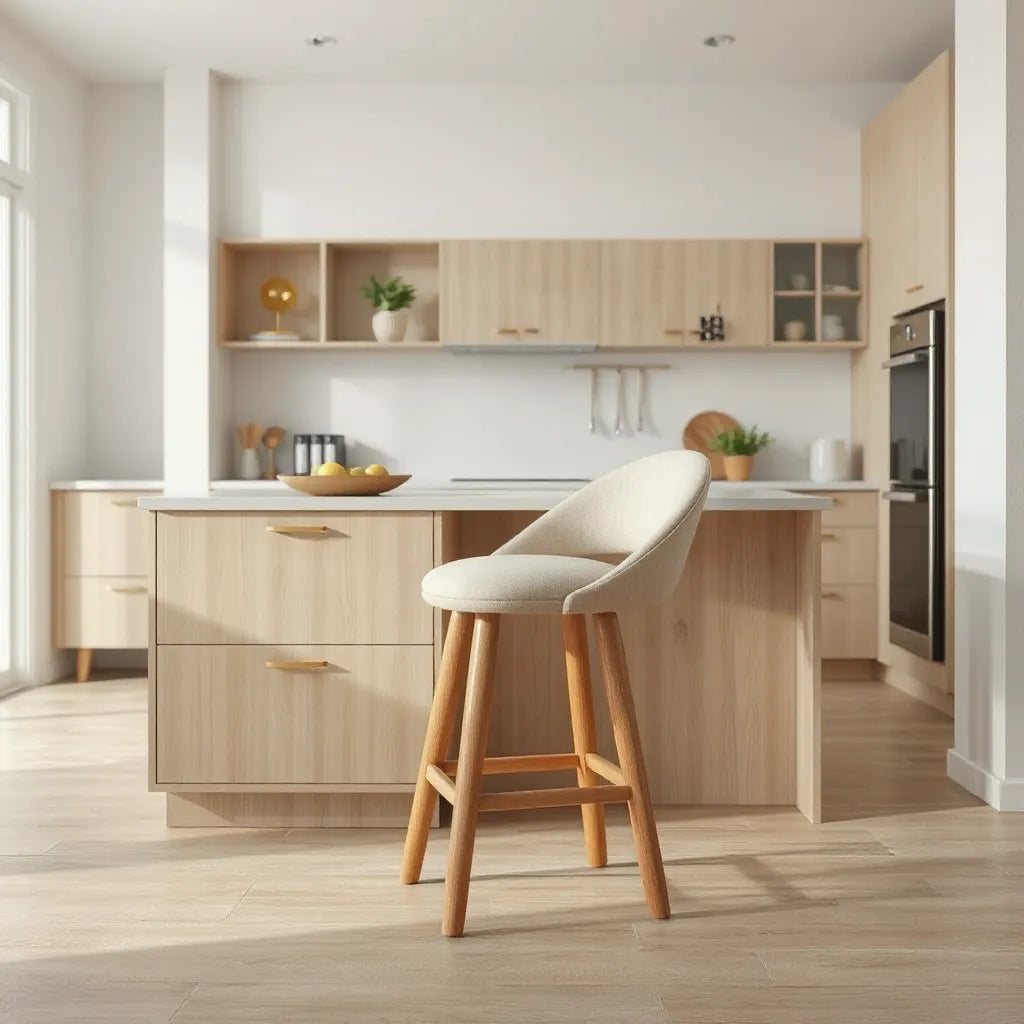
Wood offers warmth and strong visual integration with kitchens and dining spaces. In modern interiors, lighter finishes can create an open feel. In more traditional settings, darker tones can add depth.
Consider wood designs when you want a softer aesthetic. Also think about maintenance. Regular dusting and prompt wipe-downs can preserve the finish.
Metal frames
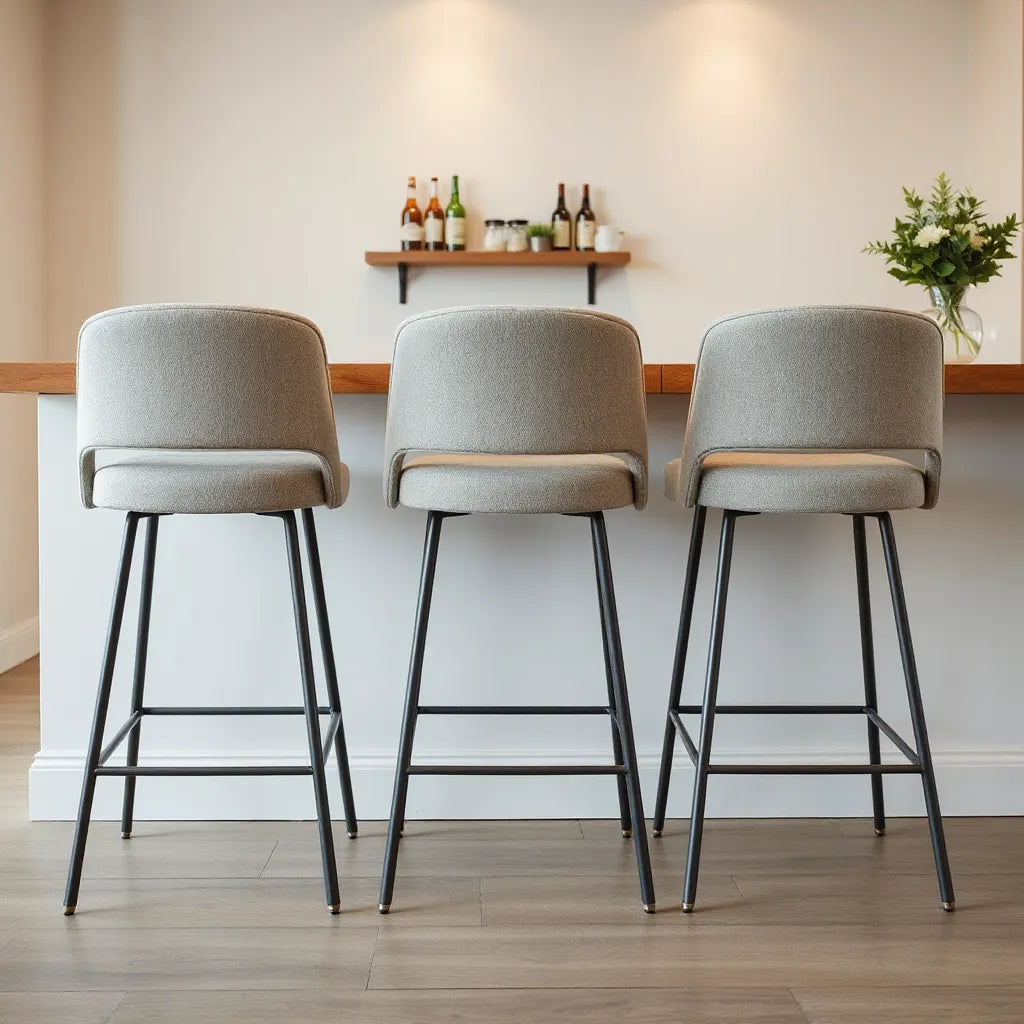
Metal supports a sleek appearance and can pair with a wide range of upholstery or seat materials. If you prefer an airy, contemporary look, metal bases often blend well with both light and dark interiors. They also tend to handle everyday wear with consistent structure.
Upholstery and seat surfaces
Upholstery changes the comfort profile quickly. Cushioned seats distribute pressure and reduce fatigue during longer use. If you prefer a cleaner wipe-down routine, look for materials designed for everyday cleaning and consider darker or stain-resistant finishes for heavy-use areas.
Footrests and stance
Many users rely on a footrest for support. A well-designed footrest improves posture and helps prevent dangling feet. It also contributes to a stable sitting position, particularly for taller or shorter individuals.
To keep decisions practical, pair your comfort goals with your style preferences. For instance, a compact frame with a supportive seat can work well in narrow bar areas, while a broader seat with a back can suit open-plan spaces.
If you are comparing specific designs, you may want to review options from your shortlist. Here are a few relevant examples from Nisu Home that can help you visualize how different forms affect comfort and style: Haruto bar stool and Emi bar stool.

Comfort layers: cushion, footrest, supportive back silhouette
Frequently Asked Questions
What height bar stools should I choose for my counter?
Measure your counter or bar height first, then select a seating height that allows comfortable knee positioning and full foot support. If your stools include a footrest, it can improve posture and reduce fatigue.
How many bar stools fit along a kitchen island?
Use your available length to estimate spacing per stool, while leaving room for movement and access. Seat width and base footprint matter, so plan for both sitting space and the ability to pull stools in without obstruction.
Are backless stools a bad choice?
Backless designs can be suitable for casual, short-duration use. If your bar area supports long meals or frequent entertaining, consider stools with back support to improve posture and comfort.
Summary & Key Takeaways
Choosing the right bar furniture is an exercise in balance: correct seating height, sufficient legroom, and a design that matches your daily routine. By separating myths from facts and using a clear measurement process, you can confidently select stools that look intentional and feel comfortable. If you are ready to refine your options, use the checklist above to compare designs side-by-side and select the best fit for your space.
Q&A Section
How do I prevent bar stools from looking too bulky?
Choose proportions that match your bar width and the surrounding furniture. A smaller footprint, slimmer base, and a finish that blends with existing tones can reduce visual heaviness. If your room is already dense, prioritize lighter colors or more streamlined frames.
Should bar stools match my dining chairs exactly?
Matching is not required, but coordination improves the overall design. You can align key elements such as color family, material type, or metal finish. This approach creates cohesion while still allowing stools to function as a distinct accent.
What is the best way to care for bar stools?
For everyday maintenance, wipe surfaces regularly and address spills promptly. Follow the cleaning guidance for your specific seat material, such as fabric care for upholstery or gentle cleaners for wood and metal finishes. Consistent care preserves appearance and comfort over time.
Can I use bar stools in a home office or study area?
Yes. When properly sized, stools can support focused work at a standing or counter-height desk. Choose designs with comfortable seat support and stable bases, and ensure there is enough clearance for safe movement.
How can I improve comfort without changing the stools?
You can improve comfort by optimizing placement and using accessories that suit your needs, such as appropriate seating cushions if the stool design allows it. Also verify that you have adequate foot support and that the stool height aligns with your counter.
Are swivel bar stools worth it?
Swivel designs can be practical when people need easy turning access to conversation or to items on shelves. They can also reduce twisting when reaching. However, confirm that the swivel range fits your layout so it does not bump into nearby surfaces.
About the Author
Nisu Home is a home-focused editorial team with expertise in interior comfort, space planning, and practical furniture selection. We analyze how seating design affects daily routines, not only how items look in photos. Thank you for reading, and we hope this guide supports your next upgrade.

Leave a comment
This site is protected by hCaptcha and the hCaptcha Privacy Policy and Terms of Service apply.